Montenegro Waterfront Property for Sale: Bay of Kotor vs Budva vs Lustica Bay
If you’re looking at Montenegro waterfront property for sale, the first thing to understand is that “Montenegro” isn’t really one market. The Bay of Kotor, Budva, and Lustica Bay each offer a completely different way of life, and picking the wrong one for your personality is the most common mistake buyers make. This guide breaks down what actually separates the three, based on what we sell and see every day.
I’ve spent 15 years watching buyers fall in love with the wrong bay
My name is Niko Lakovic. I run Montenegro Sotheby’s Realty alongside Hunter Milborne, and before that I founded Luxury Homes LLC and built sothebysrealty.me, one of Montenegro’s longer-standing property platforms. Fifteen years of doing this job has taught me one thing above all: people arrive with a picture in their head, usually a stone house they saw on Instagram, and by the end of the week they’ve bought something completely different.
It happens constantly. A couple flies in convinced they want Kotor’s Old Town, spends three days walking around Budva’s beaches instead, and leaves having reserved an apartment they hadn’t even considered on day one. It’s not that they made a mistake; it’s that nobody explained to them, before the trip, how differently these three places actually feel once you’re standing in them.
So let’s go through it properly, area by area, using what’s actually in our portfolio at Montenegro Sotheby’s Realty.
The Bay of Kotor: old stone, quiet water, a lot of history
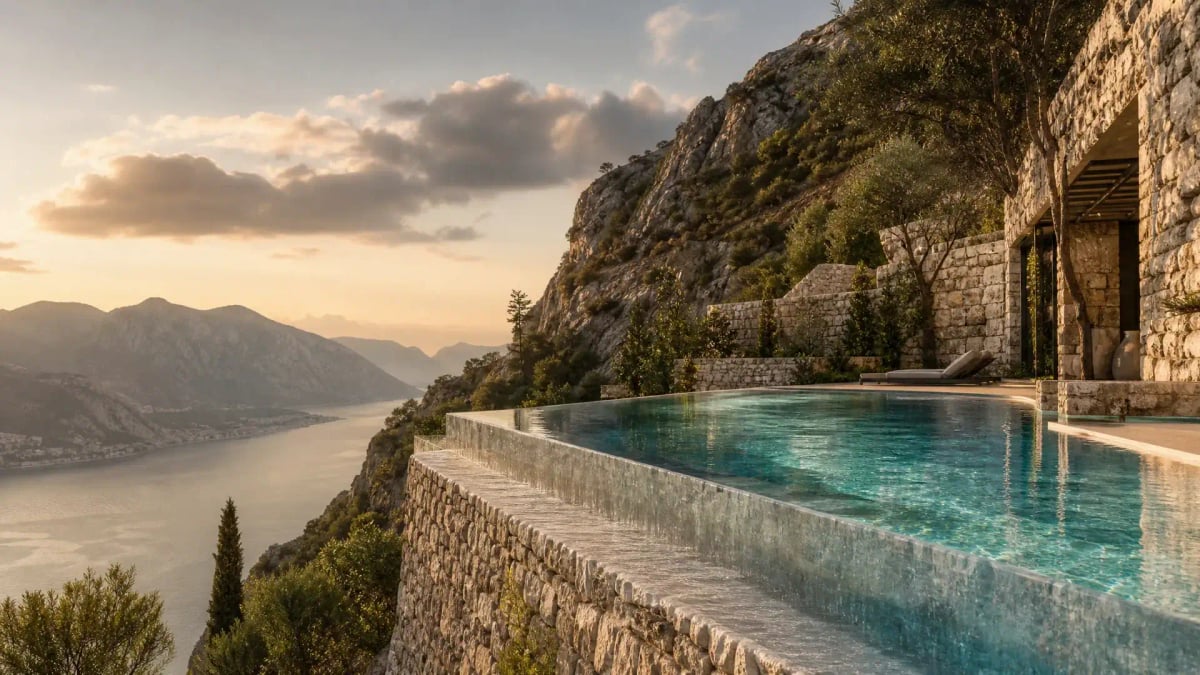
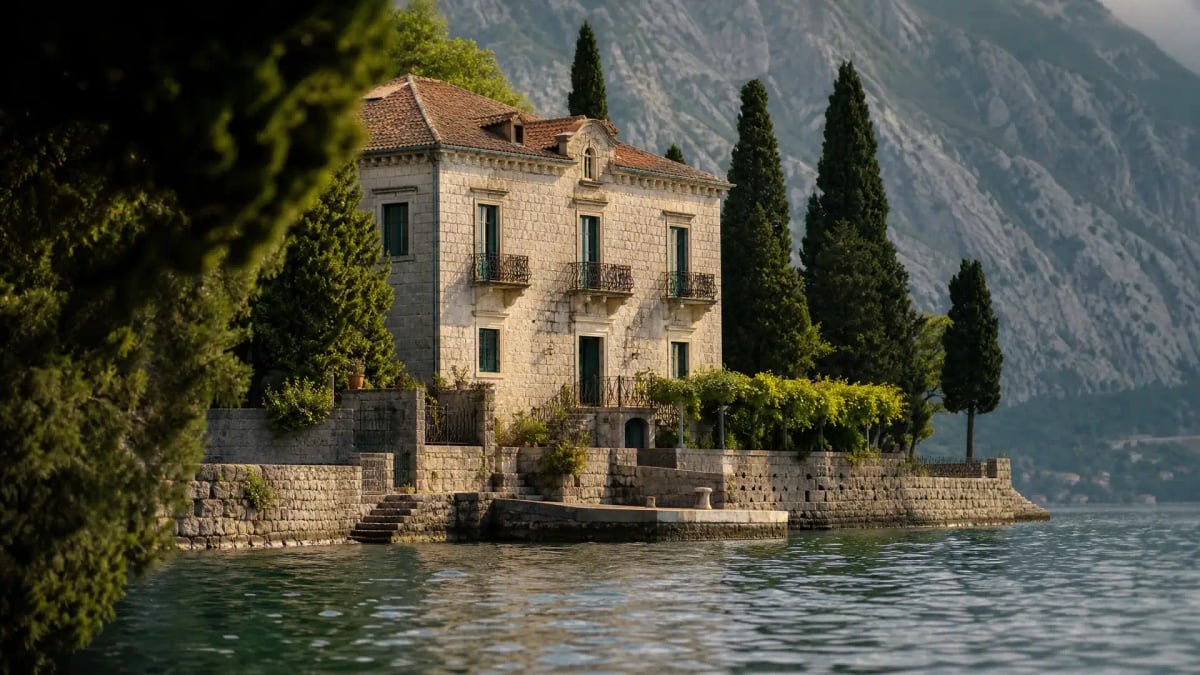
The Bay of Kotor is a fjord, genuinely, geologically a fjord, cut deep into the Adriatic coast, with mountains rising almost straight out of the water. It’s the only stretch of Montenegro’s coastline with UNESCO World Heritage status, and that designation isn’t decorative. It shapes what you can build, how towns look, and what kind of buyer ends up here.
Inside the Bay of Kotor, you’ll find two very different flavors of property:
- Kotor’s Old Town and the Dobrota waterfront, thick-walled stone houses, some going back to the 18th century, built by sea captains and merchant families. Palazzo Tripkovic, one of our current listings in Dobrota, is a good example: a genuine ship master’s mansion, still carrying its original character.
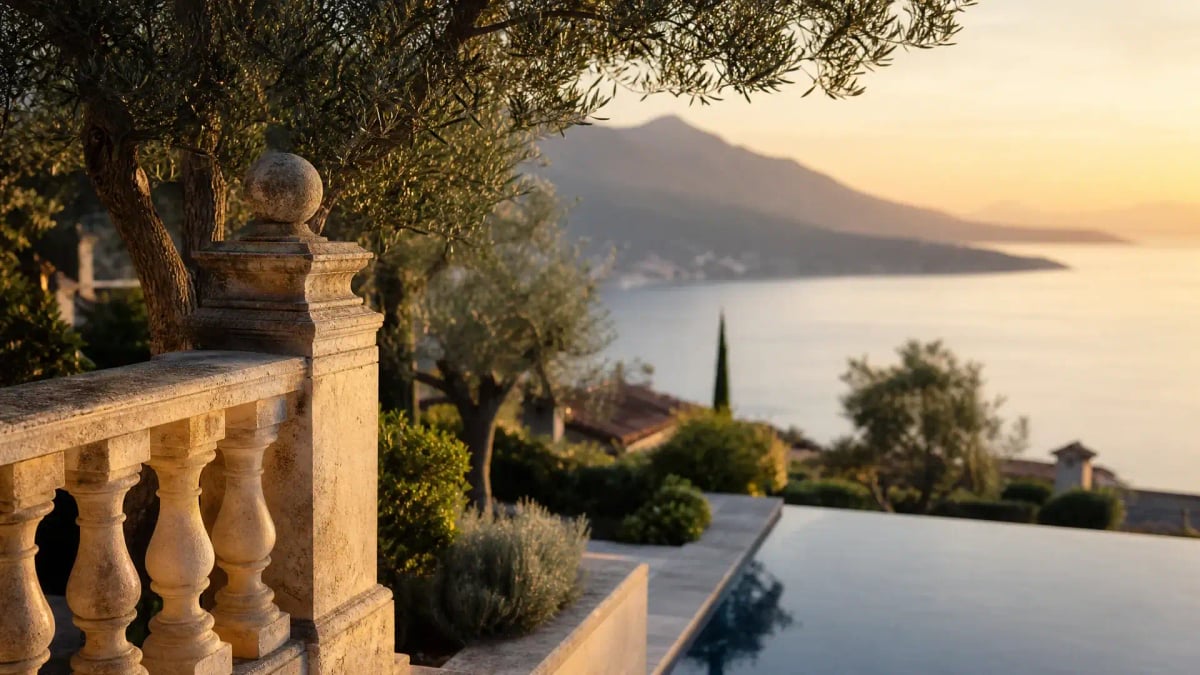
- Perast, a village with essentially one street, lined with baroque palaces facing the islets of Our Lady of the Rocks and St. George. Nothing about Perast is loud. Properties come up rarely, and the people who buy them tend to want exactly that kind of quiet.
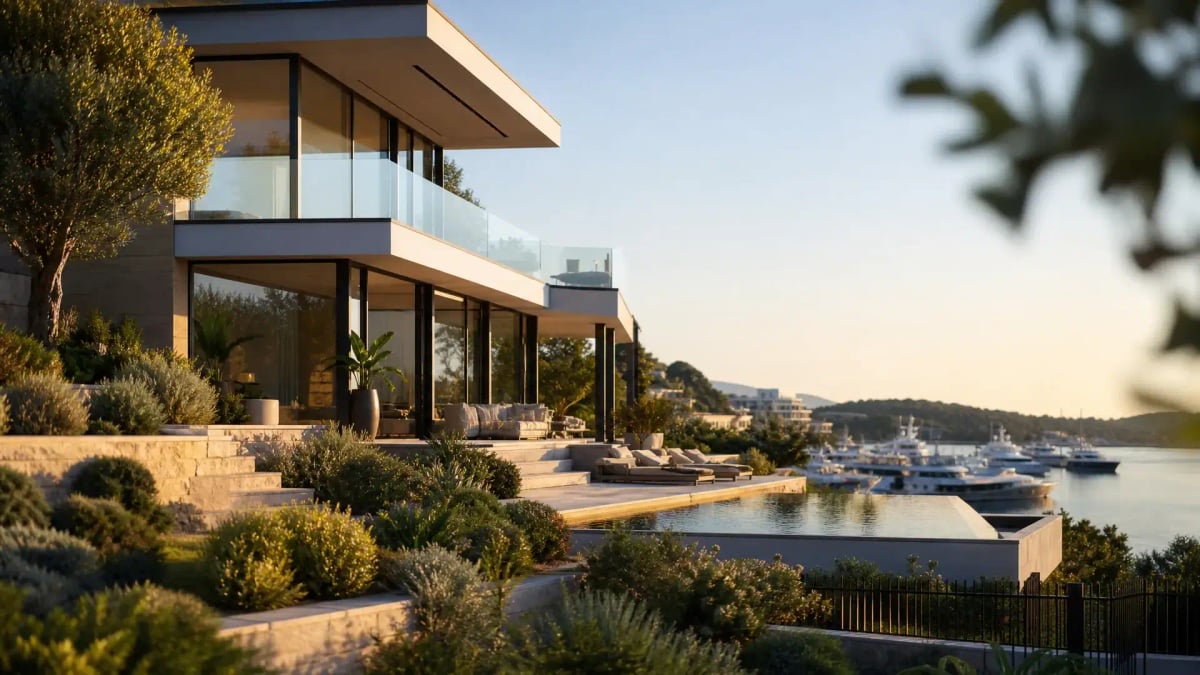
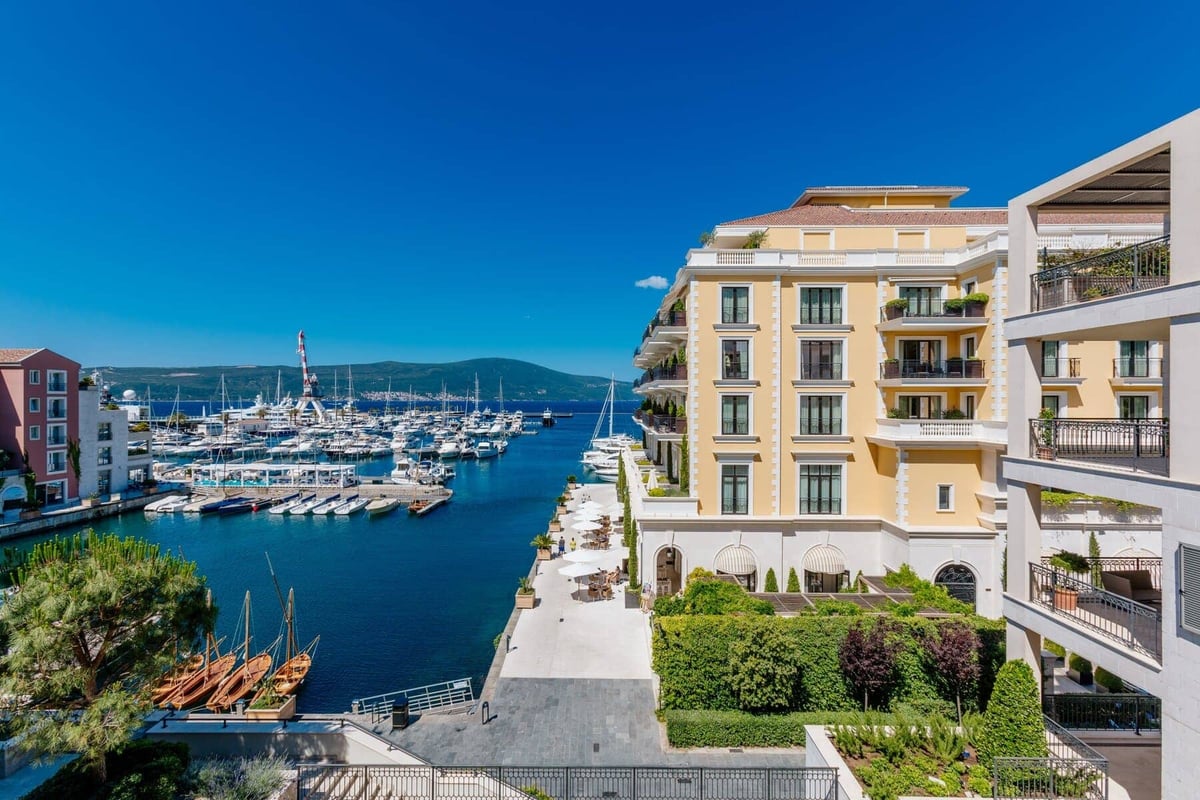
- Tivat and Porto Montenegro, the modern side of the same bay. Porto Montenegro has grown into a proper marina town, with boutiques, restaurants, and newer builds like the six-bedroom villa we currently have listed in Gradiosnica, sitting on a 3,192 m² plot with a pool.
What makes the Bay of Kotor unusual is that both of these things exist side by side. You can restore a 300-year-old stone house in Dobrota and have neighbors, ten minutes away, living in a brand-new villa with a swimming pool overlooking the marina. Nowhere else on the coast gives you that range in one place.
If history and a slower pace matter more to you than nightlife, the Bay of Kotor is almost always the right answer.
Budva: this is where people go for energy, not architecture
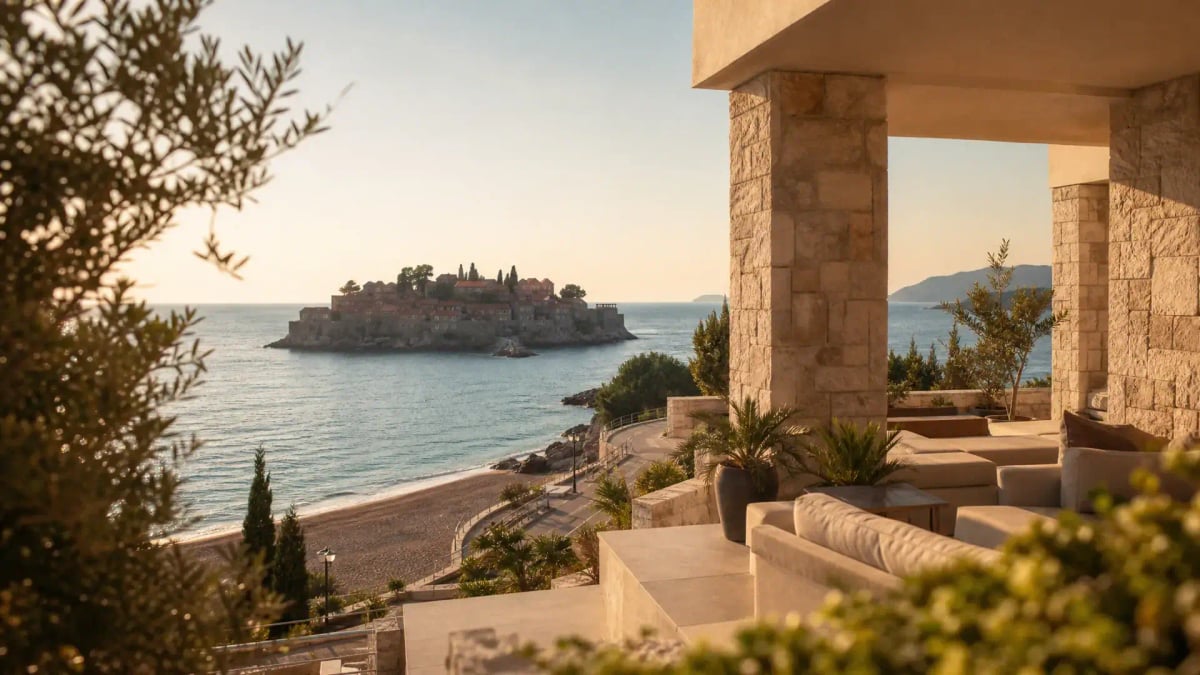
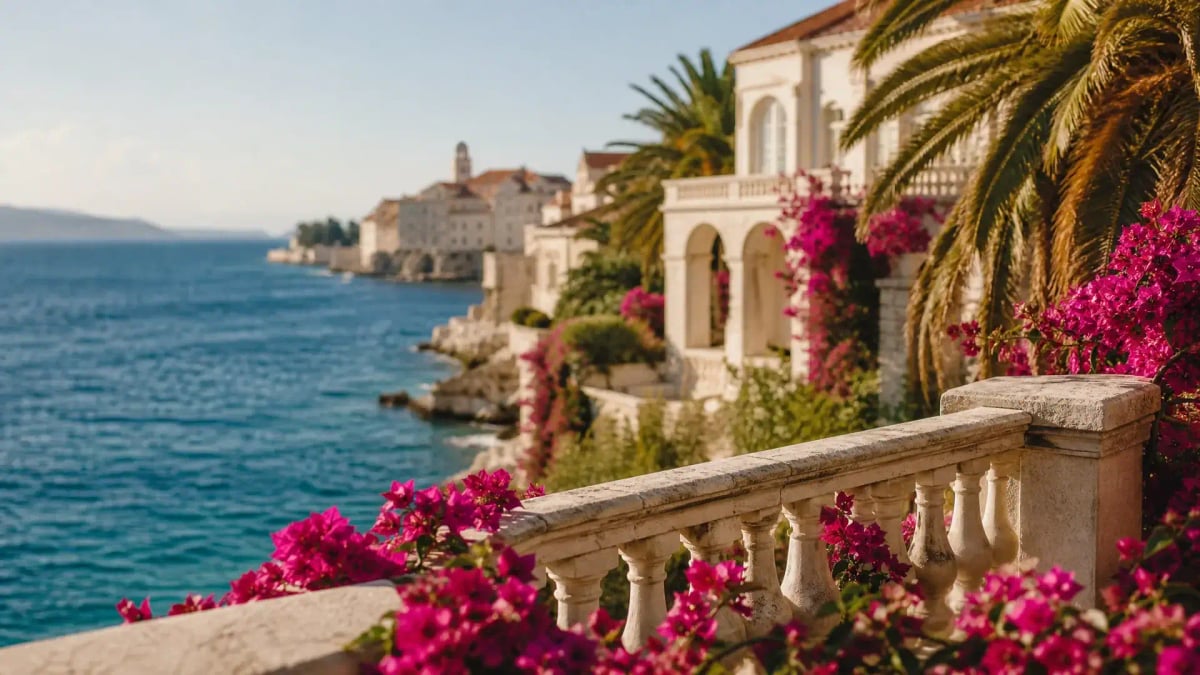
Budva is a different animal entirely, and I mean that as a compliment, not a criticism. Where Kotor trades on heritage, Budva trades on life, beaches, restaurants, an old town that’s genuinely lively rather than preserved-and-quiet, and a social scene that runs late into the night in summer.
Budva Riviera suits a buyer who wants to actually use the property, constantly, and who sees the coast as somewhere to entertain, socialize, and be close to things rather than somewhere to retreat from the world. Families who want a summer base near restaurants and beach clubs tend to end up here. So do buyers who simply want to be close to the airport and to Montenegro’s established tourist infrastructure.
What you won’t get in Budva is the stone-palace character of Perast or the restoration project feel of a Kotor townhouse. That’s the trade-off, and it’s a fair one, you’re not buying architecture here, you’re buying a lifestyle built around activity.
Lustica Bay: built from nothing, and built on purpose
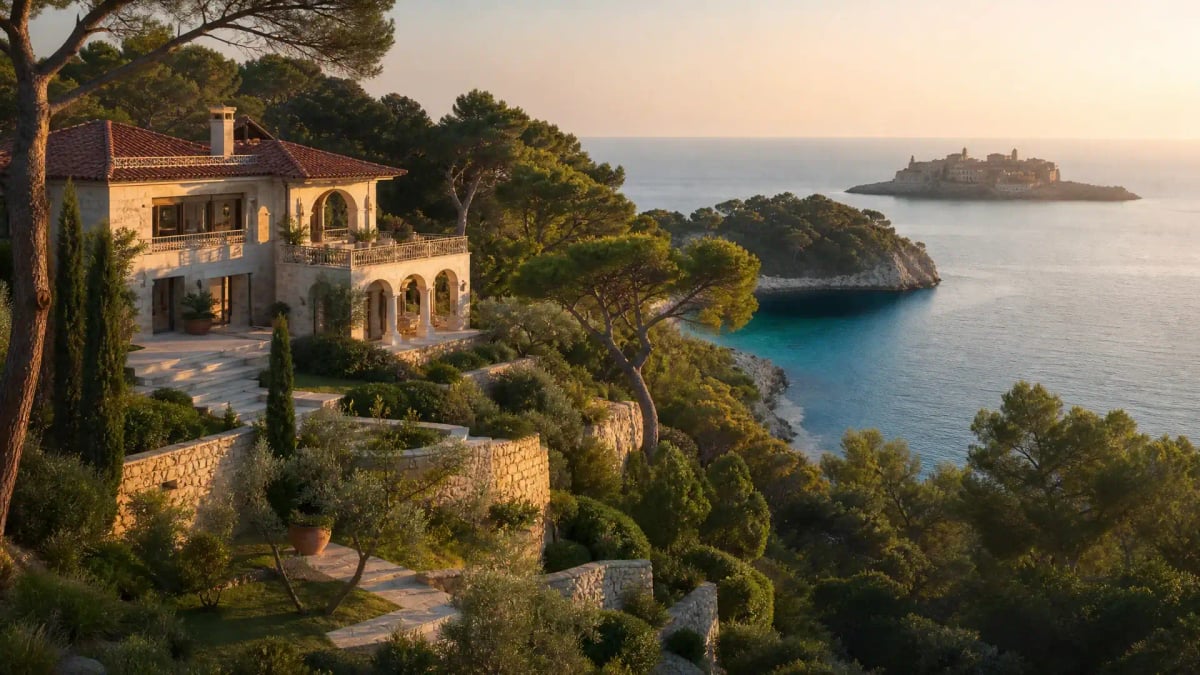
Lustica Bay isn’t an old town and it isn’t a resort strip. It’s a community that didn’t exist twenty years ago, planned from the ground up around golf, wellness, and a genuine effort to work with the landscape rather than pave over it.
That difference changes what ownership actually feels like day to day. Buying in Lustica Bay isn’t about restoring something old or moving into an existing neighborhood, it’s about joining a development that was designed as one coherent idea, with sustainable building practices baked in from the start and The Chedi Luštica Bay hotel anchoring the amenities. Our current listing here, a golf villa on the Lustica peninsula in Tivat, is exactly this kind of property: brand new, purpose-built, nothing to renovate.
Lustica Bay sits in the same company as two other big developments that changed the standard along this coast, Porto Montenegro and Portonovi, home to One&Only Portonovi and SIRO at Boka Place. Together, these three projects brought a level of professional destination management and construction quality that simply didn’t exist here before, and they’re a big part of why international buyers now take Montenegro seriously as a market rather than a curiosity.
Side by side: Bay of Kotor, Budva, and Lustica Bay
| Bay of Kotor | Budva | Lustica Bay | |
| What it’s built on | UNESCO-listed heritage and a fjord setting | Beaches, nightlife, an active old town | A planned resort built around golf and wellness |
| Typical property | Restored stone houses, plus modern villas around Tivat | Contemporary resort-style homes | New-build villas within the resort |
| Signature spots | Kotor Old Town, Perast, Porto Montenegro marina | The old town, the beach clubs | The Chedi hotel, the golf course |
| Feel | Slow, scenic, historic | Busy, social, sunny | Calm and curated |
| Suits | Buyers who want authenticity over convenience | Buyers who want to socialize and stay busy | Buyers who want a finished, low-maintenance lifestyle |
Why this coastline works as an investment, not just a nice view
None of the three areas above would matter much if Montenegro itself weren’t a stable place to own property. A few things are worth knowing regardless of which bay you end up choosing.
Montenegro’s coastline is short. There’s only so much of it, and demand keeps concentrating around the same handful of good locations, the Bay of Kotor being one of them, which is part of why property there has historically held its value well.
The ownership rules are simple, too. There’s no restriction on foreigners buying residential property here, as long as you go through the standard legal checks. Property transfer tax runs on a progressive scale, usually somewhere between 3% and 6% depending on value, and there’s no inheritance or wealth tax attached to owning property. Personal and corporate income tax generally sits between 9% and 15%, with VAT at 21%.
Montenegro is also a NATO member and an EU accession country, which gives buyers a sense of long-term direction that not every emerging coastal market can offer. Being part of SEPA makes moving euros in and out for a purchase straightforward. And practically speaking, two international airports, Tivat and Podgorica, keep the coast connected, with far more flights running in summer when demand peaks.
Put simply: the legal framework is uncomplicated, the supply is limited, and the country’s direction is stable, three things that matter more to a buyer’s long-term outcome than which town they end up choosing.
How we actually help someone choose
We don’t start by showing listings. We start by asking questions, because the answers usually make the choice obvious before we’ve even left the office.
- How will you actually use it? Full-time home, summer place, or something you’ll rent out changes everything, since Lustica Bay’s professional management suits a rental strategy differently than a Kotor townhouse would.
- Do you want a project, or do you want it finished? Some people love the idea of restoring an old stone house. Others want to unpack their bags and be done.
- Quiet or busy? This is usually the deciding factor once people have actually spent a few days in both Kotor and Budva.
- What does the paperwork look like? We walk clients through transfer tax, ownership steps, and residency questions alongside legal advisors we work with regularly.
- What happens after you buy? If you want rental income when you’re not using the place, we set that up from the start rather than figuring it out later.
From there we arrange tours, in person or virtual, across whichever area fits, and handle the negotiation and closing from that point on. Our current listings, including the properties mentioned above, are on the listings page, and you can browse by area through Porto Montenegro, Portonovi, or the general waterfront properties page.
Key takeaways
- The Bay of Kotor gives you UNESCO scenery and genuine historic architecture in Kotor and Perast, with a modern marina counterpoint in Porto Montenegro.
- Budva is for buyers who want an active, social coastline rather than heritage character.
- Lustica Bay is a purpose-built resort community centered on golf and wellness, with new construction rather than restoration.
- Montenegro’s ownership rules, tax structure, and EU direction apply across all three areas; that stability is a big part of why the market holds up.
- The right choice comes down to how you want to live first and which town or bay second.
Questions people ask us most often
- Can I buy property in Montenegro as a foreigner?
Yes. There’s no restriction on foreign ownership of residential property in Montenegro, beyond the standard legal due diligence, which is a big part of why buyers from the UK, Europe, the Middle East, and North America have become such a regular part of this market. - How much does a house in Montenegro cost?
It depends heavily on where and what; a stone house in Kotor’s Old Town, a contemporary villa in Porto Montenegro, and a new build in Lustica Bay all sit at different points on the market. The clearest way to get a real sense of current pricing is to look through our property listings or reach out to us directly. - Can I retire to Montenegro from the USA?
Owning property here can support a residence permit application, subject to the applicable rules, which is relevant if you’re thinking about relocating longer term. We’d recommend talking it through with our team alongside a qualified legal advisor before making any firm plans. - Is Montenegro expensive to live in?
Not especially, by Western European standards. Income tax generally runs between 9% and 15%, VAT is 21%, and annual property tax is charged at a low rate based on location, size, and value. - Which area is best for waterfront property in Montenegro?
Honestly, it depends on you. Choose the Bay of Kotor for heritage and quiet, Budva for energy and social life, or Lustica Bay for a finished, resort-style setting. We spend most of our first conversation with clients working out which of these actually fits.
About the author
Niko Lakovic is the local partner of Montenegro Sotheby’s Realty, founder of Luxury Homes LLC, and founder of sothebysrealty.me, one of Montenegro’s established property platforms. Alongside Hunter Milborne, known in the industry as the “Dean of Condos,” having sold more than 100,000 units, Niko brings 15 years of experience across Montenegro’s local and regional markets, working directly with investors and developers. More on the team is on our About Us page.
To talk through waterfront property in the Bay of Kotor, Budva, or Lustica Bay, reach us at info@sothebysrealty.me or +382 67 310 006, or stop by our office at Porto Montenegro, Obala bb, Regent Pool Club Baia, 85320 Tivat, Montenegro. You can also find us on Instagram, Facebook, and YouTube.
Related Posts
EU buyers are choosing Montenegro for five clear reasons: a coastline with genuinely