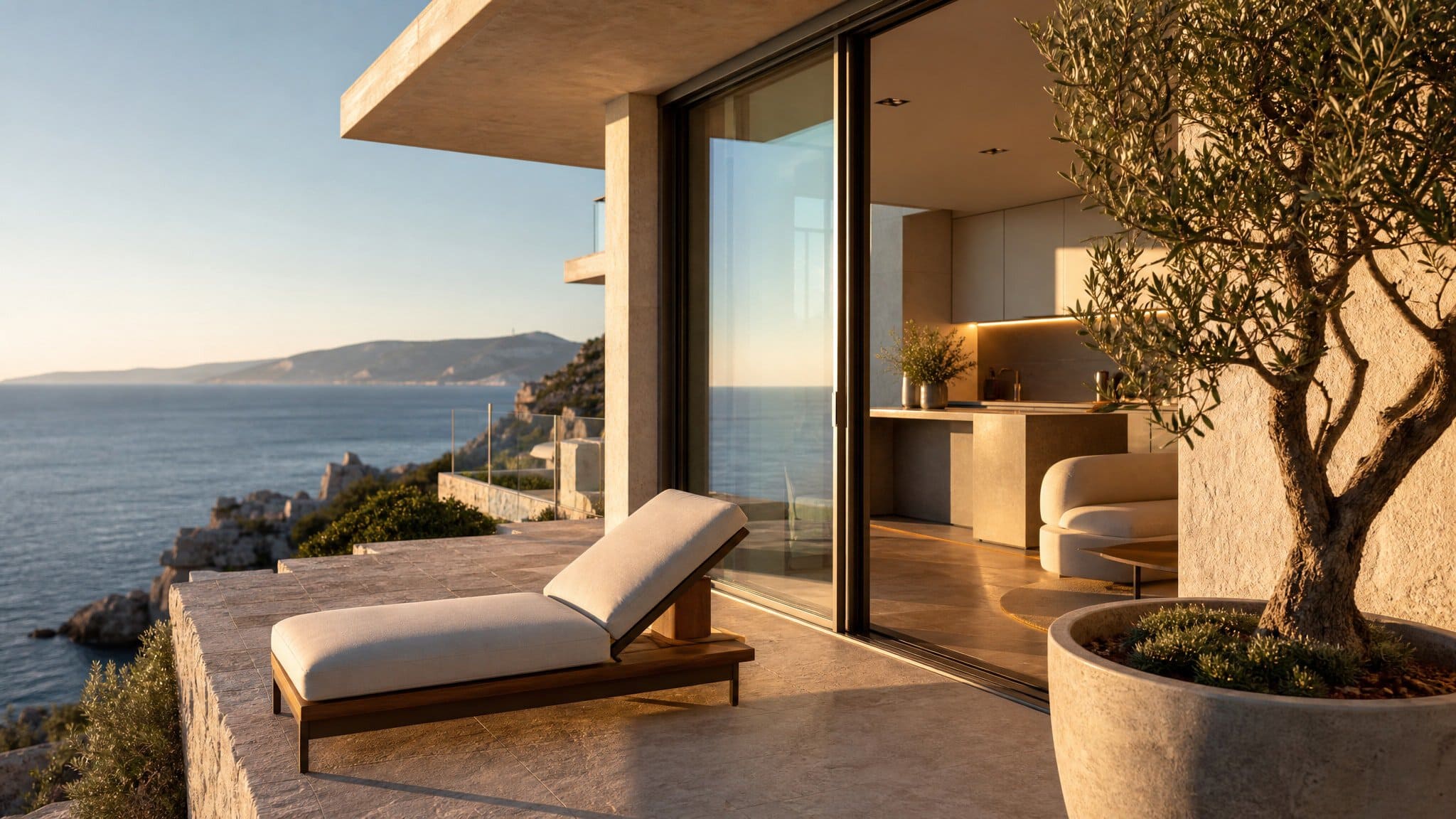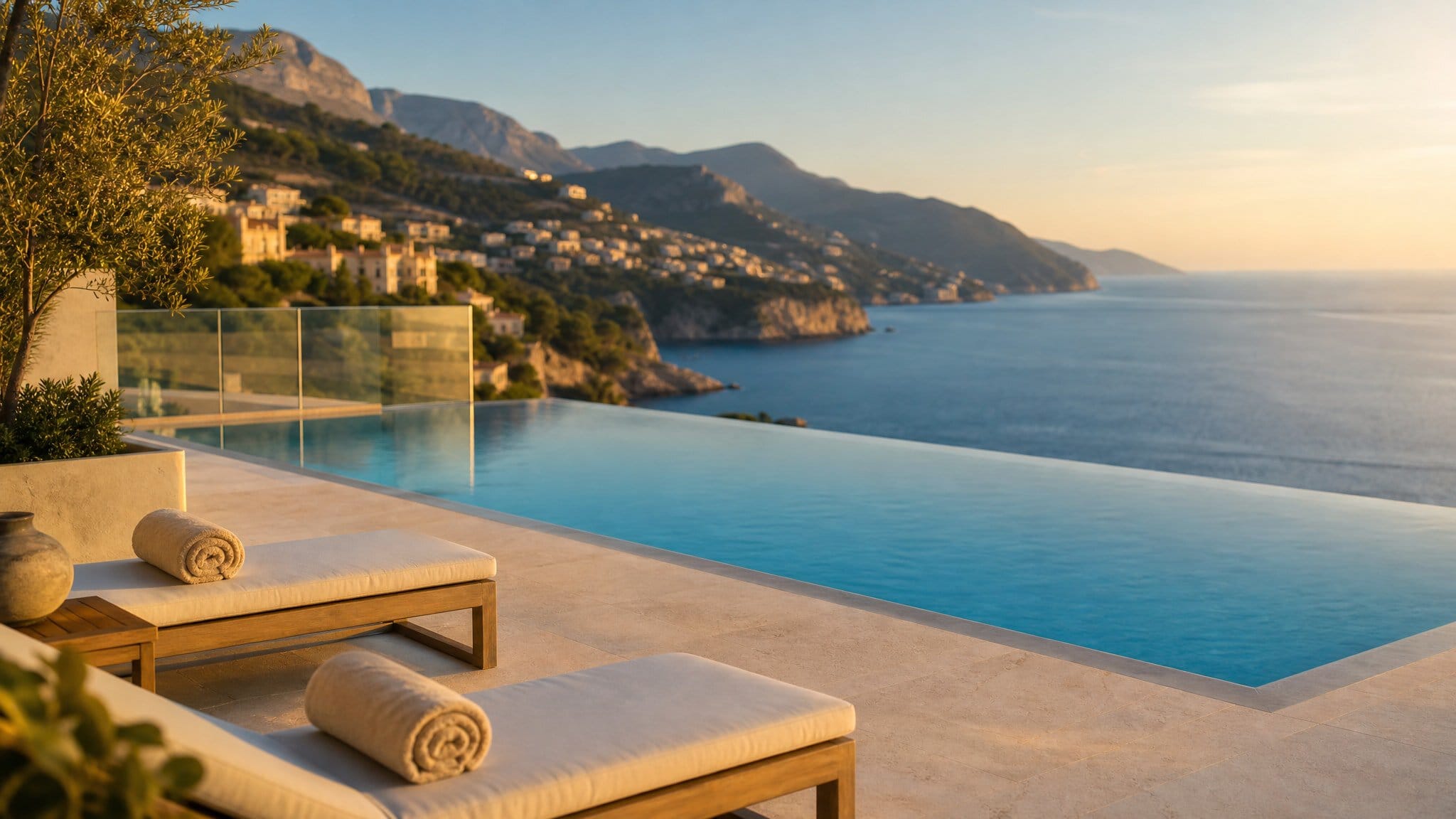



For most international buyers, Montenegro’s coast first appears as a finished villa: whitewashed walls, a stone terrace, a private mooring below. But a growing number of discerning buyers are asking a different question. Why choose someone else’s design when you can commission your own? Buying land in Montenegro’s coastal regions has become the preferred route for those who want a home built to their own taste, on a site they chose themselves.
This guide covers the practical side of that decision: legal steps, zoning rules, price positioning by region, and the due diligence a serious buyer should complete before signing anything.
Why Buy Coastal Land in Montenegro Instead of a Finished Villa
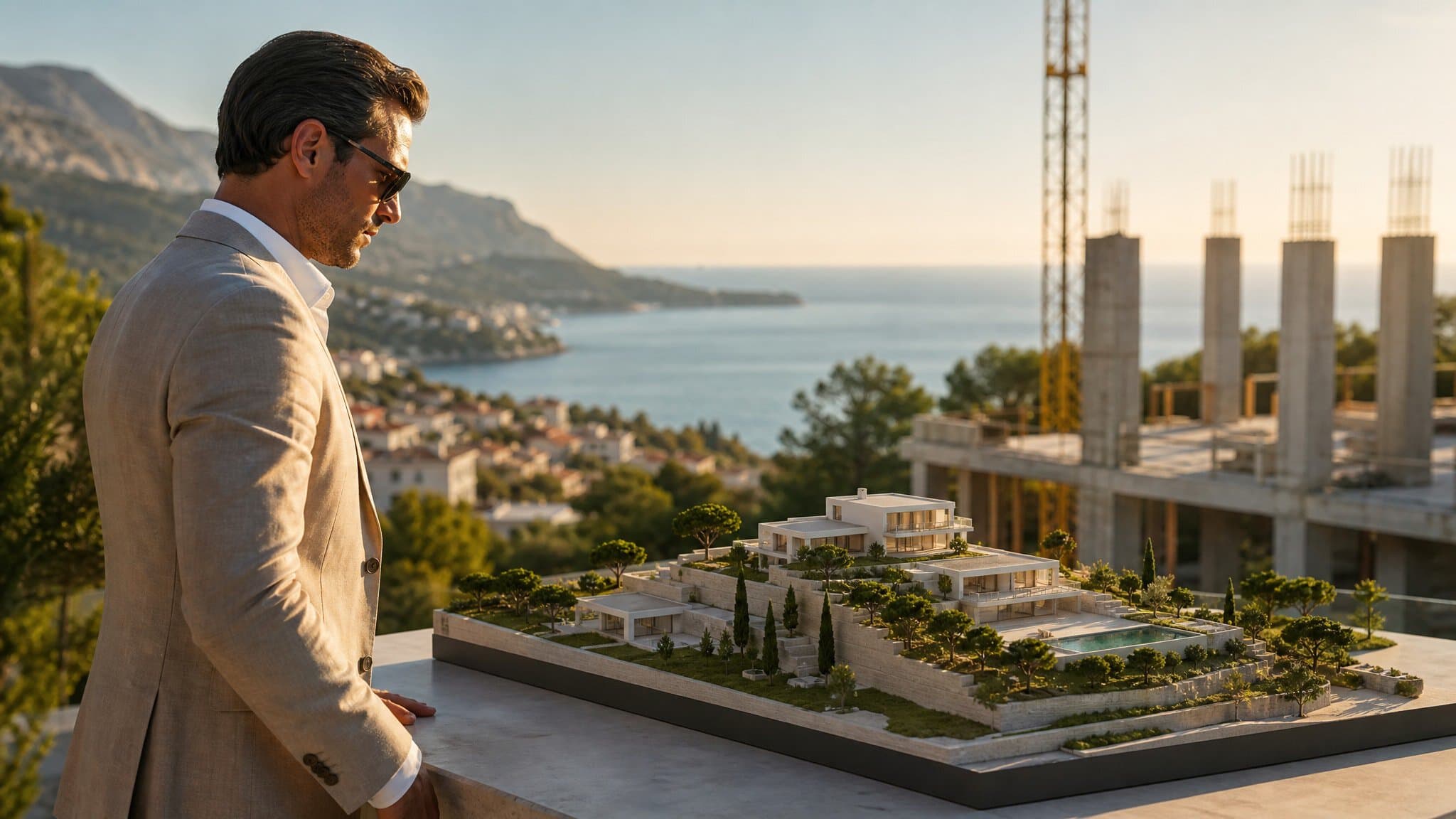
A finished villa offers certainty. You see exactly what you’re getting. Land offers something else: control. You choose the orientation, the layout, the materials, and the pace of the build.
For high-net-worth buyers, that control has real value. A bespoke villa reflects how you actually live, not how a previous owner or developer imagined someone might live. It also lets you build to current standards for insulation, energy efficiency, and smart-home infrastructure, instead of retrofitting an older structure.
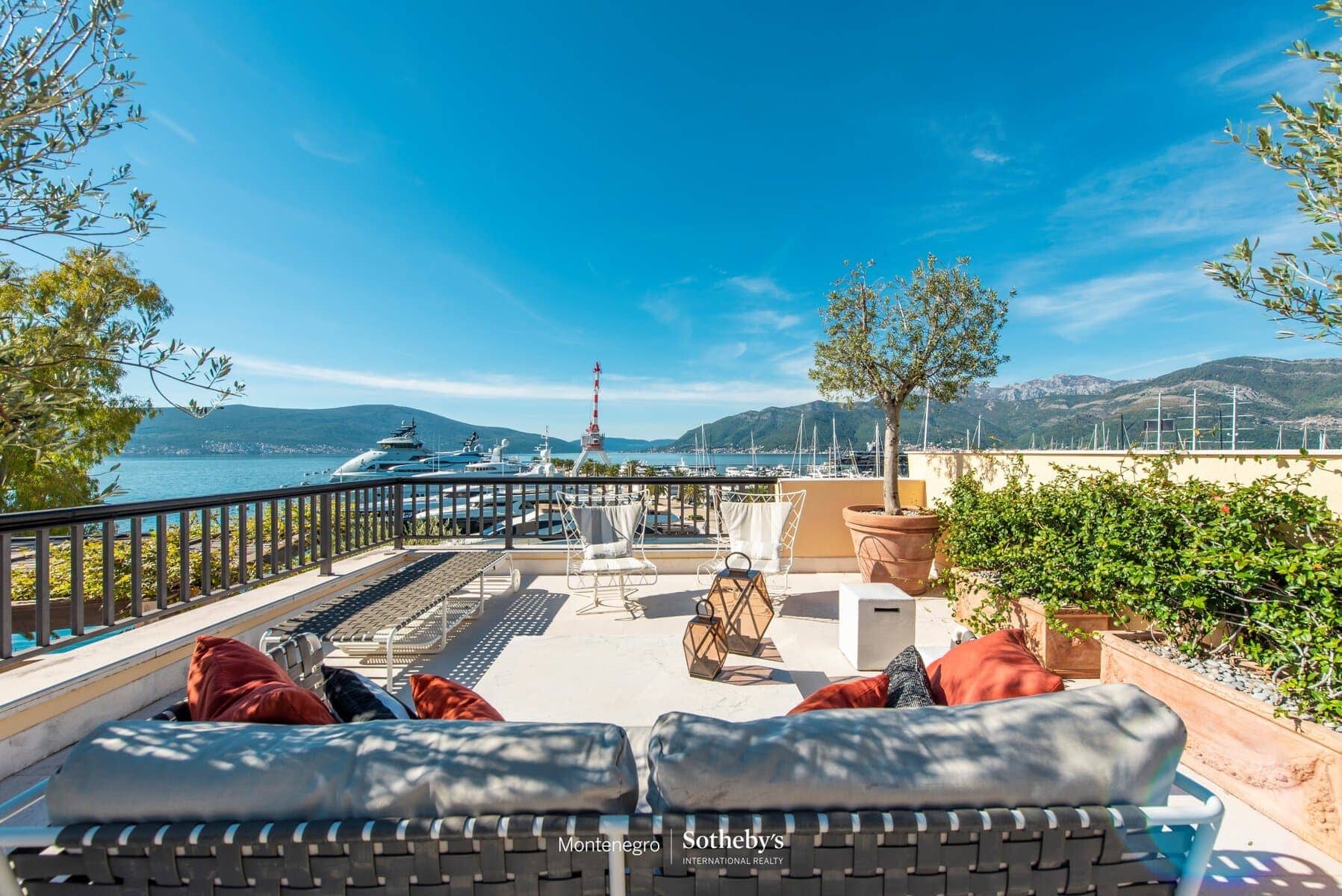
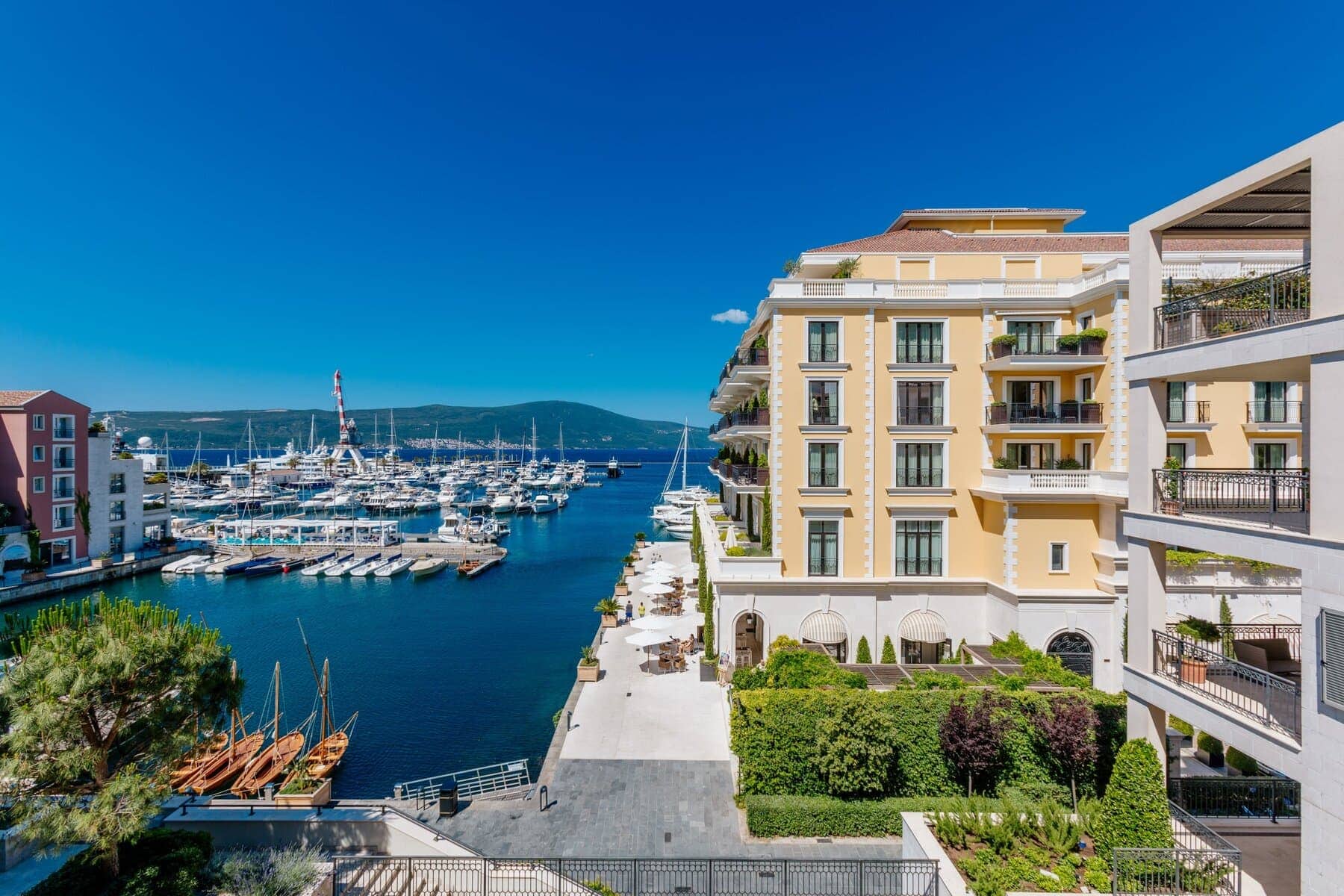
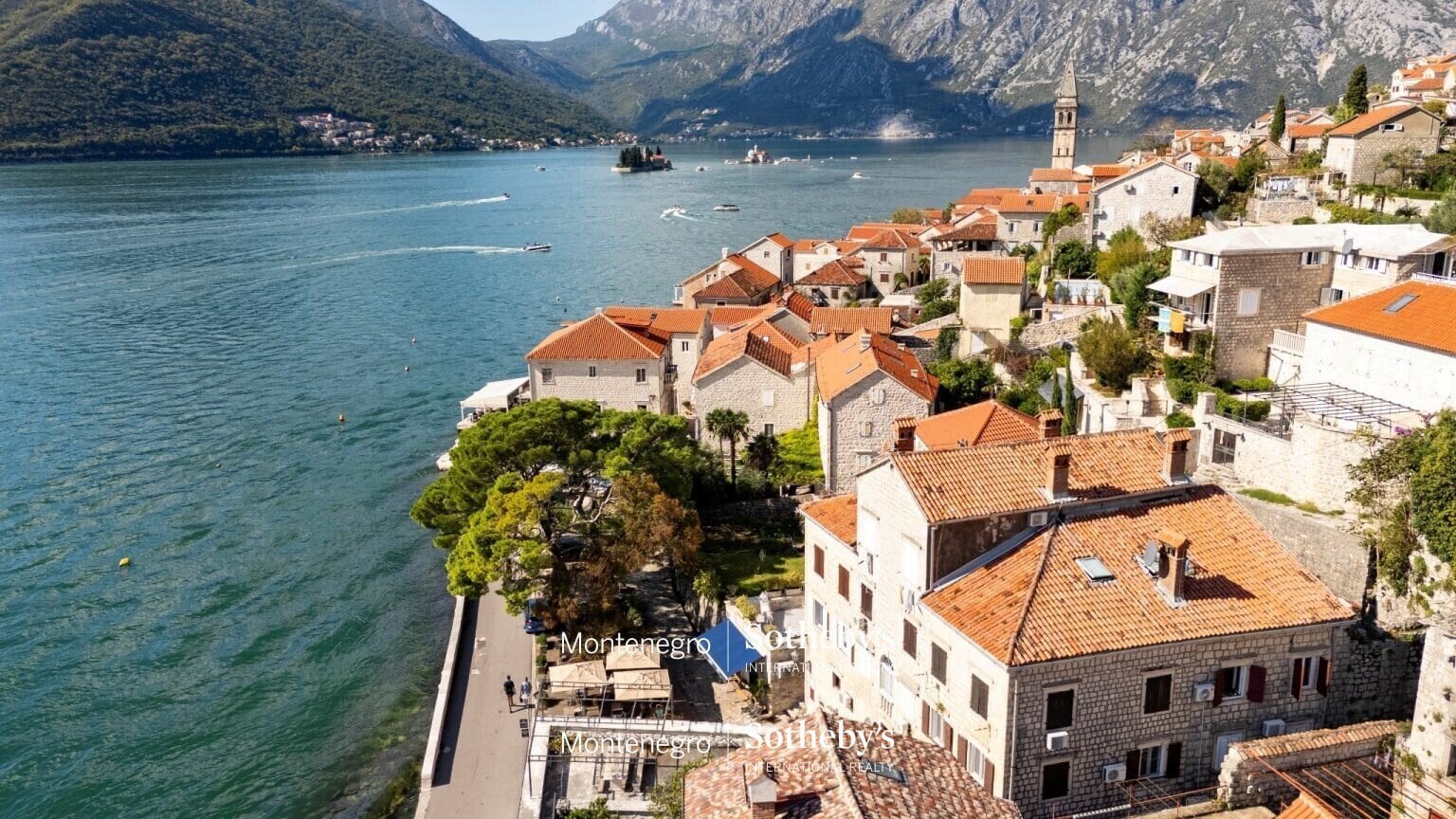
There’s an investment case too. Montenegro’s coastal market has matured quickly over the past decade. Undeveloped or serviced plots in prime locations have appreciated as demand for waterfront living has grown. Land in the right zone, with the right permit status, can be worth considerably more once a villa is designed, permitted, and partially built on it. You can see that value realized in villas already built along the Tivat and Perast waterfront, many of which began as raw plots a few years earlier.
Land Investment Montenegro Foreigners Should Understand First
Foreign buyers need to understand one thing above all: not all coastal land is equally investable. Location, zoning status, and infrastructure access all affect buildability and resale value.
A plot with construction permission, road access, and utility connections nearby is a fundamentally different asset from a raw agricultural parcel with sea views. Both can appear in the same brochure at a similar headline price. Only one lets you start building next year.
Montenegro Plot Prices Adriatic: Regional Benchmarks
Coastal land pricing in Montenegro varies sharply by municipality, proximity to the water, and zoning status. Rather than a single market, the coast behaves like several distinct micro-markets stacked along the Adriatic.
Tivat and Kotor Bay Land Values
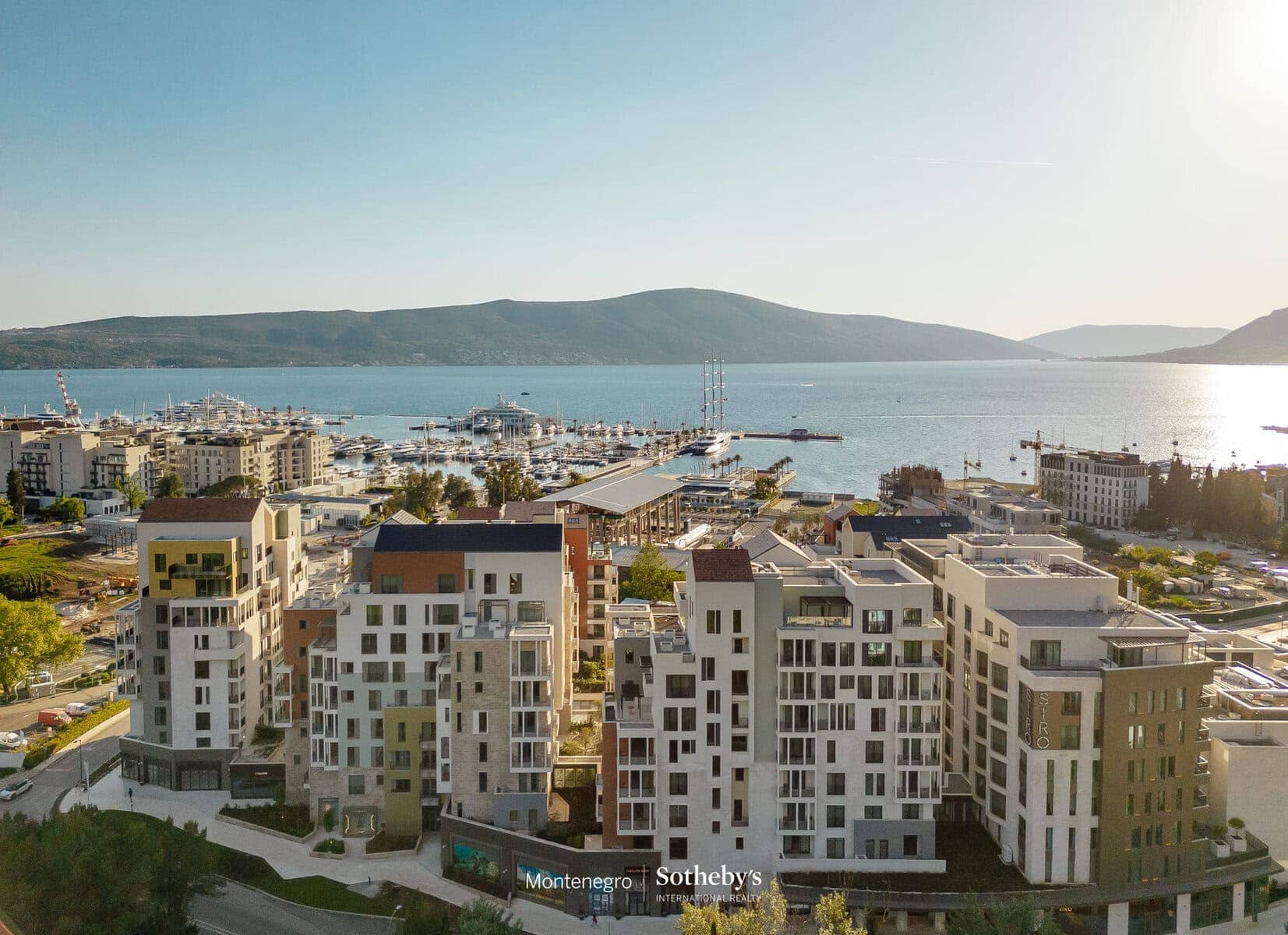
Tivat and the wider Bay of Kotor command a premium. Proximity to Porto Montenegro’s marina, sheltered bay views, and strong rental demand from yacht owners and superyacht crews all push land values here above the coastal average.
Plots with direct bay frontage or unobstructed water views are the scarcest and most sought-after category in this area. Buyers researching this region often also review current Tivat waterfront villa valuations to benchmark what a finished home on similar land might ultimately be worth.
Budva and Herceg Novi Comparisons
Budva’s land market is driven by beachfront demand and tourism density. Plots close to the Old Town or the popular beach strips carry a strong premium. That reflects both lifestyle appeal and short-term rental potential.
Herceg Novi, at the western entrance to the Bay of Kotor, tends to offer relatively better value. It has a quieter pace than Budva and a slightly lower international profile than Tivat, but it still delivers dramatic coastal and mountain scenery. For buyers prioritizing plot size or budget flexibility over immediate marina access, Herceg Novi is often the more comfortable entry point into coastal land for sale in Montenegro.
Land Zoning Montenegro Coastal: What the Classifications Mean for Development
Before falling in love with a view, check the zoning. Montenegro classifies land into distinct categories, and only some allow residential construction.
Zoning determines whether you can build at all, how large a footprint you’re allowed, and how many floors you can add. It’s the single most important filter in any coastal land search.
Building vs Agricultural vs Protected Land
Urbanized or construction land (građevinsko zemljište) is zoned for building and typically comes with a defined coefficient for floor area and height. This is the category most buyers targeting a custom villa should focus on.
Agricultural land costs less per square meter, but converting it to construction land is a separate, often lengthy administrative process. It isn’t guaranteed to succeed, so buyers shouldn’t assume conversion will happen on a set timeline.
Coastal protection zones exist to preserve shoreline and environmentally sensitive areas. Land inside these zones may face strict limits on construction, or prohibit it outright. Any plot marketed as “sea view” or “beachfront” deserves a careful check against the municipal zoning plan before you make an offer.
Freehold Land Montenegro Foreigners: Legal Framework and Ownership Rights
Montenegro has one of the more open property markets in the region for foreign buyers. That openness is part of why coastal land for sale here draws so much international interest.
Montenegro Land Purchase Process Step by Step
The process generally follows a consistent sequence:
- Identify the plot and verify zoning. Confirm the parcel’s classification with the local municipality’s urban planning department.
- Conduct a title search. Check the cadastre (land registry) for clean title, existing owners, and any registered encumbrances or disputes.
- Sign a preliminary agreement. This typically includes a deposit and outlines the terms while due diligence is finalized.
- Complete legal due diligence. A local lawyer verifies boundaries, easements, access rights, and any pending claims.
- Sign the notarized sale contract. Montenegrin law requires the final contract to be notarized to be valid.
- Register the transfer. The new title is recorded in the cadastre, formally transferring ownership.
- Pay the transfer tax. This is due after registration, based on the assessed property value.
A bilingual local lawyer and a real estate advisor familiar with coastal municipalities make this process considerably smoother, particularly for buyers managing the purchase remotely.
Land Ownership Rights Montenegro for Non-Residents
Foreign nationals can generally hold freehold title to construction land in Montenegro on the same basis as Montenegrin citizens. That’s a real advantage compared to many neighboring markets, where foreign buyers face far more restrictive structures.
The main exceptions involve agricultural land in certain zones and land near sensitive border or military areas, where restrictions or additional approvals apply. For most coastal construction plots along the Bay of Kotor, the Budva riviera, and Herceg Novi, freehold ownership by foreign buyers is standard practice. Ownership can also open the door to broader residency benefits tied to property ownership, a consideration many buyers weigh alongside the purchase itself.
Montenegro Land Due Diligence Checklist Before You Buy a Plot
A thorough due diligence process protects you from the two most common land-buying mistakes: unclear title and unbuildable zoning.
Title, Utilities, and Access Verification
Before committing, verify:
- Clean title in the cadastre, with no unresolved co-ownership claims or disputes.
- Zoning classification that matches your intended use, confirmed in writing by the municipality.
- Encumbrances, including mortgages, liens, or third-party rights of way.
- Utility access, meaning confirmed connections or connection points for electricity, water, and sewage.
- Road access, ideally a legally registered right of access rather than informal or disputed passage.
- Boundary accuracy, checked against an up-to-date surveyor’s plan rather than an old sketch.
Skipping any of these steps can turn an attractive plot into a years-long legal or infrastructure headache. A qualified local lawyer should confirm each point in writing before you sign a final contract.
Serviced Land Tivat Kotor vs Raw Land
Serviced land, meaning plots already connected to utilities and road infrastructure, commands a price premium over raw land. In exchange, it removes much of the uncertainty and delay around infrastructure buildout.
Around Tivat and Kotor, serviced plots are increasingly common near established residential developments and marina-adjacent zones. Raw land, by contrast, may cost less per square meter but can require significant time and negotiation with utility providers before a build can begin.
For buyers on a defined timeline, serviced land is usually the more predictable choice. For those willing to manage a longer runway in exchange for a lower entry price, raw land in a strong location can still make sense, particularly when purchased with the right zoning already confirmed.
From Plot to Villa: Construction Permits and Working with Sotheby’s
Once you own the land and have confirmed its zoning, the next milestone is turning approved drawings into a construction permit. This is where many self-directed buyers underestimate the timeline.
Montenegro Construction Permit Process Overview
The construction permit process in Montenegro generally involves preparing conceptual and technical design documentation, securing approvals from relevant utility and infrastructure authorities, and submitting the full application to the municipal or state permitting body.
Timelines vary depending on the project’s complexity, the completeness of the application, and how responsive local authorities are. Straightforward single-villa projects on already-zoned construction land tend to move faster than boutique multi-unit developments, which often require additional environmental or infrastructure review.
Buyers should budget realistic time for this stage rather than assuming construction can begin immediately after purchase. It’s also worth planning ahead for typical villa construction and renovation costs so the permit-to-completion budget is grounded from the outset. Many buyers also explore sustainable villa design approaches at this stage, since energy efficiency requirements are increasingly part of the permitting conversation.
This is precisely where a curated advisory relationship earns its value. Montenegro Sotheby’s International Realty connects land buyers with vetted architects, permit consultants, and builders who know the coastal municipalities and their specific requirements. That network, combined with a clear view of Bay of Kotor investment return data, helps buyers move from an empty plot to a finished villa with far less friction than going it alone.
Buyers should also factor in property tax obligations for foreign owners, which apply once construction is complete and the property is registered.
Whether you’re weighing a bay-view parcel in Tivat, a beachfront site near Budva, or a quieter plot in Herceg Novi, the fundamentals stay the same: confirm zoning, verify title, and plan realistically for the permit timeline. For a curated shortlist of vetted coastal plots and guidance from purchase through villa completion, work with a dedicated property advisor at Montenegro Sotheby’s International Realty. Buying land in Montenegro’s coastal regions rewards buyers who move carefully. The right advisor makes that process considerably more straightforward.