

For international buyers drawn to Montenegro’s Adriatic coastline, the appeal is straightforward: dramatic scenery, a growing luxury market, and a tax environment deliberately designed to welcome foreign capital. But before signing a reservation agreement, discerning buyers want the full picture. Understanding montenegro second home tax implications for foreign owners is the foundation of a sound acquisition strategy, not an afterthought. This guide maps every major cost layer, from the moment of purchase through annual holding, eventual sale, and estate planning, so you can proceed with clarity.
Why Montenegro Appeals to International Second Home Buyers
Montenegro operates a flat personal income tax rate that is among the lowest in Europe, with no wealth tax on assets held. The country levies no annual net-wealth charge on property, meaning your second home does not attract a recurring tax simply because its value rises. Combined with EU candidacy momentum continuing to build through 2026, Montenegro is actively positioning itself as a jurisdiction that courts foreign capital rather than penalizing it.
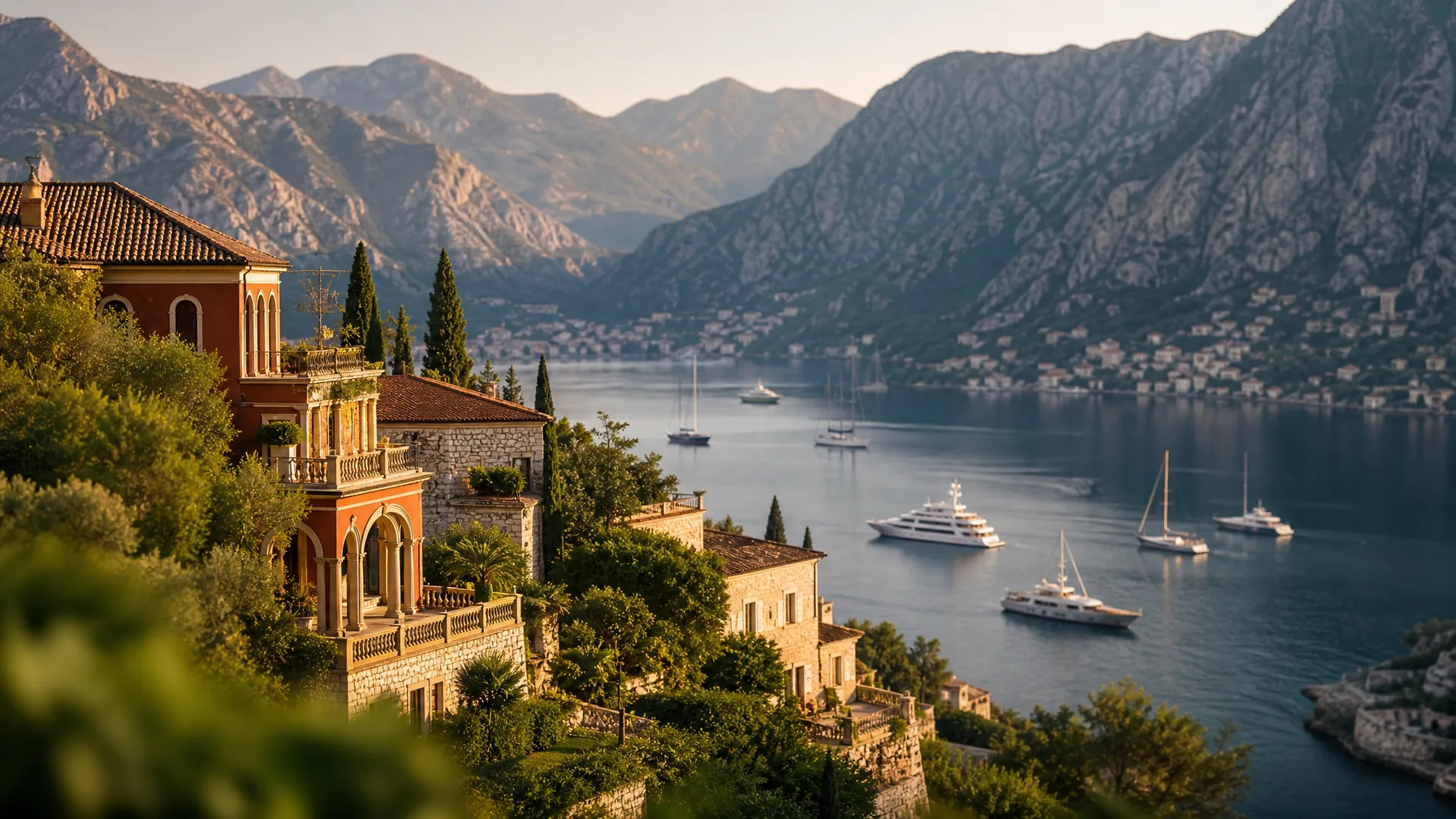
Montenegro’s luxury real estate market in 2026 reflects this trajectory. Demand from Western European, Middle Eastern, and Gulf buyers has intensified, particularly along the Bay of Kotor and in Budva Riviera resort developments. For buyers weighing multiple European markets, understanding the tax framework early means comparing like-for-like, and Montenegro’s headline numbers hold up well on that comparison.
One-Time Acquisition Costs: Transfer Tax and VAT for Non-Residents
Property Transfer Tax on Resale Purchases
When a foreign buyer purchases a resale property from a private seller, the applicable one-time cost is Montenegro’s real property transfer tax. The standard rate is approximately 3% of the officially assessed transaction value. Foreign non-residents are treated identically to Montenegrin residents at the point of purchase: no surcharge, no additional levy, no foreign-buyer stamp. The assessed value used by the tax authority may differ from the agreed sale price, so buyers should clarify the basis with their legal representative before exchange.
For context on how transfer tax translates into real euro amounts across different price brackets, see current property prices across the Bay of Kotor.
VAT on New-Build and Developer Sales
A new-build villa in a gated development sold by a VAT-registered developer carries VAT on the purchase price rather than transfer tax. That distinction directly affects total acquisition cost and requires buyers to confirm the developer’s tax status before signing. The practical implication is simple: buying from a developer means your one-time tax cost is VAT; buying resale means it is the transfer tax.
This is not a technicality. It can meaningfully shift the arithmetic on acquisition costs. The developer’s VAT registration status is a matter of public record, and your legal adviser should verify it before contracts are exchanged. The complete property purchase process for foreign buyers covers how this verification fits into the broader transaction timeline.
Annual Property Holding Costs for Foreign Owners in 2026
Real Property Tax: Rates and Assessment
Montenegro levies an annual real property tax, with rates set by individual municipalities and applied to the official cadastral (assessed) value of the property. Cadastral values are typically set well below current market values, which keeps annual bills modest relative to the property’s actual worth. Coastal municipalities, Budva, Kotor, and Tivat, apply higher coefficients than inland areas, reflecting the premium character of those locations. Even so, the absolute annual charge on a luxury coastal property remains competitive against comparable second-home markets in Italy, France, or Croatia.
Foreign non-residents pay the same rate as residents. There is no non-resident surcharge on the annual holding tax.
Utility, Communal, and Maintenance Fees
The municipal tax bill is only part of the annual holding cost picture. Owners of apartments in marina developments such as Porto Montenegro in Tivat typically pay communal and maintenance fees set by the development management company, on top of the municipal property tax. In premium gated communities, those fees can represent a larger annual outlay than the property tax itself.
These fees cover building maintenance reserves, security, landscaping, marina berth management where applicable, and shared infrastructure. Buyers evaluating buying waterfront property in Montenegro should factor development-specific fee schedules into their cost-of-ownership modelling from the outset. Utility standing charges, electricity, water connection fees, add a further modest layer for properties not in full-time use.
Capital Gains Tax on Montenegro Property Sales
Montenegro taxes capital gains from property sales at a flat rate applied to the net gain: the difference between the sale price and the original acquisition cost, adjusted for eligible capital improvements. That flat rate is the same one that governs personal income tax, keeping the headline burden on a profitable sale notably competitive versus Western European markets where progressive rates can reach 30–40% on significant gains.
Foreign owners are subject to exactly the same rate as residents. There is no distinction based on nationality or residency status at the point of sale.
One practical difference from several EU markets: Montenegro does not currently offer a holding-period exemption that reduces or eliminates the gain after a defined number of years of ownership. Documentation discipline therefore matters more than strategic timing. Foreign buyers who retain full records of acquisition costs and capital improvements are best positioned to minimize their taxable gain on eventual sale. Retain every purchase invoice, notarial fee receipt, renovation contract, and improvement bill from the day of acquisition onward.
For buyers considering the income-generation potential of their property before any eventual sale, maximizing rental income from your Montenegro property explores the rental income tax dimension in parallel.
Double Taxation Treaties and Cross-Border Relief
Montenegro has signed double taxation treaties with a substantial number of countries, including major second-home buyer source markets such as Germany, Russia, and the United Kingdom. For buyers from treaty countries, the risk of paying tax twice on the same gain or income is significantly reduced.
The general mechanism for immovable property follows a standard international principle: property situated in Montenegro is taxed in Montenegro. The buyer’s home country then typically grants either a tax credit (offsetting the Montenegrin tax paid against domestic liability) or a full exemption on the same income or gain. In practice, the Montenegrin tax is your primary, and often sole, meaningful liability on a property sale gain or rental income stream.
Treaty provisions differ materially from one bilateral agreement to another. The applicable relief method and the treatment of specific income categories both vary. Buyers should verify their country’s specific treaty with Montenegro and obtain advice from a tax professional in both jurisdictions before completing a purchase or filing in a sale year. The double taxation treaty framework is a genuine protective mechanism, but only if correctly applied.
Inheritance Tax and Estate Planning for Foreign Property Owners
Montenegro applies inheritance tax to real property, but the rules carry significant relief for close family. Spouses, children, and parents are generally exempt or subject to a minimal rate on inherited property. More distant relatives and unrelated beneficiaries face progressively higher rates.
For foreign property owners, the governing law for immovable assets located in Montenegro is Montenegrin law, regardless of the deceased’s domicile. This is a standard conflict-of-laws principle, but it has real implications for estate planning: a will drawn up exclusively under your home country’s law may not operate as intended for your Montenegrin property without parallel Montenegrin legal structure.
The choice of ownership structure, individual, joint ownership with a spouse or partner, or a corporate vehicle, affects both inheritance exposure and the administrative process for heirs. Early engagement with local legal counsel to align ownership structure with your estate intentions is strongly advisable, particularly for higher-value assets. Understanding life as an expat or second-home owner in Montenegro can also help buyers think through the longer-term residency and life-planning context alongside the legal structure conversation.
Second Residence Tax Benefits and Strategic Considerations
Taken together, Montenegro’s tax framework offers a genuinely attractive package for the international second-home buyer. No wealth tax, a modest and predictable annual holding cost based on cadastral values, a flat and competitive capital gains rate, and access to double taxation relief for buyers from treaty countries. These are structural advantages, not promotional claims.
Montenegro’s EU accession trajectory adds a forward-looking dimension. The country has been a formal EU candidate since 2010 and has opened the majority of negotiating chapters. As regulatory convergence with EU standards continues through 2026 and into 2027, some aspects of the tax and property law environment may evolve, particularly around VAT harmonization and anti-money-laundering compliance requirements for real estate transactions. Buyers purchasing now are doing so in a stable and well-documented framework, but staying informed about legislative developments is prudent for any long-term asset.
Establishing temporary or permanent residence in Montenegro is a separate legal step from property ownership, but it can unlock additional practical benefits: simplified banking relationships, longer-stay rights, and potentially more straightforward access to local professional services. If residency is part of your long-term plan, discuss it in parallel with the property transaction rather than as an afterthought.
At Montenegro Sotheby’s International Realty, we guide international buyers through the full cost-of-ownership picture, from initial transfer taxes and VAT exposure through to annual holding costs and exit strategy, so there are no surprises after contracts are signed. Our advisory team works alongside trusted local legal and tax professionals to ensure every client enters a transaction with complete clarity on the numbers.
If you are exploring a second home in Montenegro and want a personalized cost-of-ownership consultation, contact our team for an obligation-free conversation. We will map the tax implications specific to your nationality, your target property type, and your ownership goals, before you commit to anything.