

Kupovina nekretnine na prvoj liniji mora u Crnoj Gori
Crna Gora je nenametljivo postala jedno od najprivlačnijih evropskih tržišta nekretnina na obali — mala jadranska zemlja čija obala nudi mnogo više nego što bi njena veličina nagovijestila. Globalnim kupcima koji traže dramatičnu prirodu, istorijski karakter i stvarnu vrijednost u odnosu na Azurnu obalu ili dalmatinsko primorje, Bokokotorski zaliv i otvoreno crnogorsko primorje nude nešto sve rjeđe: ograničenu ponudu, rastuću međunarodnu potražnju i postupak kupovine koji je jednostavan i potpuno otvoren za strane državljane. Ovaj vodič obuhvata ono najvažnije — geografiju, cijene, postupak i investicionu logiku — iz ugla profesionalaca koji na ovom tržištu rade svakodnevno.
Zbog čega crnogorska obala 2026. privlači globalne kupce
Jadranska prednost
Kandidatura Crne Gore za članstvo u EU posljednjih godina prošla je kroz značajne faze, a put ka članstvu i dalje utiče na povjerenje kupaca. Direktni letovi povezuju Podgoricu i Tivat sa Londonom, Frankfurtom, Parizom, Bečom i sve većim brojem bliskoistočnih čvorišta, pa je Bokokotorski zaliv na dva do tri sata od velikih evropskih prijestonica. Ova dostupnost, uz privredu zasnovanu na euru, relativno niske troškove života i vladu koja aktivno podstiče strano vlasništvo nad nekretninama, daje Crnoj Gori praktičnu prednost kakvu poželjne alternative, poput Grčke ili Hrvatske, ne mogu uvijek ponuditi po istim cijenama.
Sama obala je presudan činilac. Manje od 300 kilometara jadranske obale, stisnute između planina i mora, znači da je zemljište na obali pogodno za gradnju zaista ograničeno. Ova rijetkost je strukturna, a ne ciklična.
Bokokotorski zaliv ili otvoreno primorje
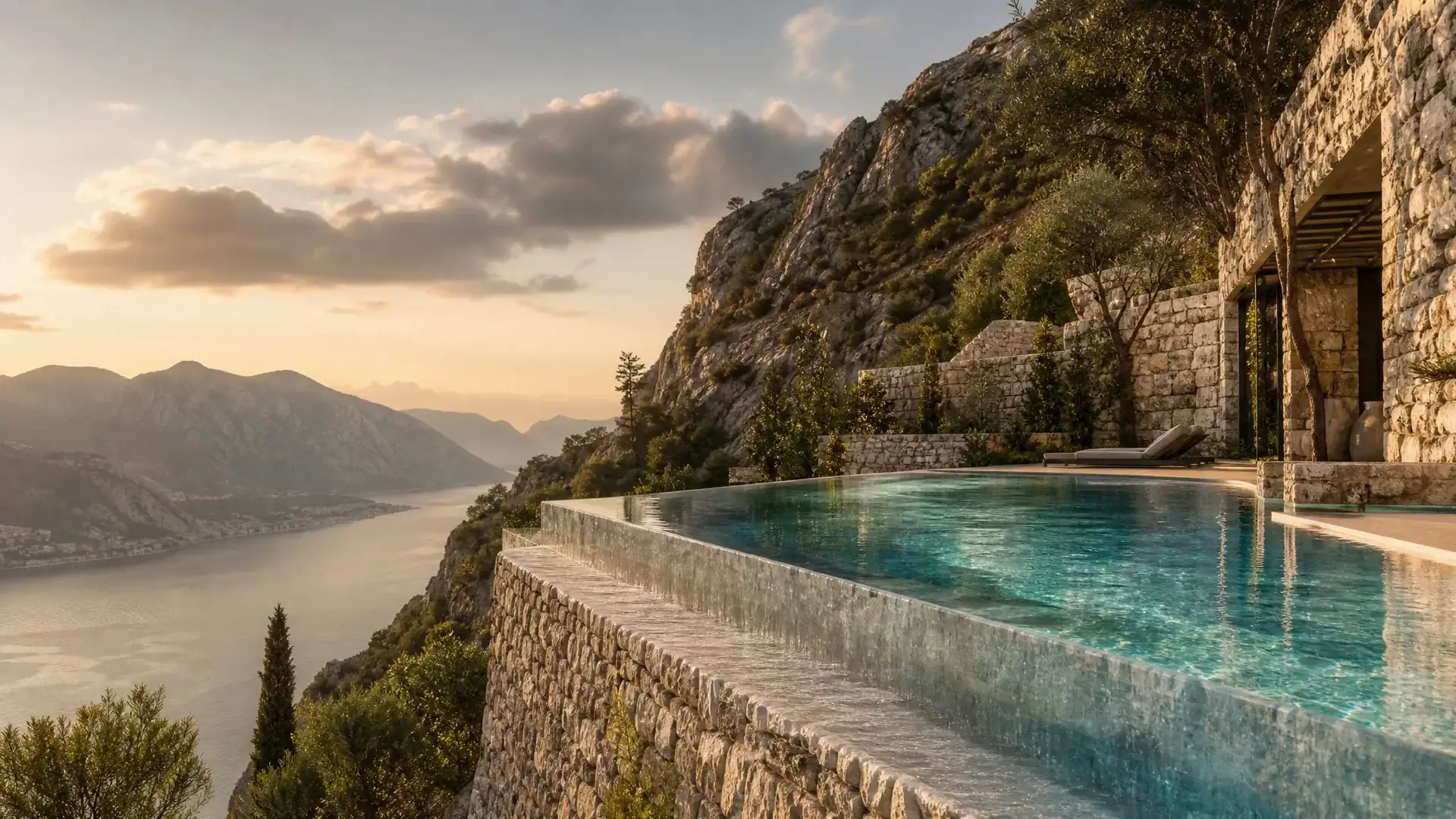
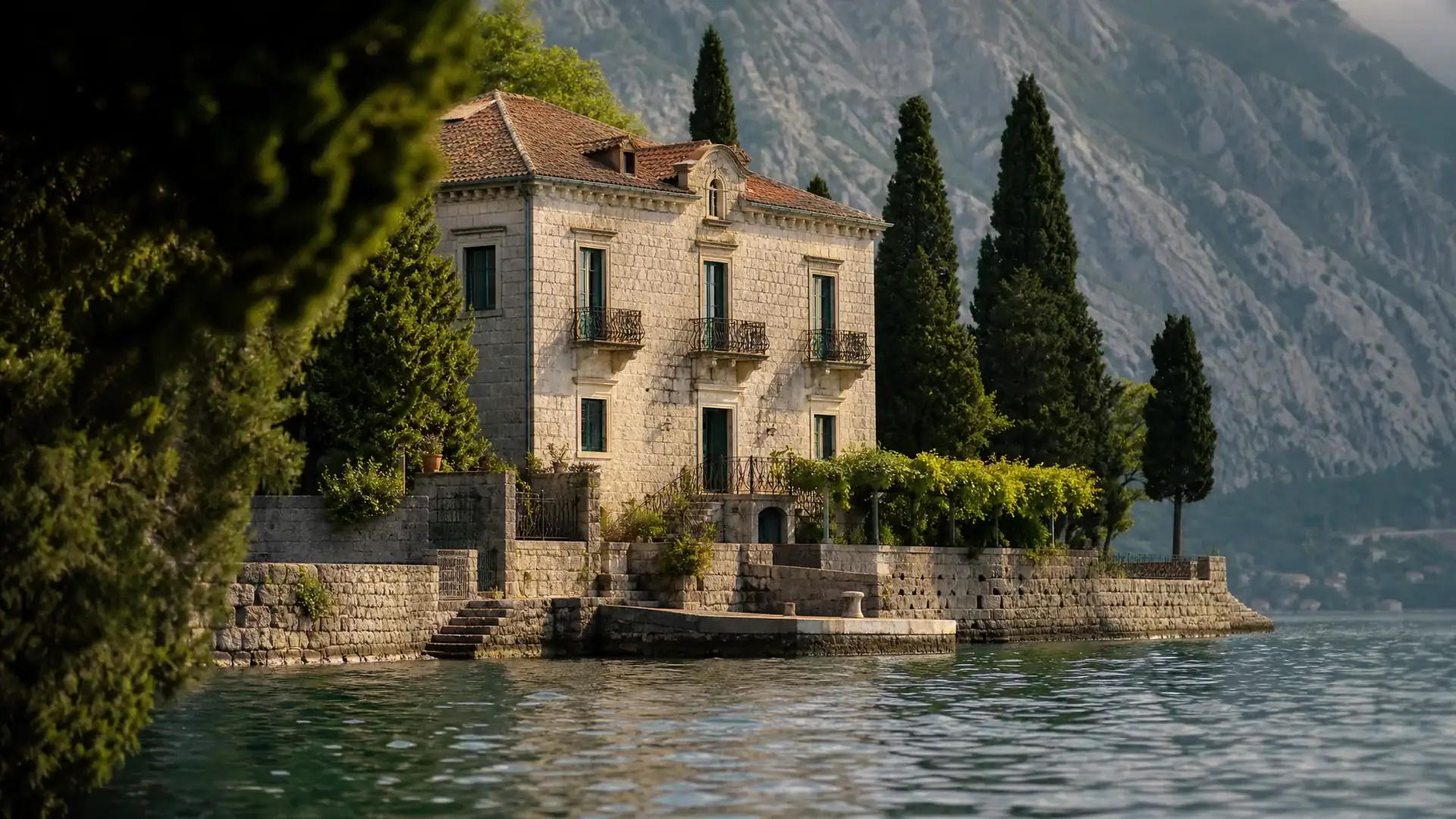
Crnogorsko primorje dijeli se na dva različita doživljaja. Bokokotorski zaliv — potopljeni rječni kanjon koji se često opisuje kao najjužniji fjord Evrope — nudi zaštićeno, tamnoplavo more okruženo krečnjačkim planinama, kamenim selima iz mletačkog doba i atmosferom tihe, gotovo skrivene ekskluzivnosti. Ovo je destinacija za kupce kojima su prioritet privatnost, baština i pejzaž.
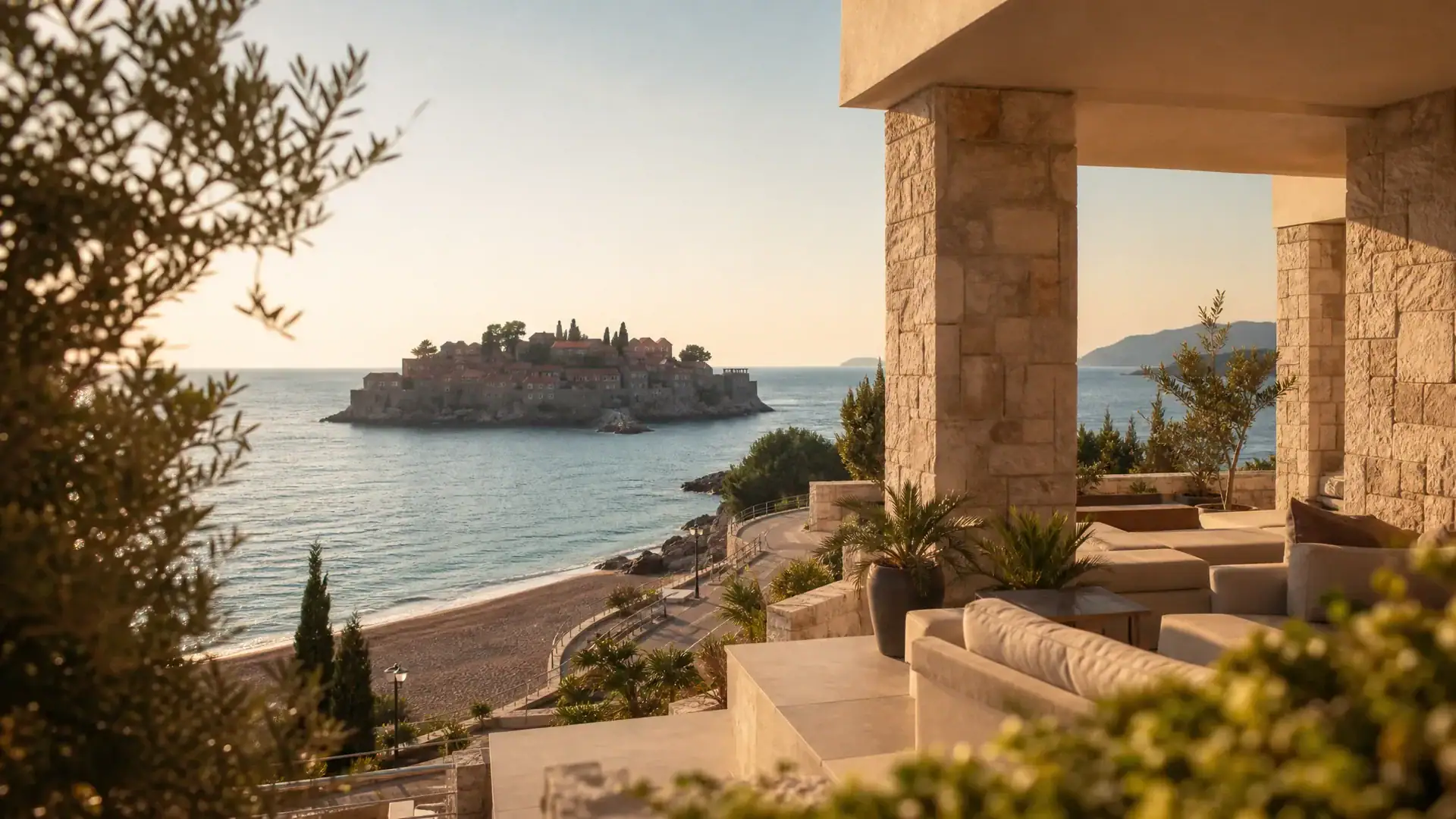
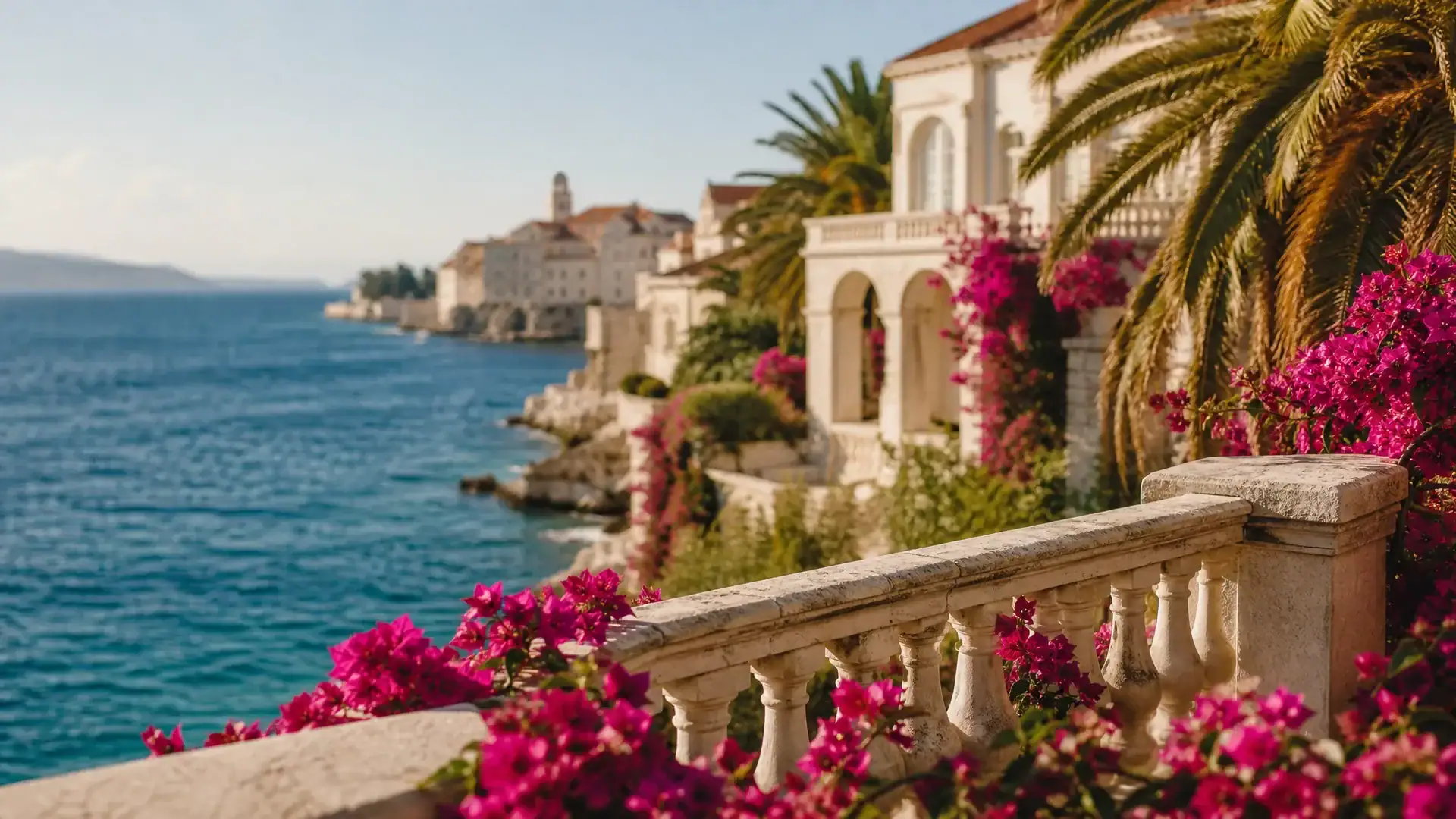
Otvorena jadranska obala, sa Budvanskom rivijerom kao središtem, nudi prepoznatljiviji mediteranski obrazac: pješčane i šljunkovite plaže, živ noćni život, dugo razvijanu turističku infrastrukturu i veliki sezonski promet. Budva i okolina privlače kupce koji uz ličnu upotrebu žele i prinos od zakupa. Oba tržišta su stabilna; izbor se svodi na lični senzibilitet.
Geografija obale Bokokotorskog zaliva
Unutrašnji dio zaliva: Kotor, Perast i Dobrota
Unutrašnji dio zaliva proteže se od srednjovjekovnog grada Kotora opasanog zidinama, na sjever i zapad preko Dobrote, Mula i Prčanja, a vrhunac istorijske raskoši doseže u Perastu. Riječ je o kamenim naseljima čiji se suštinski karakter vjekovima gotovo nije mijenjao. Nekretnine su ovdje uglavnom adaptirane kamene kuće i palate — mnoge sa privatnim terasama na obali, kamenim pristanima i direktnim izlazom na more — a ne namjenski građene stambene zgrade.
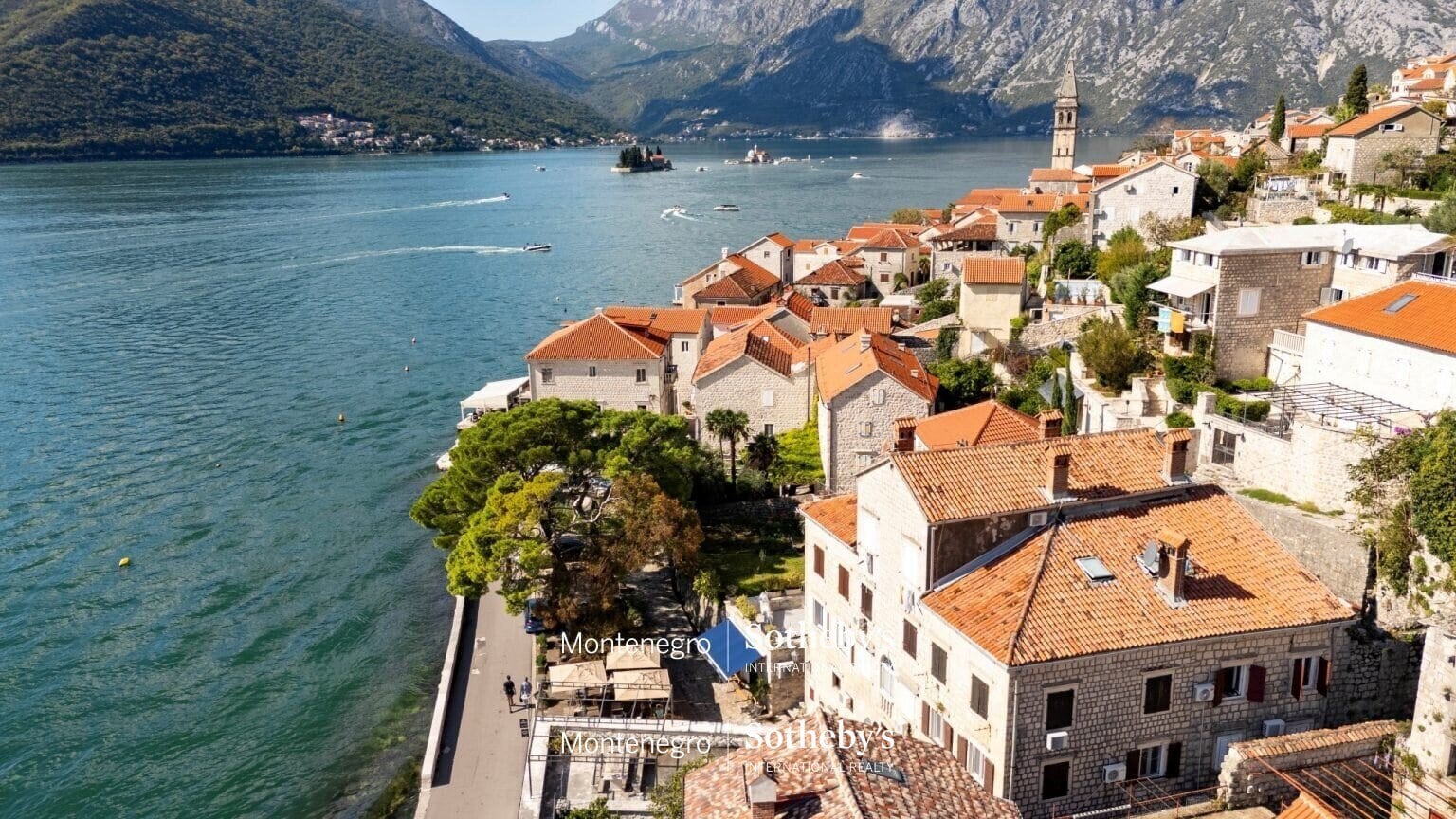
Perast, barokno mjesto pod zaštitom UNESCO-a, smješten je u najdubljem zavoju zaliva, sa pogledom na dva ostrva, Gospu od Škrpjela i Sveti Đorđe. Kamene palate ovdje rijetko mijenjaju vlasnika. Kada se to desi, postižu cijene koje odražavaju i njihov arhitektonski kvalitet i apsolutnu rijetkost — u zaštićenoj istorijskoj zoni nema novih placeva na obali za gradnju. Za kupce koji cijene nezamjenjivo porijeklo, unutrašnji dio zaliva nudi nešto što nijedan investitor ne može ponoviti.
Dobrota, odmah sjeverno od Starog grada Kotora, pristupačniji je ulaz u život u unutrašnjem dijelu zaliva. Bliže je kotorskim uslugama, sa spojem istorijskih kuća i novijih vila građenih sa mjerom, i naročito privlači kupce koji žele atmosferu bez izuzetno visoke premije za rijetkost kakvu ima Perast.
Spoljni dio zaliva: Tivat, Luštica i Porto Montenegro
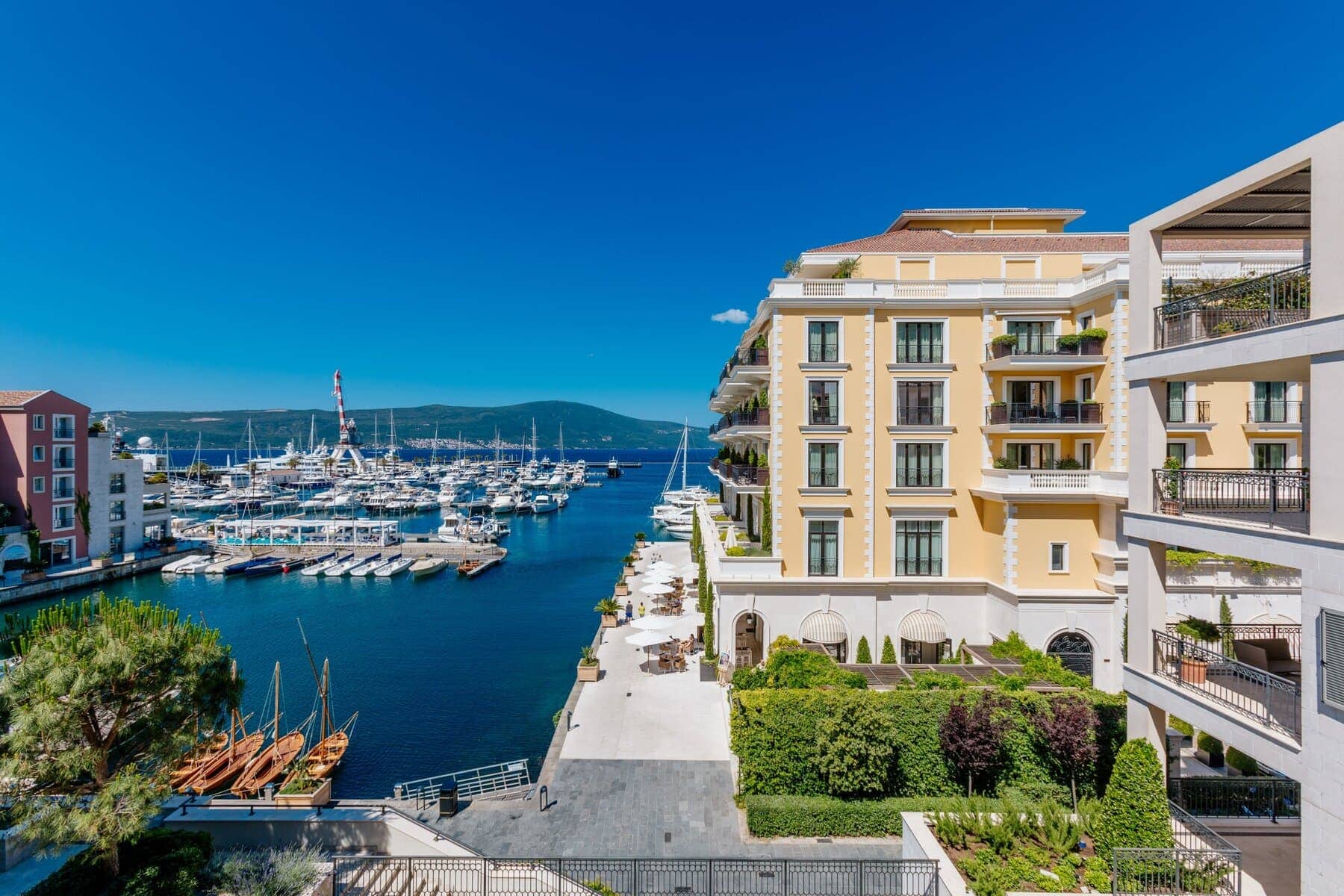
Spoljni dio zaliva, oko Tivta i poluostrva Luštica, ima drugačiji karakter, oblikovan dvama prepoznatljivim projektima. Porto Montenegro, marina za superjahte i luksuzno stambeno naselje nastalo na mjestu nekadašnjeg vojnog brodogradilišta u Tivtu, učinio je spoljni dio zaliva jednom od najprepoznatljivijih luksuznih adresa na Jadranu. Kapacitet vezova, hotel sa pet zvjezdica, brendirani stanovi i međunarodna zajednica vlasnika privlače kupce kojima je, uz život na obali, prioritet infrastruktura za način života.
Luštica Bay, planski rizort koji je Orascom razvio na južnom poluostrvu spoljnog dijela zaliva, dodao je brendirane rezidencije, naselje uz marinu i šampionski golf teren, ubrzavajući interesovanje kupaca iz EU, zalivskih zemalja i šire. Porto Montenegro i Luštica Bay zajedno su stvorili pojas sadržaja međunarodnog nivoa, zahvaljujući kojem je spoljni dio zaliva vjerodostojan konkurent etabliranim mediteranskim rizort destinacijama.
Za kupce koji odmjeravaju ove dvije zone: unutrašnji dio zaliva nudi istorijsku dušu i apsolutnu ekskluzivnost; spoljni dio nudi savremenu infrastrukturu i likvidnije tržište preprodaje, podstaknuto zamahom razvoja koji je u toku.
Šta očekivati od cijena nekretnina na obali u Crnoj Gori
Nekretnine na obali u Crnoj Gori obuhvataju širi raspon nego što većina međunarodnih portala sugeriše. Primorski stanovi početnog nivoa — naročito na području Budve ili u novijim projektima u spoljnom dijelu zaliva — odražavaju položaj Crne Gore kao tržišta koje još sazrijeva u odnosu na Hrvatsku ili Grčku. Istorijske palate u unutrašnjem dijelu zaliva, u Perastu ili Dobroti, i premium vile na obali sa privatnim pristanima dostižu iznose od više miliona eura.
Više činilaca određuje premiju u odnosu na uporedivu nekretninu u unutrašnjosti ili na padini. Direktan izlaz na obalu — privatna terasa, ponton ili plaža na granici nekretnine — donosi najveće povećanje cijene. Sljedeći nivo je nesmetan pogled na zaliv iz prvog reda. Blizina marine Porto Montenegro donosi premiju likvidnosti za kupce koji imaju plovilo. U Perastu i istorijskom jezgru unutrašnjeg dijela zaliva, arhitektonska autentičnost i status UNESCO zone dodaju još jedan sloj vrijednosti zasnovane na rijetkosti.
Portfolio agencije Montenegro Sotheby’s International Realty obuhvata sve od primorskih stanova početnog nivoa do imanja na obali vrijednih više miliona eura, pa kupci u svakom segmentu luksuznog tržišta imaju pristup pažljivo probranim, stručno provjerenim nekretninama u Bokokotorskom zalivu i na otvorenom jadranskom primorju. Cijena po kvadratnom metru znatno varira zavisno od lokacije i vrste položaja na obali, a razumijevanje ovih nijansi zahtijeva lokalno znanje koje opšti portali rijetko pružaju.
Postupak kupovine nekretnine na obali u Crnoj Gori: korak po korak
Pravni okvir za strane kupce
Strani državljani mogu imati nekretnine u Crnoj Gori u punom vlasništvu, pod istim uslovima kao crnogorski državljani. Ne postoje ograničenja za strano vlasništvo nad stambenim nekretninama, niti je potreban lokalni partner ili posebna struktura vlasništva. Ovo je važno međunarodnim kupcima naviklim na ograničenja koja važe na pojedinim drugim jadranskim i jugoistočnoevropskim tržištima.
Postupak kupovine teče jasnim redosljedom. Kada se nekretnina pronađe i načelno dogovori, depozit za rezervaciju je obezbjeđuje dok traje dubinska provjera. Glavna transakcija se formalizuje kupoprodajnim ugovorom ovjerenim kod notara — ovjera kod notara je po crnogorskom zakonu obavezna i daje ugovoru pravnu snagu. Kupac se zatim upisuje kao vlasnik u katastar (Katastarska uprava), čime se završava prenos vlasništva.
Troškovi pored kupoprodajne cijene obično obuhvataju porez na promet nepokretnosti od 3% vrijednosti transakcije, notarske naknade i troškove pravnog zastupanja. Oni su standardni i predvidivi; planirajte ih povrh dogovorene kupoprodajne cijene.
Dubinska provjera i provjera vlasništva
Jasno vlasništvo najvažniji je korak dubinske provjere na crnogorskom primorskom tržištu. Naročito u istorijskim naseljima zaliva postoje nekretnine sa složenom istorijom nasljeđivanja, pa nije neuobičajeno da starije kamene kuće imaju neriješene zahtjeve suvlasnika ili nepotpune katastarske podatke. Temeljna provjera vlasništva u katastru — koju sprovodi kvalifikovani crnogorski advokat prije plaćanja bilo kakvog depozita — neizostavna je.
Planski status je druga ključna provjera, naročito kod nekretnina koje su dograđivane ili renovirane. Potvrda da svi radovi imaju odgovarajuće dozvole štiti kupca od preuzimanja obaveza zbog neusklađenosti sa propisima. Saradnja sa iskusnim lokalnim savjetodavnim timom znatno skraćuje trajanje ove faze i smanjuje njen rizik.
Investiciona logika: primorska nekretnina kao dugoročna imovina
Investiciona logika za crnogorske nekretnine na obali počiva na nekoliko činilaca koji se podudaraju. Ponuda je najstrukturniji od njih: obala Bokokotorskog zaliva pogodna za gradnju praktično je ograničena geografijom i propisima o zaštiti baštine. Nova ponuda u unutrašnjem dijelu zaliva je zanemarljiva; čak i u spoljnom dijelu, najpoželjniju obalu zauzimaju veliki rizort projekti, umjesto da se nudi kao pojedinačni placevi. Kupac koji danas stekne dobro pozicioniranu nekretninu na obali stiče nešto što se ne može ponoviti u većem obimu.
Potražnja se kreće u jednom smjeru. Broj turističkih dolazaka u Crnu Goru stalno raste tokom posljednje decenije, a put ka članstvu u EU privlači širi krug evropskih kupaca koji su se ranije usredsređivali na jadranska tržišta država članica EU. Kupci sa Bliskog istoka — naročito iz zalivskih zemalja — postali su vidljivi u premium segmentu, privučeni direktnim vezama, toplom klimom i tržištem zasnovanim na euru, bez kontrole kapitala.
Kada je riječ o zakupu, topla sezona u Crnoj Gori pouzdano traje od maja do oktobra, pa vlasnici nekretnina na obali imaju period za izdavanje do šest mjeseci godišnje. U najposjećenijim mjestima zaliva — Perastu, Kotoru, Dobroti — kratkoročna potražnja zahtjevnih putnika koji umjesto hotela žele butik, stambeno iskustvo snažna je i strukturno nedovoljno zadovoljena. Vlasnici koji odluče da izdaju nekretninu u periodima kada je ne koriste u dobroj su poziciji da ostvare značajan prihod od zakupa koji pokriva troškove držanja.
Kako vas Montenegro Sotheby’s International Realty vodi kroz kupovinu
Razlika između korišćenja međunarodnog portala i saradnje sa lokalno ukorijenjenim Sotheby’s partnerom nije zanemarljiva. Međunarodni portali prikupljaju oglase bez konteksta; ne mogu vam reći koja nekretnina u unutrašnjem dijelu zaliva ima sporno vlasništvo, koji projekat u spoljnom dijelu zaliva ima najvjerodostojnije tržište preprodaje, niti koje mjesto nudi pravu ravnotežu dostupnosti i osame za vaše konkretne zahtjeve.
Montenegro Sotheby’s International Realty donosi obje dimenzije koje su važne: infrastrukturu globalnog brenda — mrežu, standarde usklađenosti, profesionalnu prezentaciju — i dubinu poznavanja terena koju pruža samo svakodnevni rad na konkretnom tržištu. Tim pažljivo bira portfolio provjerenih nekretnina, organizuje privatna razgledanja sa diskrecijom kakvu zahtijevaju transakcije velike vrijednosti i povezuje kupce sa kvalifikovanim lokalnim pravnim i notarskim stručnjacima. Podrška se nastavlja i nakon zaključenja kupovine, uključujući preporuke za upravljanje nekretninom i pozicioniranje na tržištu zakupa, gdje je potrebno.
Za kupce koji razmatraju kupovinu na bilo kojem nivou tržišta — od prvog primorskog stana do istorijske palate u unutrašnjem dijelu zaliva — pravi početak je razgovor o onome što tražite, a ne pregledanje zbirnih oglasa. Bokokotorski zaliv nagrađuje one koji razumiju njegovu geografiju i nijanse. Naš tim je tu da vam pruži upravo takvo vođenje.
Da biste dogovorili konsultacije o nekretninama na obali ili privatno razgledanje u Bokokotorskom zalivu i na crnogorskom jadranskom primorju, obratite se direktno agenciji Montenegro Sotheby’s International Realty. Najizuzetnije nekretnine mijenjaju vlasnike tiho; rani pristup počinje pravim upoznavanjem.
Share on: