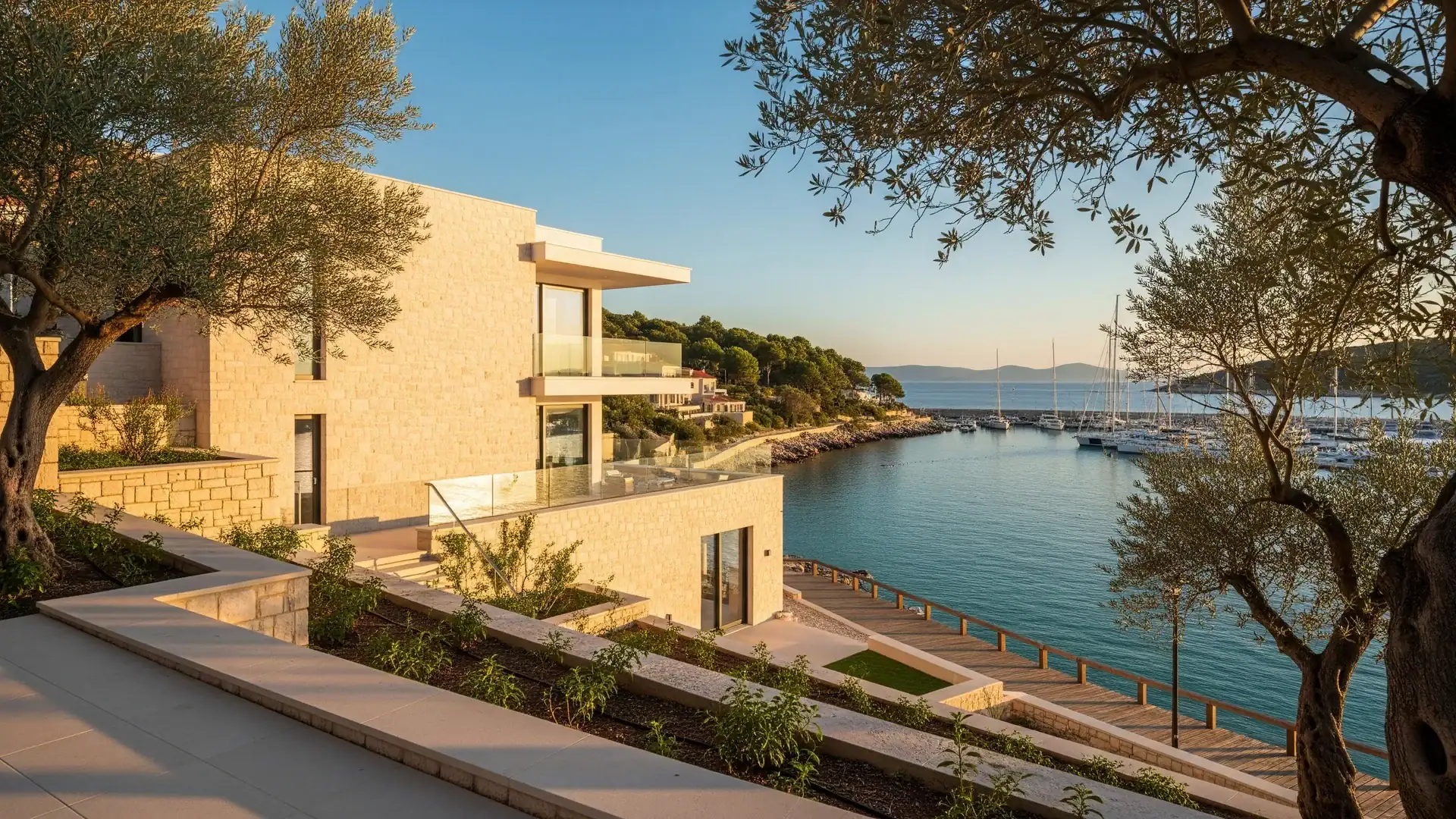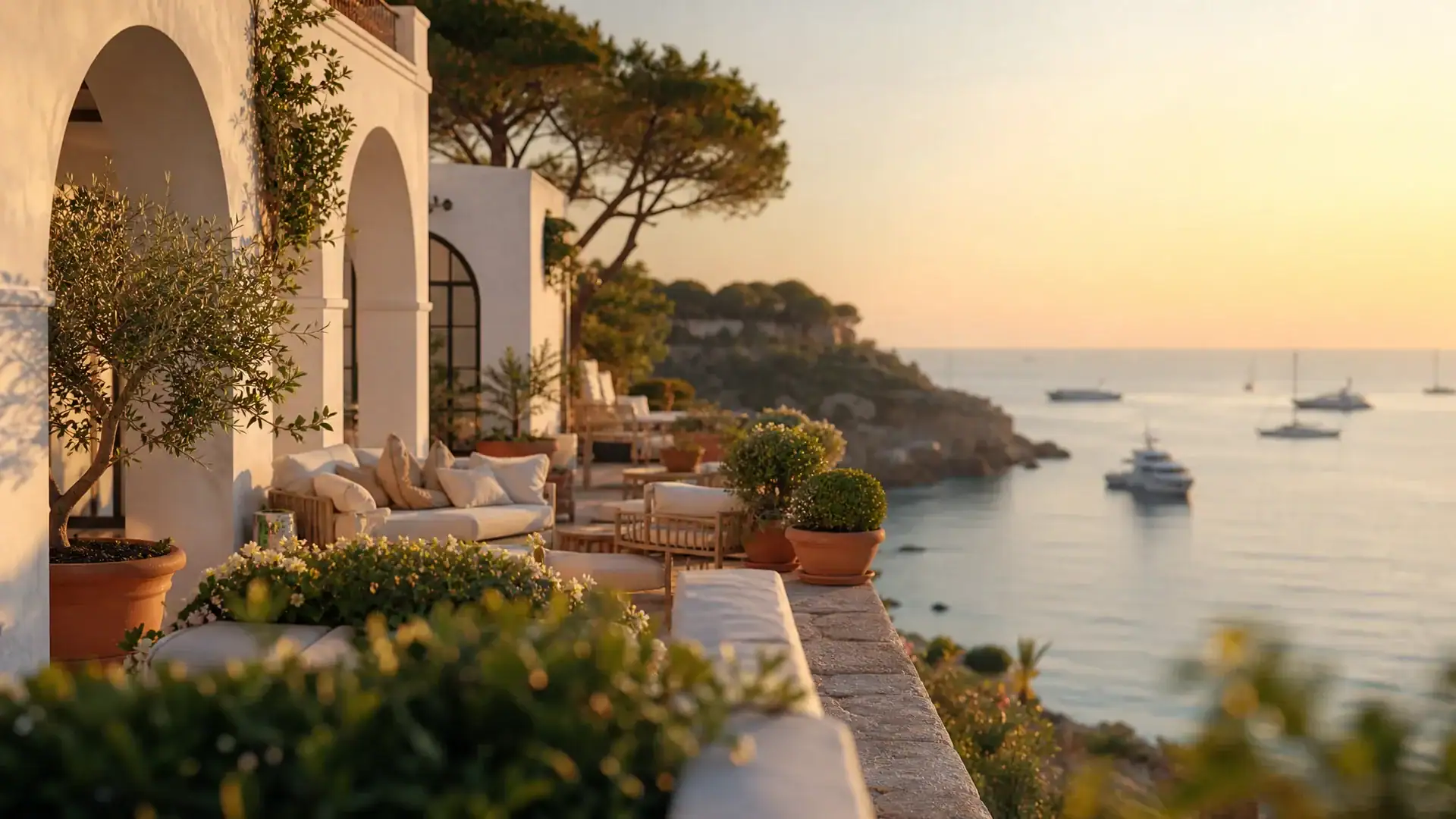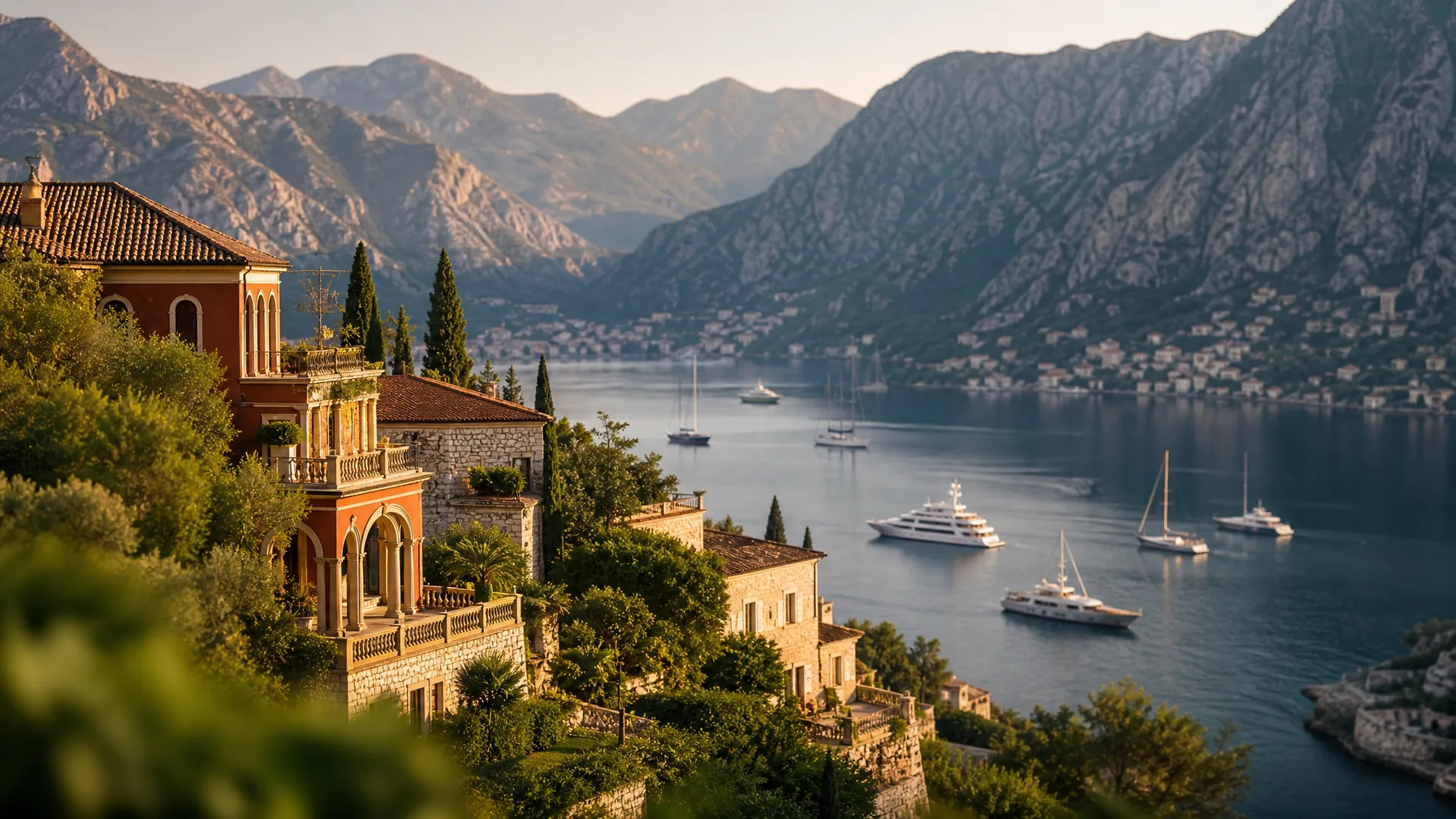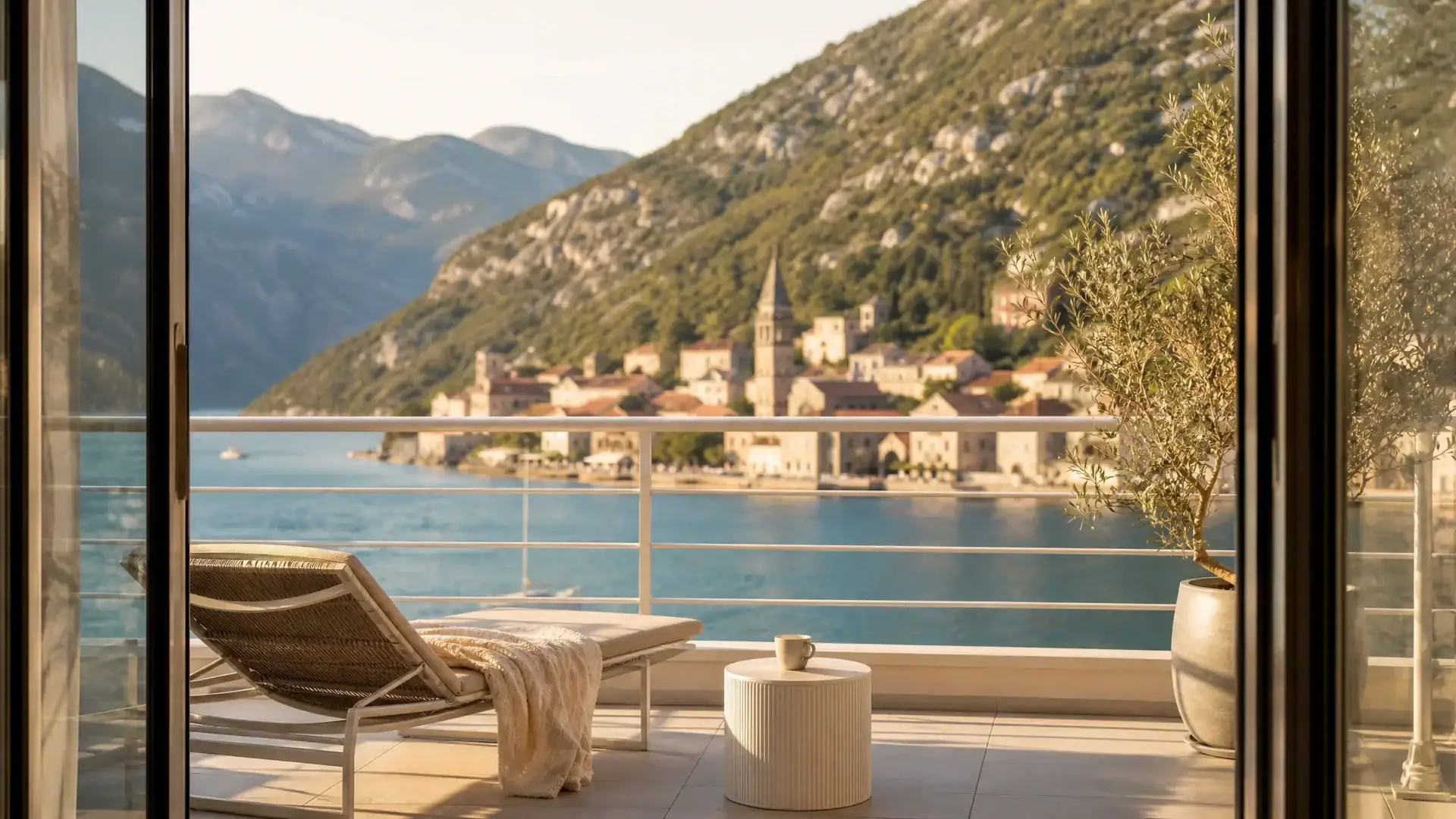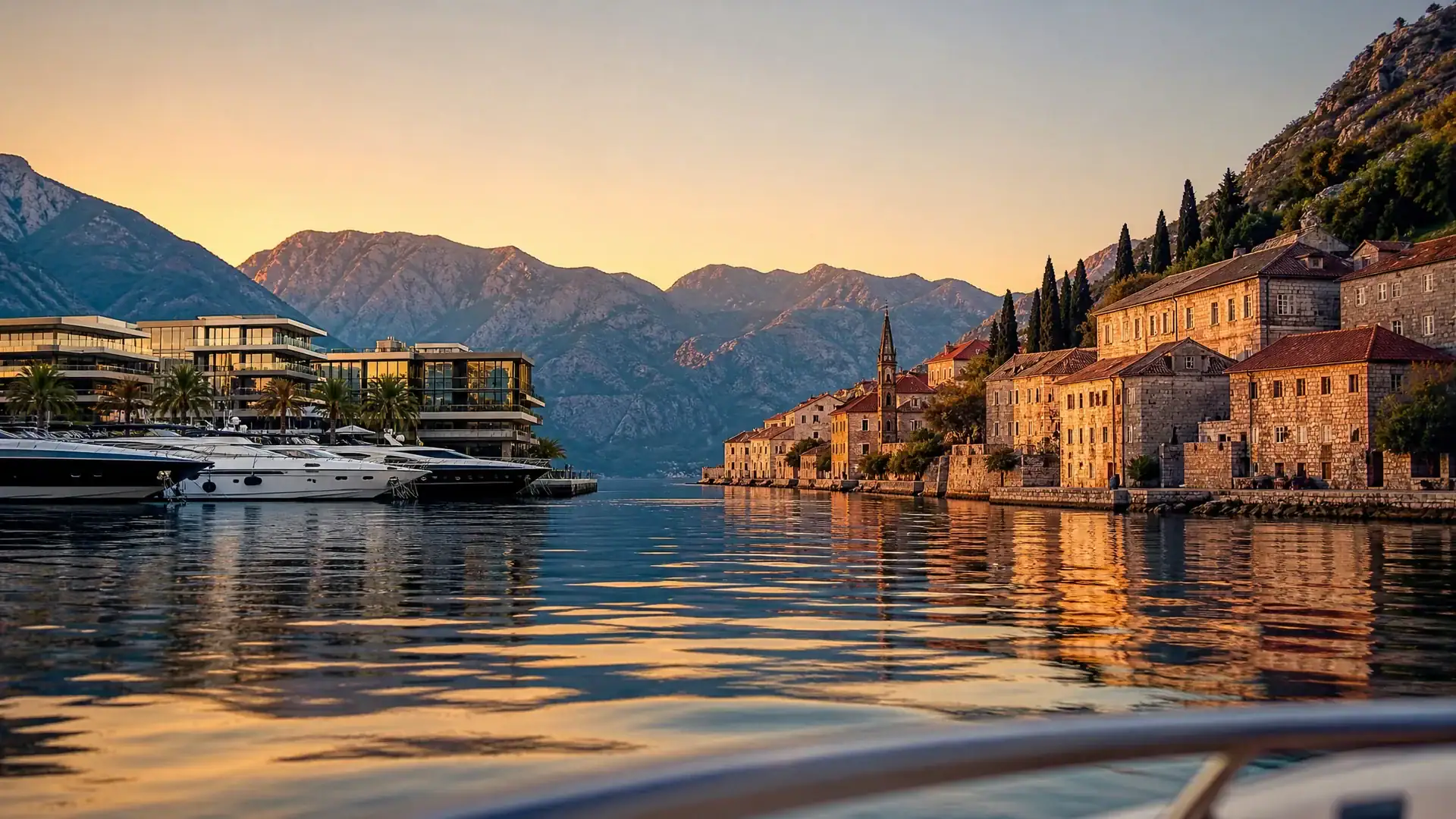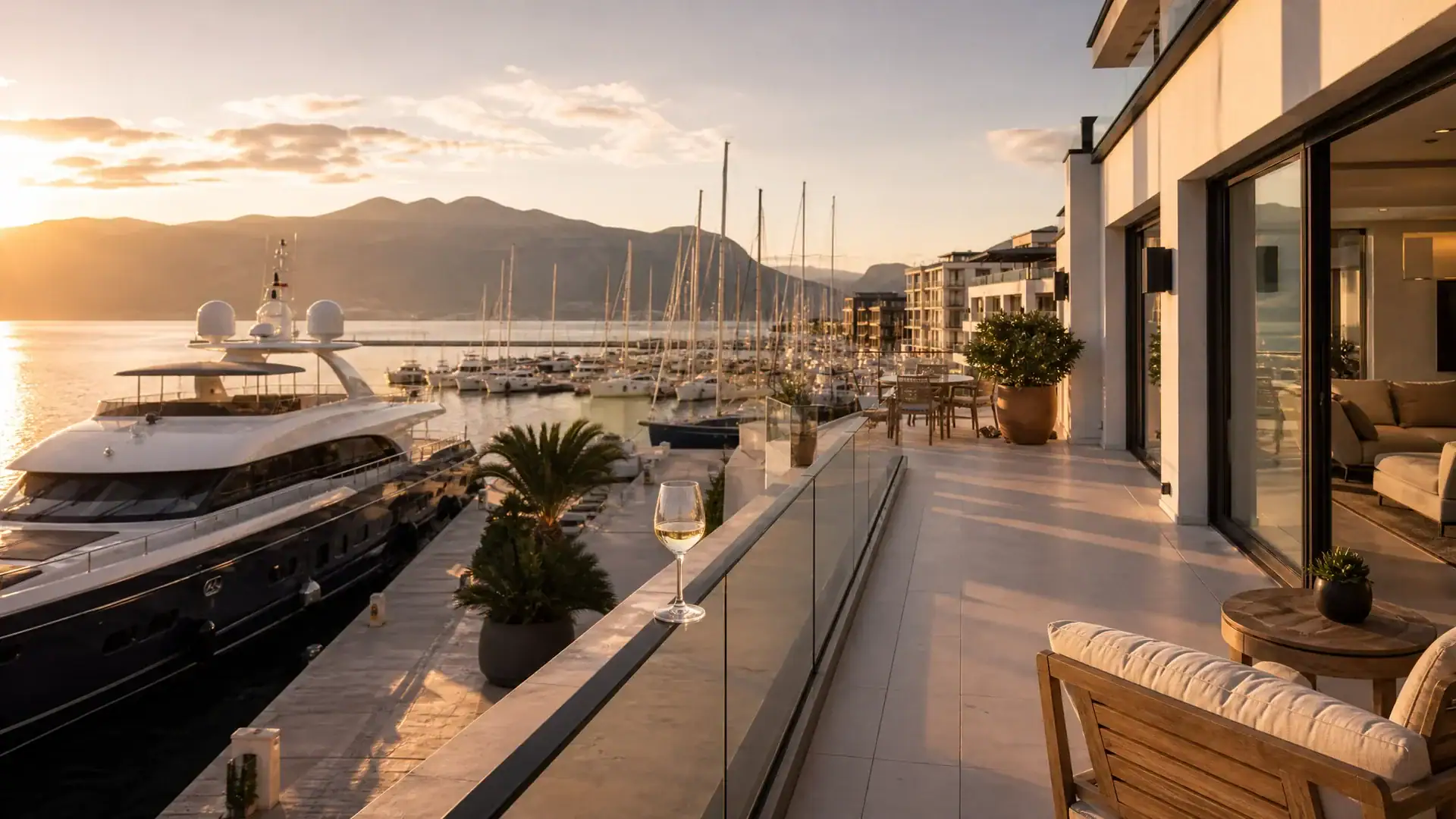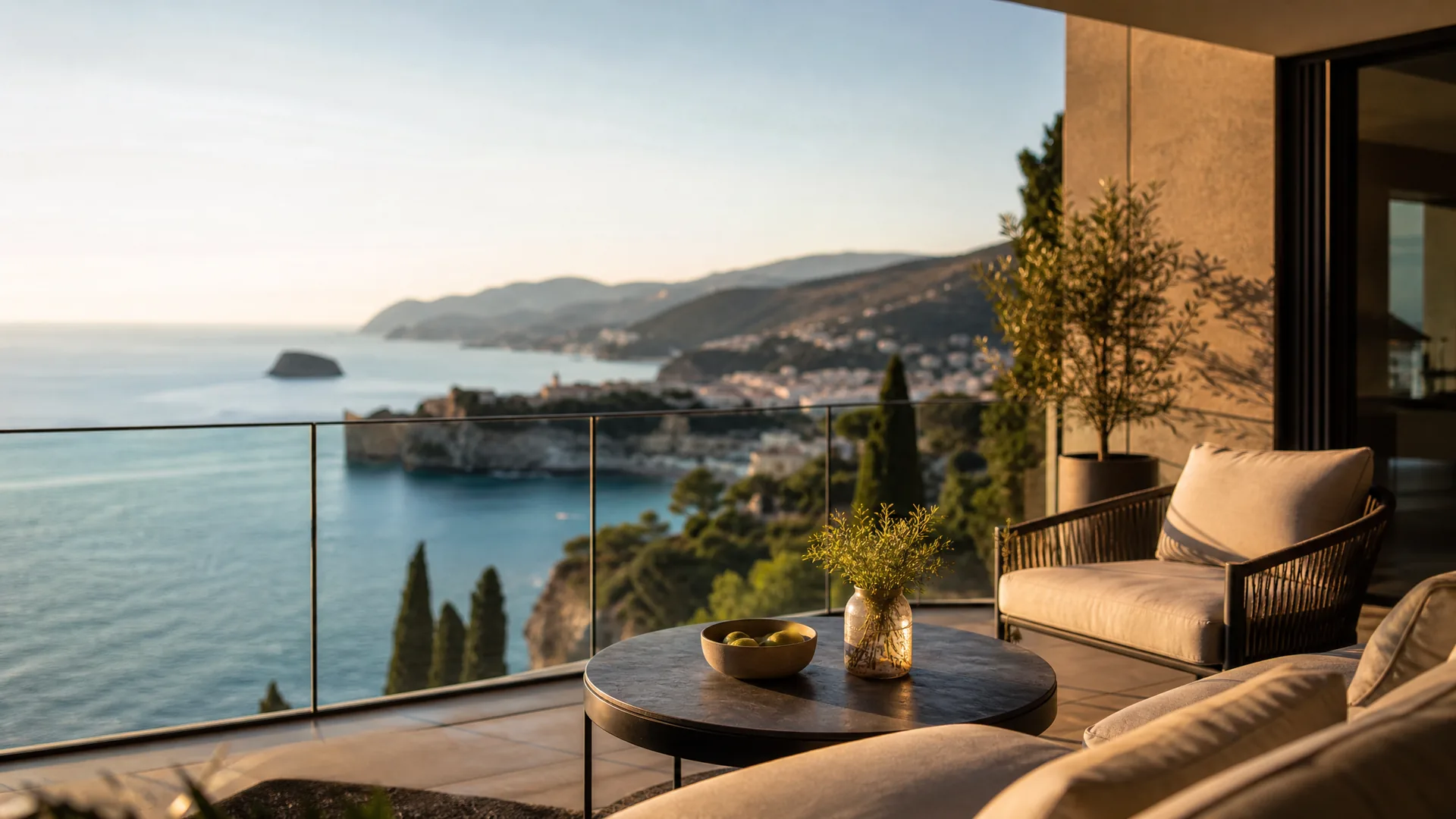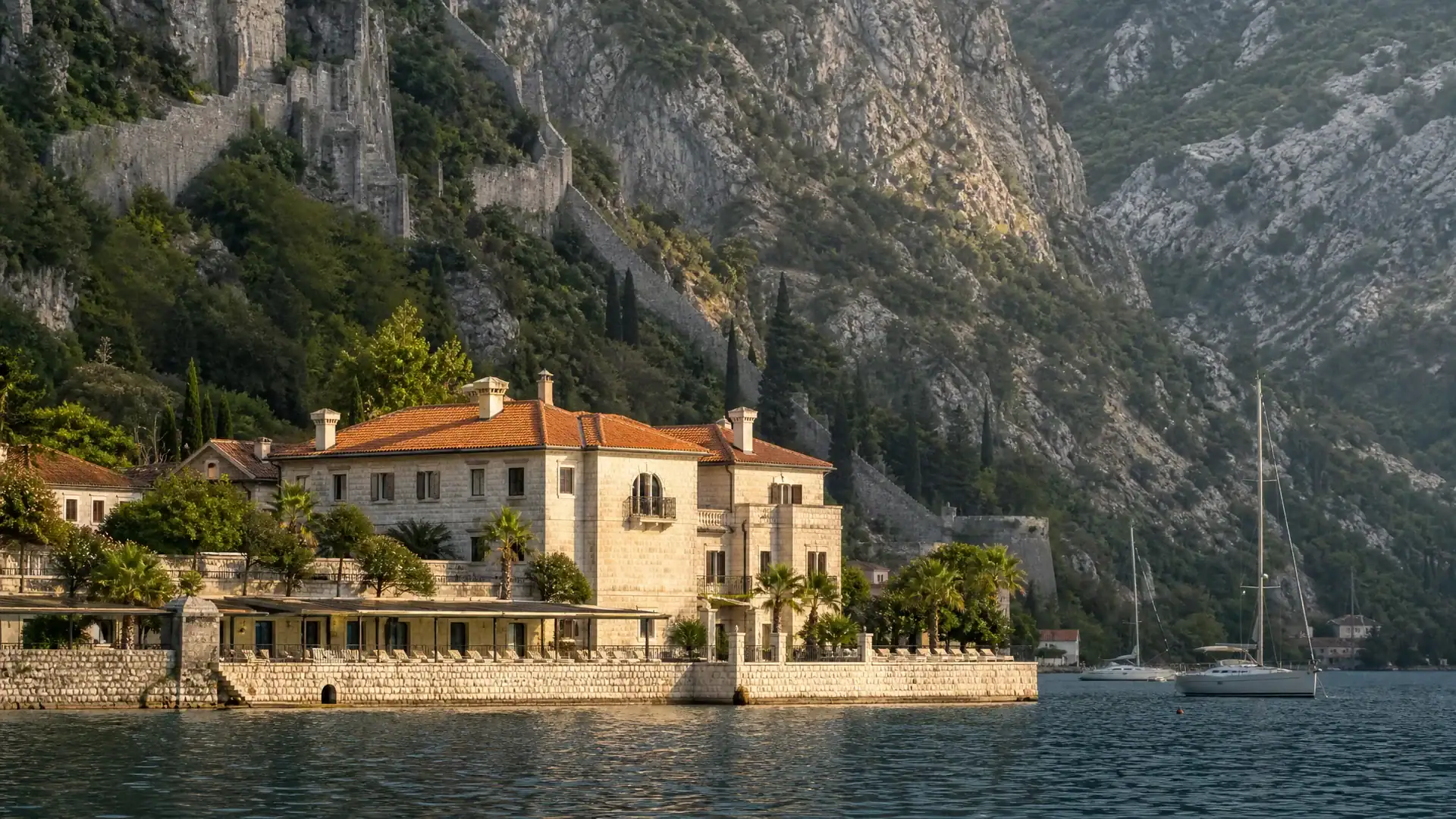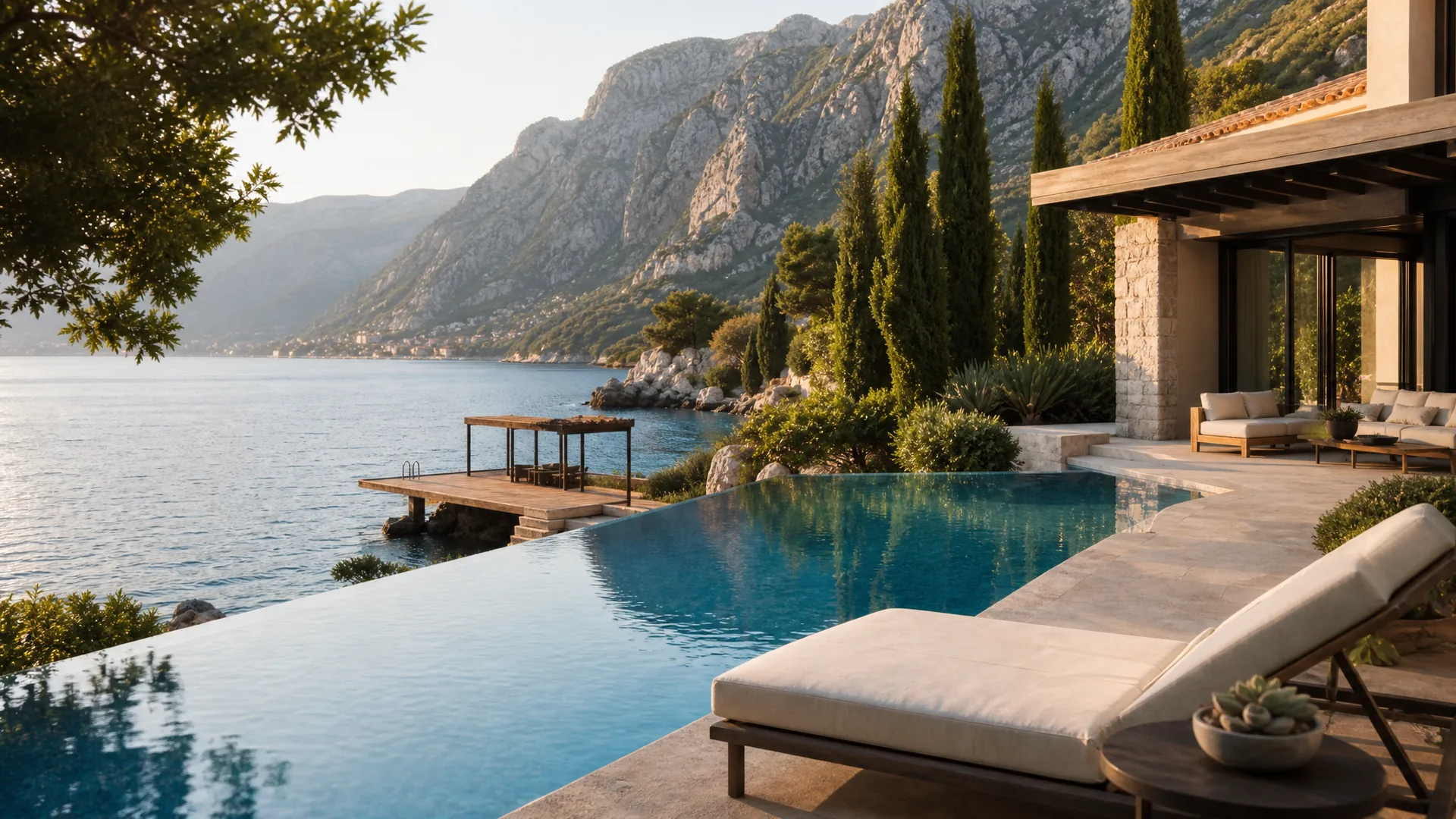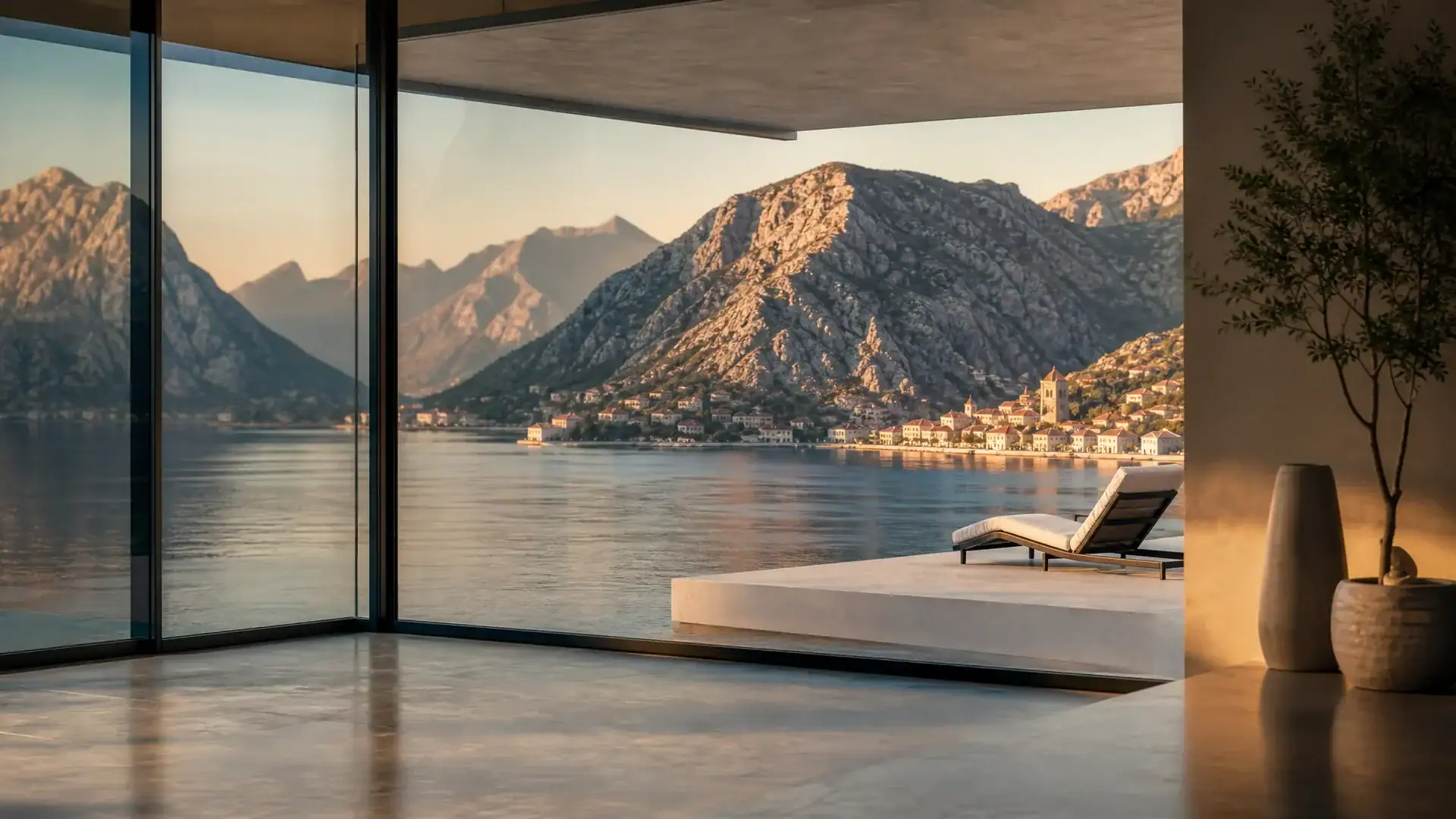



Budva beachfront property investment sits at an unusually compelling intersection: a Mediterranean-calibre resort town with Adriatic pricing that still rewards early movers. Sandy beaches stretch for kilometres, a walled Old Town anchors the coastline with genuine historic character, and a marina busy with superyachts signals the direction of travel. For international buyers weighing Adriatic beach properties, Budva is no longer a discovery, it is the benchmark.
Why Budva Stands Apart on the Adriatic Coast
Montenegro’s Premier Beach Resort
Budva has earned its reputation as the leading resort on the Montenegrin Riviera through a combination few coastal towns on the Adriatic can replicate. The Old Town rises directly from the sea, its Venetian walls enclosing medieval lanes and terrace restaurants. Mogren Beach curves away to the west; Slovenska Plaža stretches south, backed by a promenade lined with bars and beach clubs. The result is a resort that feels simultaneously intimate and cosmopolitan, the kind of place that attracts both European families and high-net-worth visitors looking for something more textured than a generic beach destination. Riviera real estate rarely offers this density of lifestyle in a single location.
A Tourism Economy Built for Year-Round Appeal
Montenegro’s tourism sector has grown consistently over the past decade, and Budva accounts for the largest share of overnight stays among all coastal municipalities, making it the country’s most visited beach destination. International flight connections into Tivat and Podgorica have broadened steadily, with direct routes now arriving from Central, Eastern, and increasingly Western Europe. The 2026 summer season opened with strong advance bookings, continuing a pattern of year-on-year growth. Budva’s tourism economy is not a single-season story: the Old Town draws cultural visitors in spring and autumn, and the marina sustains activity well into October.
Understanding the Budva Seasonal Rental Market
Peak-Season Demand and Short-Term Rental Yields
Short-term rental occupancy in Budva during the June–September window routinely surpasses that of many established Mediterranean rivals. The driver is a combination of budget-friendly flight access from Central and Eastern Europe and the growing appeal of the Montenegrin Riviera among Western European travellers who want Adriatic quality without Croatian or Italian price tags. For owners of Budva beach apartments in prime positions, direct sea view, walking distance to the beach, peak-season nightly rates are strong enough to make short-let platforms the default monetisation strategy. Entry-level sea-view apartments generate a more modest yield per night but still benefit from very high occupancy across the peak window. True beachfront or Old Town-adjacent units command a meaningful premium, and their annual returns reflect that gap clearly. For a deeper look at how to structure your rental strategy, see the guide to maximising rental income from Montenegro properties.
Off-Season Resilience and the Long-Stay Trend
The shoulder months, May, early June, and October, have strengthened considerably as a source of rental income. A growing segment of remote workers and longer-stay European visitors treat Budva as a warm-weather base, booking for weeks rather than nights. This long-stay trend softens the revenue cliff that purely seasonal markets experience after summer, and it suits a different property profile: well-furnished apartments with functional workspaces and reliable connectivity hold their appeal well beyond peak season. Budva tourism investment carries a more resilient income profile than it did five years ago, a meaningful change in how investors should model returns.
What to Look for in a Budva Beach Apartment or Luxury Home
Location Tiers: Beachfront, Sea-View, and Town-Adjacent
Micro-location is the single most consequential variable in any Budva acquisition. The top tier is true beachfront, properties on or immediately behind Mogren or Slovenska Plaža, where the sea is visible and audible from the terrace and walk-to-water time is measured in seconds. These command the highest capital values and the strongest short-term rental premiums.
The second tier covers elevated sea-view positions above the Old Town and along the hillside north of the marina. Views are often panoramic, prices are lower per square metre than beachfront, and long-stay rental demand is solid. The third tier, town-adjacent, without direct sea view, suits buyers prioritising lifestyle access over rental yield.
South of central Budva, Bečići and Rafailovići have attracted a wave of boutique apartment developments targeting short-term rental platforms. Investor demand has spread well beyond the historic core to these adjacent coastal villages, and both offer strong beaches and established tourist infrastructure at a more accessible entry point. This is where a significant share of new luxury villas on Montenegro’s Adriatic coast and villa-scale developments are now emerging.
Property Types and Price Positioning
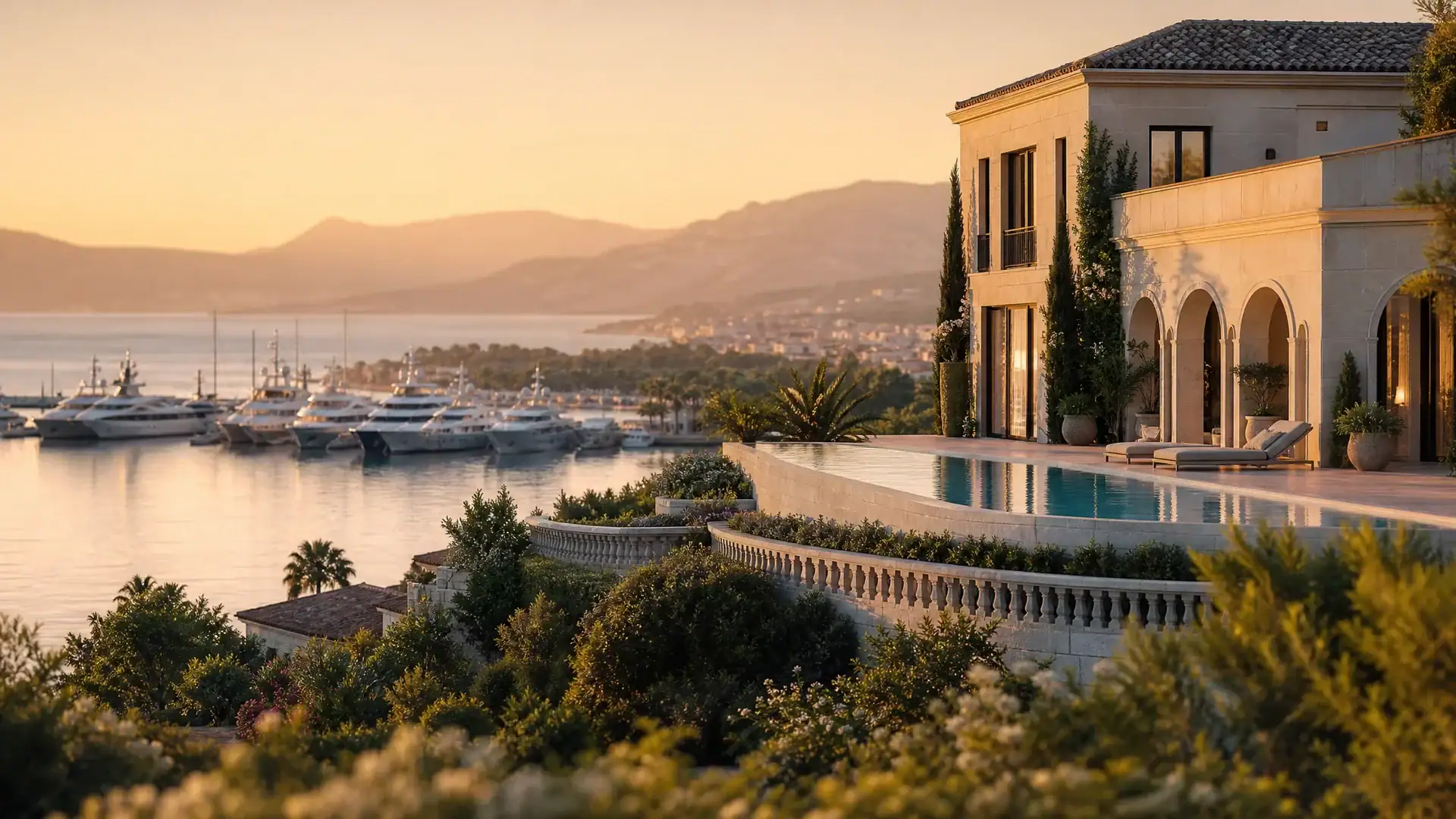
Budva beach apartments dominate the investment conversation because they are the most liquid asset class, easy to let, easy to exit. Studio and one-bedroom units at entry level start well below €200,000 for inland or partial-view positions. Sea-view and beachfront apartments move into the €300,000–€700,000 range depending on size, finish, and exact frontage. At the top of the market, Budva luxury homes, penthouse residences, boutique villa complexes, and full-floor apartments with private terraces, reach well into seven figures.
For buyers weighing apartments against larger residential assets, the international investment guide to luxury apartments in Montenegro provides a useful comparative framework across the country’s key markets.
Coastal Investment Considerations for International Buyers
Montenegro’s legal framework is genuinely welcoming to foreign capital. EU, UK, and non-EU buyers all hold full rights to purchase freehold property, there are no nationality-based restrictions on private residential acquisitions. This positions Budva well against some regional competitors where foreign ownership remains limited or complex.
Title clarity has improved markedly. Budva’s cadastral registry has undergone significant modernisation, which has reduced transaction risk and made it easier for buyers and their lawyers to verify clean ownership before exchange. That said, due diligence on construction-era permits and zone classifications remains essential, particularly for properties built during the rapid development period of the 2000s, where documentation quality varies.
For Adriatic beach properties specifically, buyers should confirm whether a property sits within a coastal management zone and what restrictions, if any, apply to future development or renovation. Maritime proximity also affects insurance structuring and, in some cases, utility connections.
Tax obligations are straightforward by European standards: a transfer tax applies on resale transactions, and rental income is subject to personal income tax at a flat rate. The full sequence of legal steps is covered in the Montenegro property purchase process for foreign buyers guide, and beachfront-specific considerations are addressed in detail when buying waterfront property in Montenegro.
Working with a registered notary, an independent legal advisor, and an agent with genuine on-the-ground presence in Budva is the standard of care that experienced cross-border buyers apply. Cutting corners on any of these three creates disproportionate risk in a market where local knowledge still matters more than formal systems alone.
Sotheby’s Budva Property Selection: Curated Beachfront Opportunities
Montenegro Sotheby’s International Realty’s approach to Budva beachfront property investment starts with curation rather than volume. The portfolio spans the full investment spectrum, from well-priced sea-view apartments suited to first-time Adriatic buyers, through to multi-million-euro beachfront residences and villa compounds, giving clients a single, trusted access point to the entire market without the noise of aggregator portals.
What distinguishes the Sotheby’s model in Budva is the combination of local presence and global network. Our advisors know which buildings have strong rental management infrastructure, which micro-locations are gaining value ahead of the wider market, and where new supply is likely to shift the competitive landscape over the next two to three years. That ground-level intelligence, combined with access to the international buyer pool that the Sotheby’s brand attracts, creates a meaningful advantage for clients on both sides of a transaction.
For buyers, the process begins with a private consultation: understanding your investment objectives, yield-focused, capital-growth oriented, or lifestyle-led, and matching those to the right asset class and location tier. For sellers, the same network ensures that a Budva beachfront listing reaches qualified buyers across Europe, the Middle East, and beyond. To understand how Budva fits within Montenegro’s luxury real estate market in 2026 more broadly, the wider market context is worth reviewing alongside your Budva shortlist.
The current Budva portfolio includes active listings across all price tiers and location categories. If you are ready to move from research to decision, explore our current Budva listings or contact a Montenegro Sotheby’s advisor directly to arrange a private consultation.