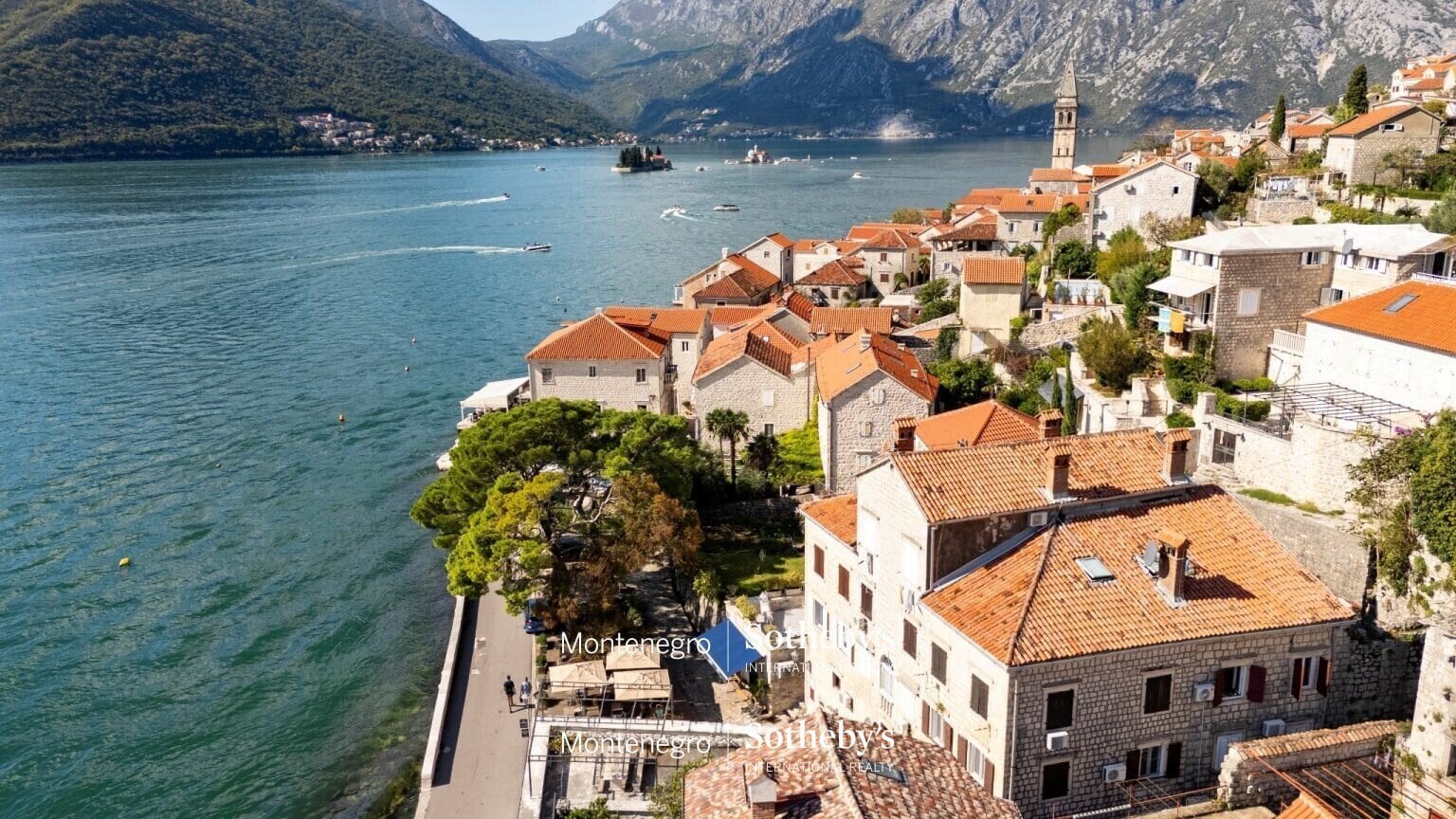




Few property markets in Europe combine genuine scarcity, UNESCO-protected heritage, and rising international demand the way the kotor old town renovation property market does. Inside the medieval walls, every stone palazzo, merchant house, and vaulted apartment is irreplaceable, and buyers who understand what restoration truly involves are increasingly treating these properties not as projects to endure, but as investments to pursue. This guide covers costs, regulations, return potential, and the practical steps that turn a centuries-old ruin into a flagship asset.
Why the Kotor Old Town Property Market Rewards Restoration
The UNESCO Premium: How Protected Status Shapes Value
Kotor’s Old Town has held UNESCO World Heritage Site status since 1979, making it one of only a handful of intact medieval walled cities on the entire Adriatic coast. That designation does something no zoning ordinance can replicate: it permanently caps supply. No new construction is permitted inside the walls. Every restorable property is, by definition, one of a finite number.
For buyers, this matters. Scarcity is the foundation of long-term value, and in Kotor Old Town, scarcity is structural and irreversible. A beautifully restored palazzo here cannot be undercut by a new-build competitor two streets away. The asset class is self-protecting.
To understand where restored properties currently trade relative to the broader region, it helps to benchmark against current property prices across the Bay of Kotor, the contrast between unrenovated and fully restored heritage stock is striking.
Demand Outpacing Supply in a Walled City
International buyer interest in Kotor Old Town has grown consistently through the mid-2020s, driven by Montenegro’s EU accession trajectory, the region’s expanding air connectivity, and a broader shift among affluent buyers toward authenticity over anonymity. Quality restored properties sell quickly. Unrenovated properties, correctly priced, attract competitive acquisition interest from buyers who see the restoration upside.
The walled city covers roughly 7.6 hectares. Available restorable stock at any given time is measured in dozens of properties, not hundreds. Demand, by contrast, is global.
Heritage Preservation Rules and Renovation Permissions in Montenegro
Navigating the Ministry of Culture Approval Process
Any structural or external work inside Kotor Old Town requires permits from two bodies: Montenegro’s Directorate for Protection of Cultural Heritage (under the Ministry of Culture) and the local municipal planning office in Kotor. Neither can be bypassed, and attempting to renovate without approval risks forced reversal of works at the owner’s expense.
The process is rigorous but predictable. Applications must include detailed architectural drawings, material specifications, and, for any stonework, documented provenance showing that replacement materials match the original. Heritage-licensed architects who work regularly inside the walls know exactly what the Directorate requires and can prepare submissions that move through the process efficiently. The permit phase typically adds several months to the project timeline, so buyers should factor this in from the outset, not treat it as a surprise.
Montenegro does not currently operate a formal tax-incentive scheme ring-fenced for heritage renovation, though the broader investment framework offers favourable conditions for property owners. Engaging a local legal advisor to assess applicable exemptions on a case-by-case basis is worth doing early.
What Changes Are, and Aren’t, Permitted
The rules draw a clear line between exterior and interior. Protected elements typically include:
- Original stone façades and their surface finish
- Window and door proportions and frame profiles
- Roof pitch, tile specification, and ridge lines
- Any decorative stonework, cornices, quoins, loggia columns
More permissible are interior upgrades: modern plumbing, electrical rewiring, underfloor heating, HVAC systems, and full kitchen and bathroom fitouts. Provided the external character is preserved, interiors can be brought fully up to contemporary luxury standards.
The permit process, while thorough, is predictable once you understand what the Directorate requires: authentic materials, faithful façade restoration, and documented provenance for any replacement stonework. The constraint is not creativity; it is compliance with a framework designed to protect the very qualities that make these properties valuable.
Kotor Old Town Property Restoration Costs: What to Budget
Stone House Restoration Price Per Metre
Restoration costs inside Kotor Old Town vary significantly based on the condition of the structure, the complexity of the heritage requirements, and the specification of the finished interior. Buyers should distinguish between two types of work.
Cosmetic renovation, updating interiors while the structure is sound, runs materially lower per square metre and is closer to what a standard contractor can price. Full structural restoration, addressing centuries of damp ingress, failed lime-mortar joints, compromised floor structures, and deteriorated stonework, runs significantly higher and demands specialist trades throughout.
For full structural gut-and-restore projects, costs in the current market typically fall in the range of €1,500–€3,000+ per square metre, depending on scope and specification. A high-specification palazzo restoration with period-authentic joinery, bespoke stone carving, and luxury interior fitout sits at the upper end of that range. These figures reflect Montenegro’s labour market, which remains notably more competitive than Western Europe, but heritage-approved craftspeople command a meaningful premium over standard contractors, because the permit conditions require them.
Hidden Cost Categories Buyers Underestimate
From our experience advising international buyers on Kotor Old Town acquisitions, the single most commonly underestimated cost is structural damp remediation. Centuries-old lime-mortar walls absorb and hold moisture in ways that modern construction does not. Treating this correctly, with heritage-compatible methods the Directorate will approve, is specialist work. Standard waterproofing contractors are not qualified for it under permit conditions, and cutting corners here typically means the problem returns within a few years.
Other categories buyers routinely underestimate include:
- Lime-mortar repointing at scale, labour-intensive and time-consuming across an entire façade
- Period-authentic window joinery, custom-made to match original profiles, not off-the-shelf units
- Structural stabilisation of vaulted ceilings and original timber floor structures
- Permit coordination costs, architect fees, survey fees, and the time cost of the approval process itself
Budget conservatively on all of these. The buyers who have the smoothest projects are those who entered with realistic contingency reserves, typically 15–20% above the base restoration budget.
ROI and Resale Value: Kotor UNESCO Protected Property Investment Returns
The return case for Kotor UNESCO protected property investment rests on two distinct pillars: capital appreciation at resale, and rental yield during the hold period.
على resale value, the before-and-after uplift on fully restored properties has been compelling. Buyers who completed full structural restorations of 16th- and 17th-century Venetian-era stone palazzos have subsequently listed them at multiples of their pre-renovation acquisition price. The most sought-after transformations, featuring original loggia, stone fireplaces, and private courtyard gardens, attract international buyers at the very top of the market. The restoration investment is recovered, and then some.
على rental yield, Montenegro’s short-stay tourism market expanded strongly through the mid-2020s, with the Bay of Kotor among the highest-demand micro-markets for premium holiday rentals. Nightly rates for fully restored heritage apartments in Kotor Old Town are among the strongest in the country, supported by a visitor profile that selects specifically for authentic, character-rich accommodation. A well-positioned restoration can achieve occupancy rates and average daily rates that make rental income a meaningful component of total return, not just a holding strategy.
Maximising short-term rental yields in Montenegro requires attention to positioning and management, but a completed restoration is the most powerful foundation you can start from. Buyers considering larger-scale palazzo projects may also want to explore converting heritage buildings into boutique hotels as an alternative use case.
The lifestyle dimension matters too. Many buyers enter a restoration project intending to hold and rent, then find that the completed property becomes a personal sanctuary, and exit via private sale to the next discerning buyer rather than through the open market.
Sourcing Restoration Specialists and Authentic Materials in Kotor
The community of craftspeople qualified and licensed to work inside Kotor Old Town is small. That is not a problem, it is a reality to plan around.
Local stonemasons with heritage experience understand Primorje limestone, the dominant building material inside the walls, and know how to source matching stone from the same regional quarries used in original construction. Lime-mortar specialists are a specific sub-trade; not every stonemason works to the standard the Directorate requires. Heritage-licensed architects are the essential first engagement, they know which craftspeople are reliable, which suppliers carry period-authentic Venetian-style roof tiles, and how to sequence a project to avoid the long lead times that come with authentic material sourcing.
Identify and engage your architect before you finalise the purchase. The best professionals are in demand, and a good architect can also provide a realistic cost-and-timeline assessment that informs your acquisition price negotiation.
Restored waterfront villas in nearby Perast offer a useful reference point, that market has seen similar restoration dynamics and draws on the same pool of specialist trades, so practitioners there often work across both locations.
Buying a Fixer-Upper in Kotor Old Town: Timeline and Process
Acquiring and restoring a property in Kotor Old Town is a multi-stage process, and the timeline rewards honest planning over optimism.
Due diligence on title deserves particular attention. Many older properties inside the walls carry complex inheritance histories, multiple ownership shares, unresolved estate divisions, or registration records that predate Montenegro’s current land registry system. A thorough title search, conducted by a local lawyer experienced in heritage property, is non-negotiable before any offer is made. Understanding the property purchase process for foreign buyers in Montenegro is essential groundwork.
Permit application follows purchase. Expect the heritage permit phase to take several months for a straightforward project; more complex restorations involving significant structural works may require additional consultations with the Directorate. Use this period productively, finalise your architect’s detailed drawings, source specialist contractors, and secure material lead times.
Restoration phasing for a typical project looks roughly like this:
- A modest one- or two-bedroom apartment with sound structure: 12–18 months from permit to completion
- A mid-size town house requiring structural stabilisation and full interior fitout: 18–30 months
- A multi-storey palazzo with full gut-and-restore scope: 3 years or more, particularly if phased across construction seasons
These are realistic figures, not worst-case scenarios. The buyers who complete on schedule are those who engaged their specialists early, secured permits before starting work, and maintained a contingency budget rather than treating every unexpected discovery as a crisis.
What daily life looks like for expats and remote workers in Montenegro is worth reading if you’re considering the property as a primary or secondary residence, the wider context of living in the country shapes how buyers think about restoration scope and timeline.
The Kotor Old Town renovation property market rewards preparation, local knowledge, and a clear-eyed view of both the costs and the returns. The properties are irreplaceable. The regulatory framework is navigable. The upside, financial, aesthetic, and personal, is real.
Montenegro Sotheby’s International Realty works with a curated network of heritage architects, restoration specialists, and legal advisors built specifically around this market. If you’re ready to explore restorable properties currently available inside Kotor Old Town, contact our team for a personalised shortlist and an honest assessment of the restoration journey ahead.