


Montenegro has emerged as one of the most accessible property markets in Europe for international buyers — combining Adriatic scenery, a euro-denominated economy, and a legal framework that genuinely welcomes foreign ownership. Yet the purchase process has its own sequence of legal steps, local institutions, and tax obligations that differ meaningfully from buying in Western Europe. This guide walks through each stage clearly, so you arrive at the closing table informed and confident.
Can Foreigners Buy Property in Montenegro?
Most foreign nationals can purchase residential and commercial property in Montenegro on terms that closely mirror those available to citizens. There is no requirement to form a local company, no mandatory government approval for standard transactions, and no ceiling on the number of properties a foreigner may own.
Two categories of land carry restrictions worth knowing upfront: agricultural land and certain protected natural zones. Foreigners cannot acquire agricultural land in their own name — a company structure is typically used where that asset class is the objective. Protected coastal and ecological zones impose planning limits that affect development potential rather than ownership eligibility itself.
Montenegro’s openness to international buyers is not accidental. The country’s EU accession trajectory and its drive to attract investment capital have made cross-border ownership a deliberate policy feature, not a loophole. For buyers from the EU, UK, US, the Middle East, and beyond, the practical path to ownership is clear.
Step 1 — Define Your Budget, Goals, and Property Type
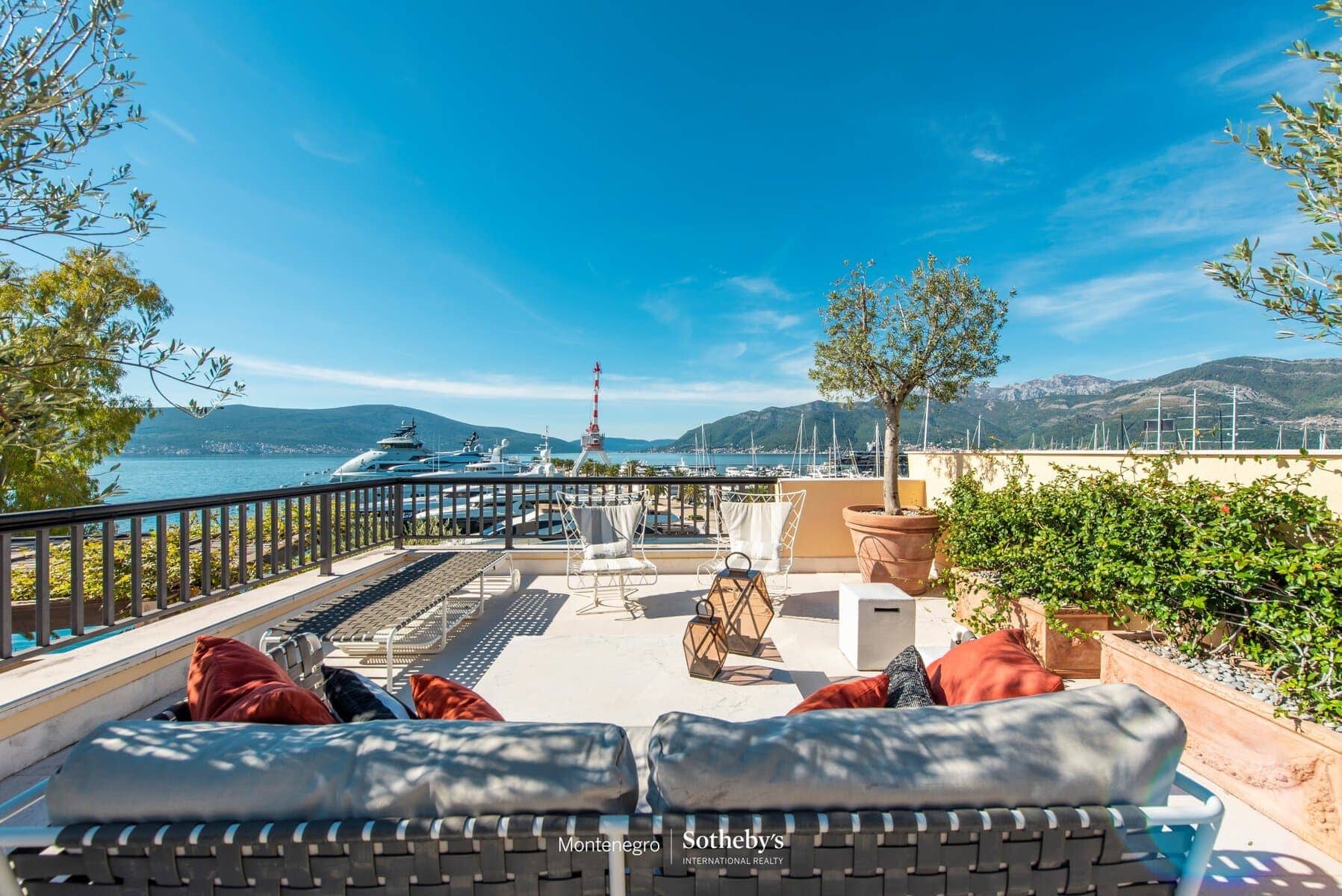
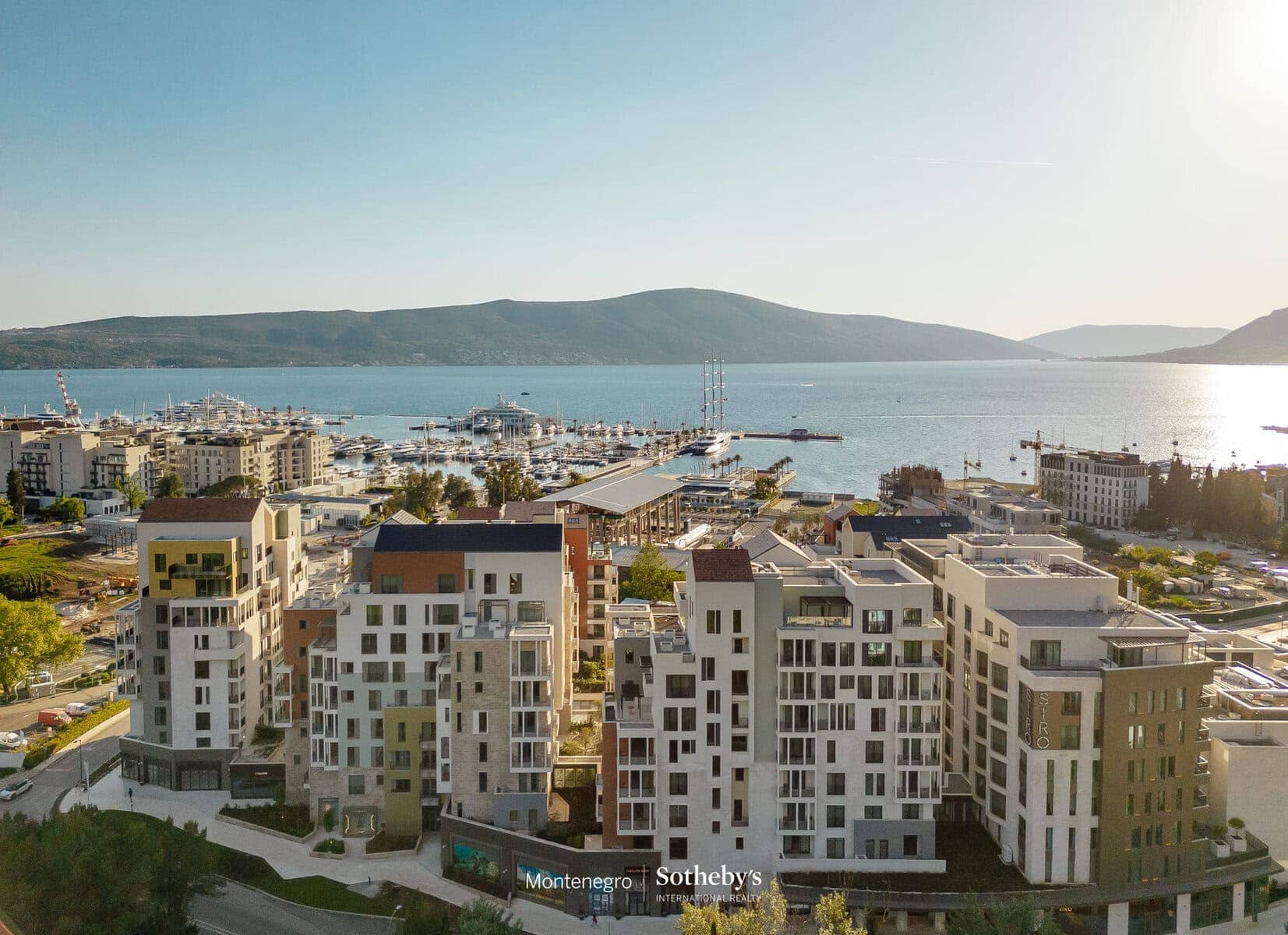
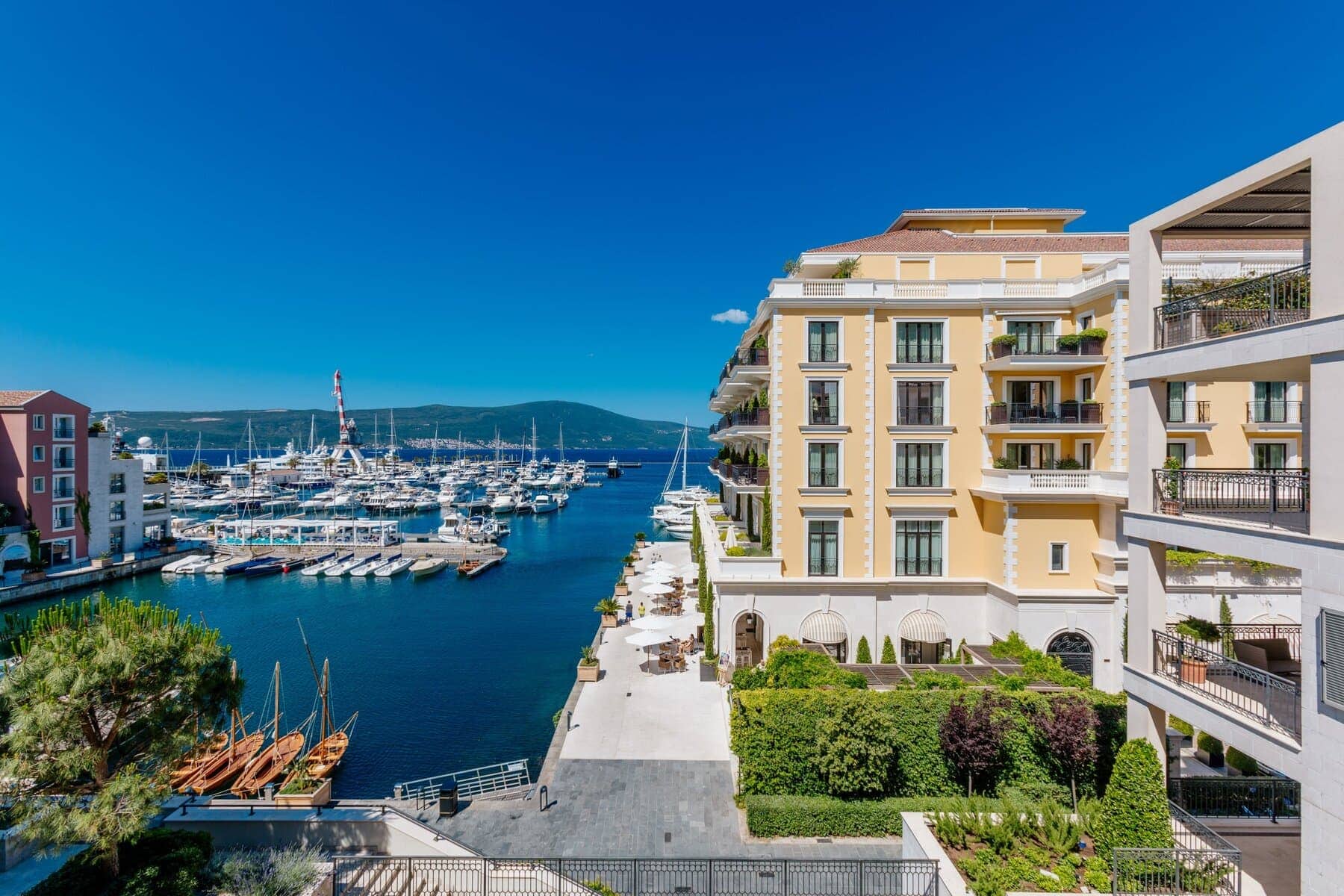
Montenegro’s property market spans a wide range — from one-bedroom apartments in Budva at relatively accessible price points, to waterfront villas and superyacht-adjacent residences around Porto Montenegro in Tivat at prices consistent with comparable Mediterranean addresses. Commercial assets, boutique hotel real estate, and land with development permits round out the opportunity set.
Before engaging the market, clarify two things: whether the purchase is primarily a lifestyle decision, an investment for yield or capital appreciation, or both — and what your realistic all-in acquisition budget is, including taxes and fees. That distinction shapes which regions, property types, and legal structures make the most sense.
Montenegro uses the euro. For European buyers this eliminates exchange-rate risk entirely; for buyers holding USD or GBP, the currency exposure is to a single, widely traded pair. That simplicity reduces friction in financing planning and post-purchase cost management.
Step 2 — Due Diligence and Legal Checks
Due diligence in Montenegro follows a structured checklist. Skipping or abbreviating it is the single most consequential mistake a foreign buyer can make, and it is entirely avoidable with the right advisors.
Title and Cadastre Verification
Montenegro’s cadastre — the national land and property registry administered by the Real Property Administration (Uprava za nekretnine) — has undergone substantial modernisation in recent years. Digital records are now accessible for most urban and coastal parcels, significantly reducing the title ambiguities that were more common in the early post-Yugoslav property market. A qualified local lawyer will run a cadastre extract (list nepokretnosti) to confirm the current registered owner, verify that no mortgages, liens, or third-party encumbrances are recorded against the property, and check that the seller’s identity matches the registry entry precisely.
Clean title confirmation is non-negotiable before any contract is signed.
Urban Planning and Zoning Status
The cadastre extract tells you who owns the property; the urban planning documentation tells you what may legally be done with it. Your lawyer should obtain the relevant planning permits and verify the property’s zoning classification. For new-build or partially developed properties, confirming that construction permits were issued correctly and that the building has received its use permit (upotrebna dozvola) is essential. Unpermitted extensions or incomplete permit chains can complicate future resale or renovation.
Step 3 — The Notary and Purchase Contract Process
The central legal instrument in a Montenegrin property transaction is the notarially certified sale-purchase agreement (ugovor o kupoprodaji). Unlike in some jurisdictions where a solicitor or attorney handles the closing, Montenegro requires a licensed notary to authenticate the signatures of both parties and certify the contract, giving it full legal force.
Before the contract can be signed, a foreign buyer must obtain a Montenegrin personal tax identification number, known as the PIB (poreski identifikacioni broj). This is issued by the Tax Administration and is a prerequisite for any property transaction. The process is straightforward but requires a passport and, typically, the involvement of a local intermediary or lawyer to navigate the administrative steps efficiently.
A preliminary contract (predugovor) is often signed first, with a deposit — commonly 10% of the agreed price — paid to secure the property while final due diligence is completed and financing confirmed. The main contract follows, notarised, with the balance of the purchase price transferred. Possession is typically handed over on or shortly after the signing of the main contract, depending on what the parties agree.
The notary’s role is not merely ceremonial. Notarisation creates a public deed, provides a legally defined record of the transaction, and is the document on which the cadastre registration that follows is based.
Step 4 — Taxes and Fees to Budget For
Understanding the full acquisition cost before you make an offer prevents surprises at closing. Montenegro’s transaction cost structure is modest relative to most Western European markets.
Property transfer tax on resale properties is levied at 3% of the officially assessed value — the value determined by the tax authority, which may differ from the contracted price. This 3% rate is low by European standards; comparable transactions in France or Italy routinely attract rates several times higher. The buyer is responsible for payment within 15 days of the contract being notarised.
VAT applies to new-build purchases rather than transfer tax. Buyers of off-plan apartments or newly constructed properties — including developments around Porto Montenegro and other active coastal schemes — should confirm the VAT treatment with their legal adviser before signing a reservation agreement, as the applicable rate and who bears the liability can vary by developer structure.
Notary fees are regulated and calculated on a sliding scale relative to the property value. They are a minor component of the overall cost.
Agent commission is typically agreed as a percentage of the transaction value and varies by agency and mandate type. When working with Montenegro Sotheby’s International Realty, fee structures are disclosed at the outset.
The cumulative effect is an all-in acquisition cost that remains competitive within the European context — an advantage buyers consistently cite when comparing Montenegro to Adriatic alternatives in Croatia or Greece.
Step 5 — Registration and Ownership Transfer
Signing the notarised contract transfers the contractual right to the property. Legal ownership — in the full sense of being the registered proprietor — is only complete once the buyer’s name appears in the cadastre. This final registration step is the formal vesting of title.
The notary or the buyer’s lawyer submits the certified contract to the Real Property Administration to initiate the cadastre transfer. Processing times for coastal and urban properties are generally measured in weeks rather than months, though complexity or administrative backlogs can extend timelines in specific municipalities. The total elapsed time from accepted offer to completed registration — encompassing due diligence, PIB issuance, contract execution, and cadastre registration — typically runs between six and twelve weeks for a straightforward resale transaction.
A point that matters to many international buyers: owning property in Montenegro does not automatically confer the right of residency. Property ownership is, however, one of the recognised bases on which a foreigner may apply for temporary residency, and many buyers use it precisely for that purpose. Residency applications are managed separately through the relevant state authorities and have their own documentation requirements.
How Montenegro Sotheby’s International Realty Guides You Through Every Step
The purchase process described above is navigable — but it rewards buyers who have experienced, on-the-ground support rather than those piecing it together from a distance. Montenegro Sotheby’s International Realty has direct presence across Kotor, Tivat, Budva, and Podgorica, and coordinates the full advisory chain from initial brief to completed registration.
That means shortlisting properties against your precise criteria, facilitating introductions to vetted local legal counsel, coordinating notary scheduling, clarifying tax obligations specific to your transaction, and remaining a single point of contact throughout a process that spans multiple institutions. It does not mean replacing your independent legal adviser — on the contrary, our position is that every buyer should have one, and we help ensure they engage the right one.
The result is a purchase experience that matches the calibre of the properties themselves: considered, organised, and free of the uncertainty that too often accompanies cross-border real estate transactions.
If you are ready to begin — or simply want to understand what your budget could achieve in Montenegro’s current market — speak with a Montenegro Sotheby’s International Realty advisor. We offer personalised guidance and access to curated listings across the country’s most sought-after addresses.