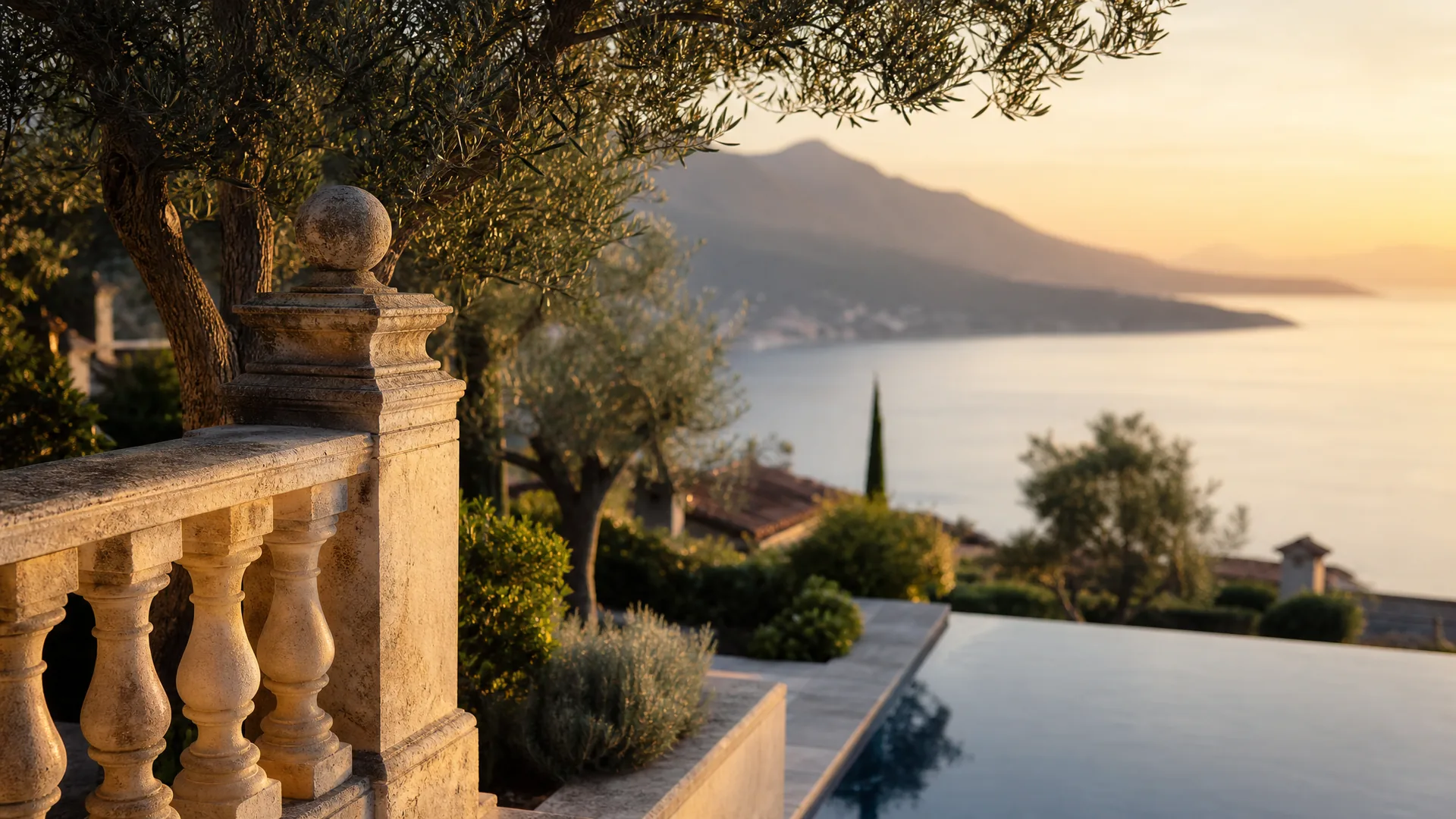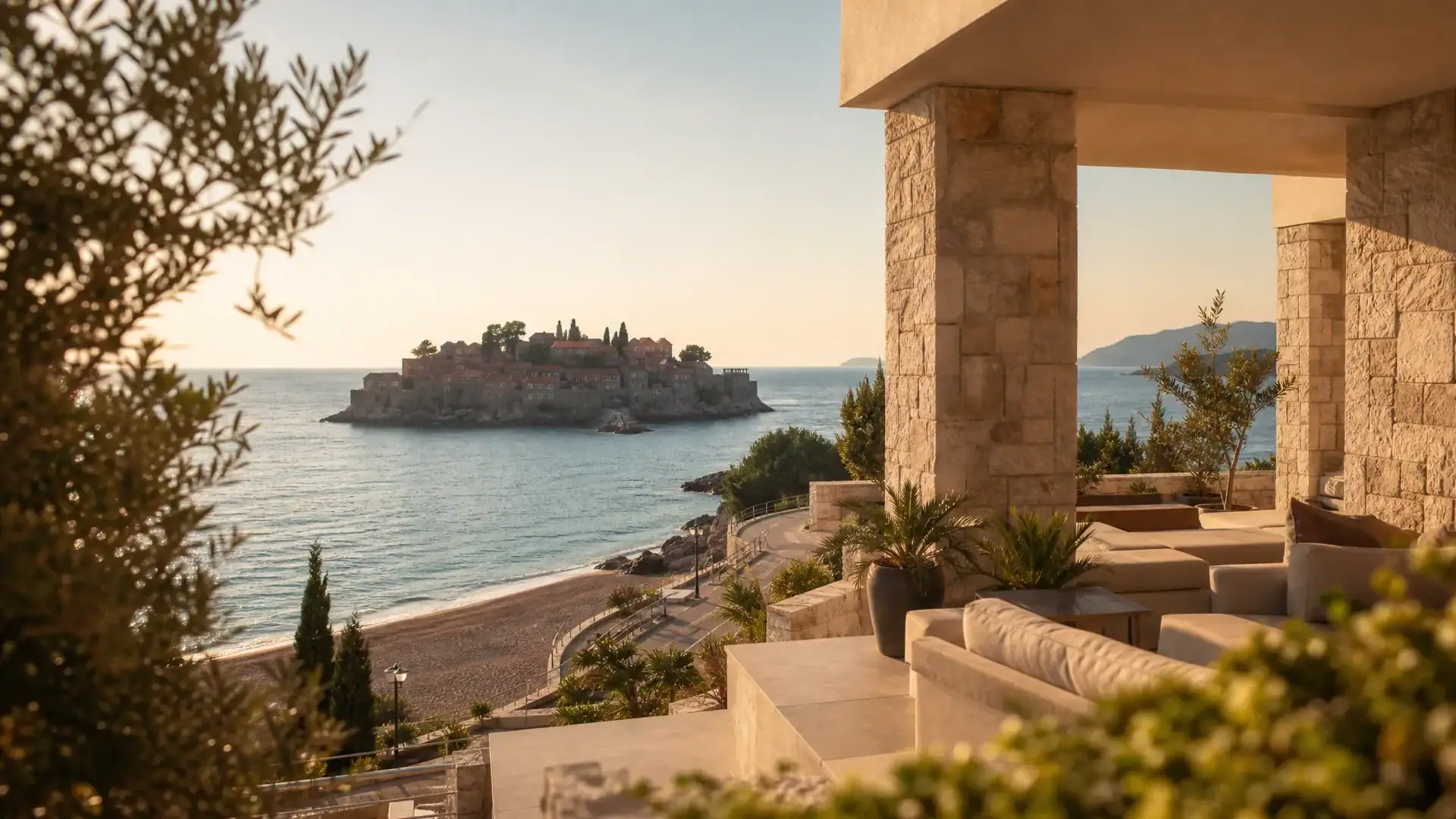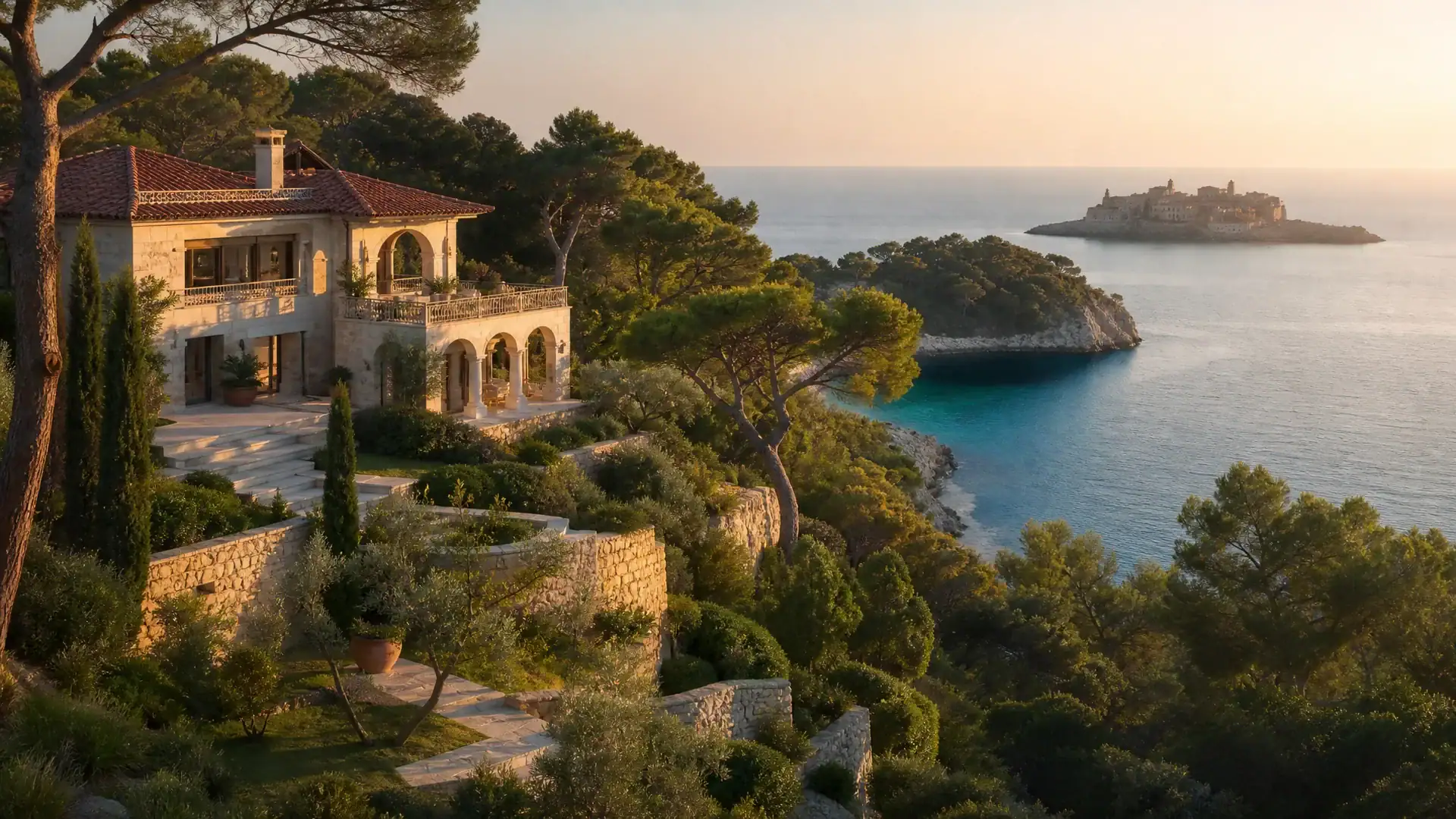




For a growing number of affluent Europeans, the search for a second home has shifted away from the overcrowded rivieras and toward somewhere less familiar, and more rewarding. Montenegro has quietly become one of the most compelling answers to that search. This second home Montenegro buy guide is written for the lifestyle buyer: someone who wants a personal retreat first, a sound asset second, and a manageable ownership experience throughout.
Why Montenegro Is Drawing Affluent Second-Home Buyers in 2026
The Adriatic lifestyle advantage
Montenegro packs an extraordinary range of landscape into a small country. The Bay of Kotor’s calm, deep-green waters sit within 30 minutes of open Adriatic beaches. The Lovćen mountains rise behind Kotor’s medieval walls. Durmitor’s highland wilderness lies a few hours’ drive north. The climate is generous, hot, dry summers, mild springs and autumns, and winters that rarely impose. For a seasonal residence, buyers value this variety: you can sail in August, hike in October, and ski in January without changing country.
Connectivity is strong. Tivat Airport receives direct flights from London, Paris, Frankfurt, Vienna, Moscow, and Istanbul. Podgorica Airport adds further connections. For a buyer flying in four or five times a year, Montenegro is genuinely accessible, not an adventure destination requiring half a day of connections.
The lifestyle is unhurried but sophisticated. Luxury villas on Montenegro’s Adriatic coast sit within reach of excellent waterfront restaurants, historic old towns, and a marina scene that has matured significantly over the past decade.
How Montenegro compares to Southern Europe alternatives
Buyers who might otherwise look at the Côte d’Azur, Croatia’s Dalmatian coast, or Tuscany routinely find Montenegro offers comparable natural beauty with meaningfully lower acquisition costs, lower annual running costs, and less bureaucratic friction. The Côte d’Azur commands some of the highest second-home prices in the world, with ownership costs to match. Croatian coastal property has risen sharply since EU accession in 2013. Tuscany’s desirable countryside estates are deeply competitive and supply-constrained.
Montenegro, by contrast, remains a market where well-priced, high-quality properties are still available, particularly покупка недвижимости у воды в Черногории along the Bay of Kotor corridor, where heritage stone houses and modern villas coexist on the same shoreline. The offer is genuinely distinct: scale, privacy, and authenticity at a price point that rewards the buyer who moves with conviction.
Choosing Your Second Home: Coast, Bay, or Mountains
The right location depends on the lifestyle you are buying into. Montenegro’s main micro-markets feel entirely different from one another.
Bay of Kotor and Perast: intimacy and heritage
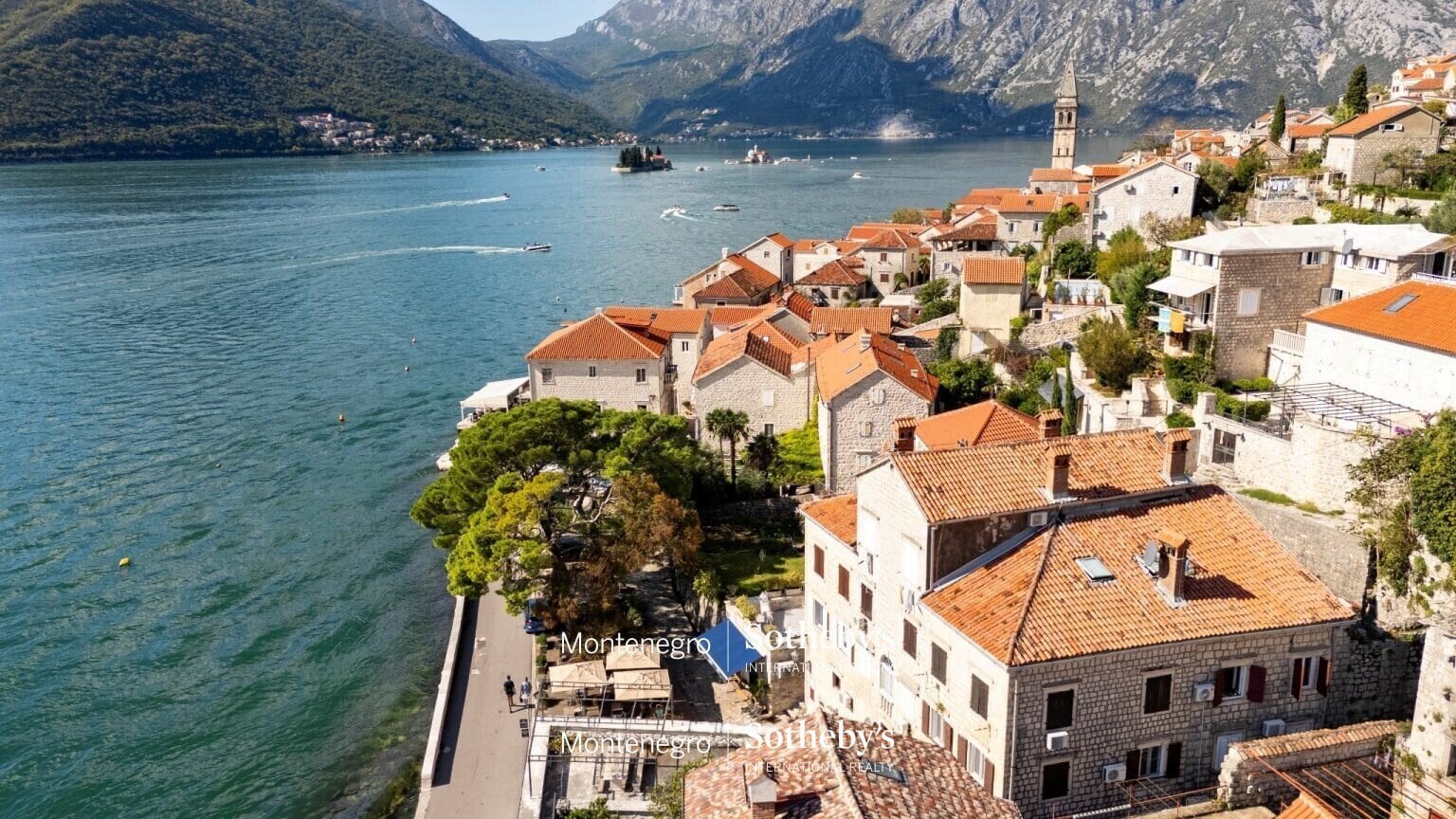
The Bay of Kotor, a UNESCO World Heritage site, consistently attracts European buyers seeking an intimate, culturally rich retreat distinct from the more commercialised Mediterranean riviera resorts. Its fjord-like geography creates a private, sheltered world: tiered stone villages, Venetian fortifications, and glassy water that reflects the mountains above. Perast, in particular, is a settlement of rare architectural calm, a handful of baroque palaces, two famous island churches, and an almost total absence of mass tourism.
Perast waterfront villas in the Bay of Kotor appeal strongly to buyers who prioritise heritage character, peace, and year-round liveability over beach-club energy. The bay’s microclimate is among the mildest on the eastern Adriatic, extending the comfortable shoulder season considerably. For Bay of Kotor real estate prices in 2026, buyers will find a premium market relative to the rest of Montenegro, but still well below comparable heritage waterfront in France or Italy.
Budva Riviera: sun-season energy
Budva is Montenegro’s busiest summer resort: a walled old town, a string of sandy beaches, and a hospitality scene that comes fully alive between June and September. For this audience, Budva suits buyers who want maximum beach access, a social summer atmosphere, and strong short-let optionality when they’re not in residence.
At Montenegro Sotheby’s International Realty, the majority of lifestyle-buyer enquiries in 2026 centre on the Bay of Kotor corridor and the Budva Riviera, buyers prioritising personal-use potential and low seasonality friction over raw yield. The Riviera’s modern apartment buildings and villa complexes offer a range of entry points, from lock-up-and-leave apartments to large private villas above the coastline.
Porto Montenegro and Tivat: marina lifestyle
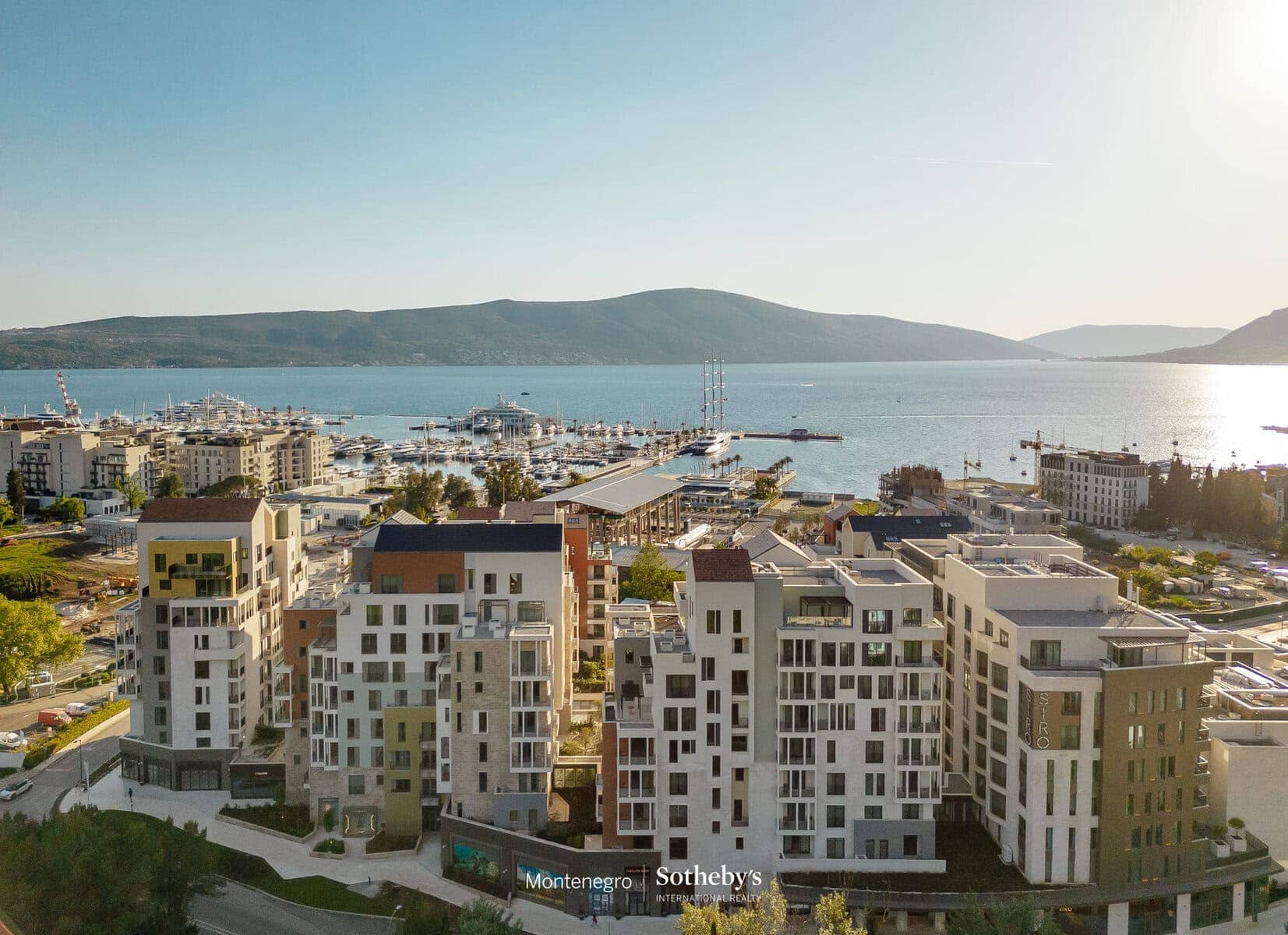
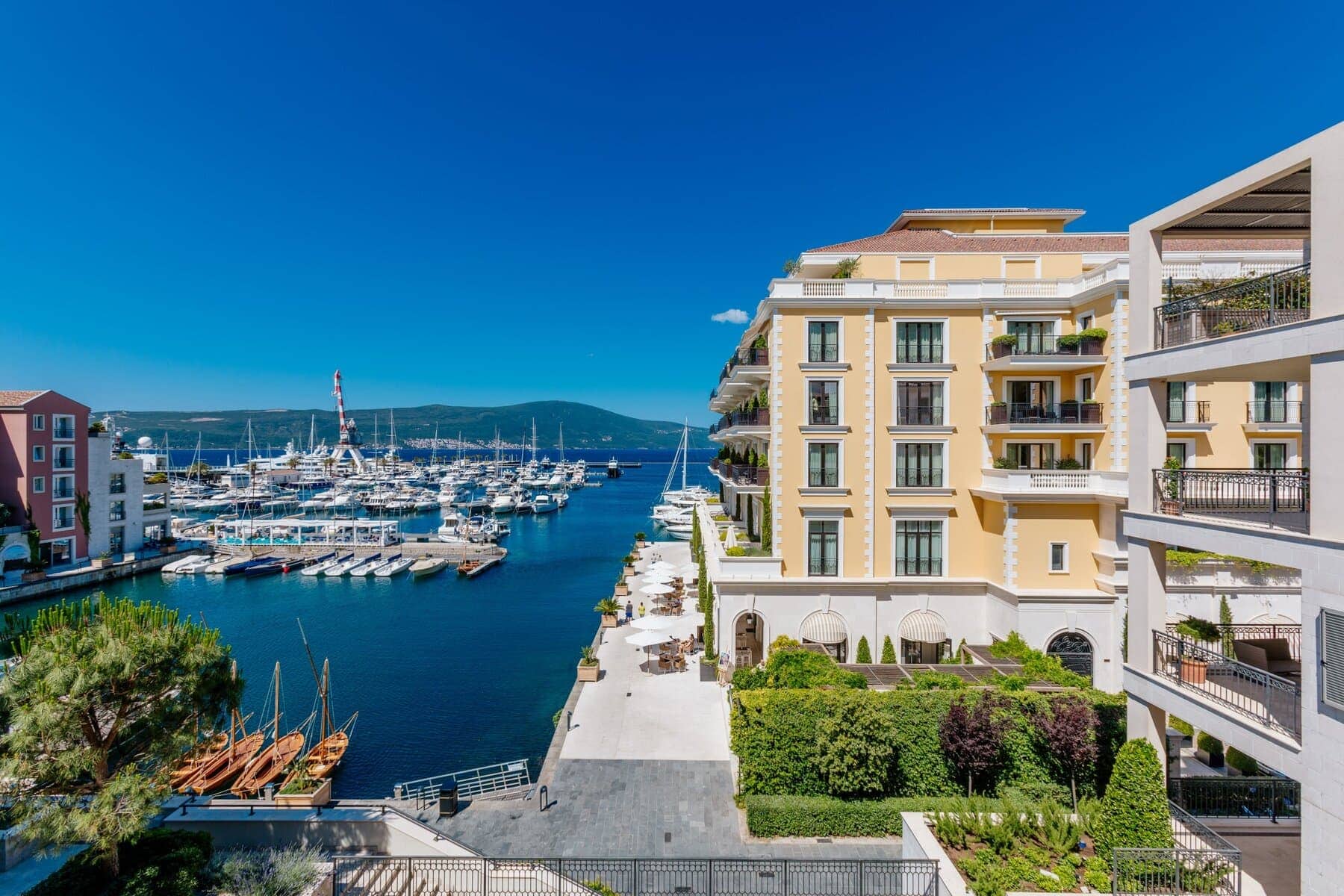
Porto Montenegro in Tivat is a superyacht marina and residential village developed to international standards. It combines berths for yachts of any size with curated retail, dining, a wellness club, and a growing residential offering. Porto Montenegro luxury apartments in Tivat suit buyers who want the ease of a managed resort environment with the flexibility of private ownership. Tivat is also the entry airport for most international visitors, making it the most logistically straightforward location in the country.
Tax Implications and Legal Considerations for Foreign Buyers
Property transfer tax and ongoing ownership costs
Montenegro’s second home Montenegro tax implications are straightforward compared to most Western European jurisdictions. Property transfer tax on resale property is 3% of the transaction value, paid by the buyer. New-build transactions from a developer are typically subject to VAT, which is generally factored into the agreed price.
There is no annual wealth tax on real property, and no capital gains tax for individual owners who have held a property for more than two years. Annual ownership costs are modest: local communal fees vary by municipality and property size but are not punitive by international comparison. The overall second home Montenegro cost of ownership is meaningfully lower than on the Côte d’Azur or in parts of Spain where annual property taxes, wealth taxes, and community fees accumulate quickly.
Title registration in Montenegro is conducted through the State Geodetic Authority. The title system, while requiring careful due diligence (particularly for older stone properties where historical ownership chains can be complex), is generally reliable when properly navigated.
Buying as an EU citizen vs. non-EU national
EU nationals and non-EU nationals currently enjoy broadly equivalent purchase rights for residential property. The restrictions that historically applied to non-EU foreign nationals acquiring land have been largely lifted, with some categories of agricultural land remaining restricted.
In practice, the purchase process for both groups follows the same path. The meaningful distinction is residency and travel: EU citizens can stay in Montenegro for up to 90 days within a 180-day period without additional documentation, while non-EU nationals should plan their residency strategy (see below) if they intend extended stays. Both groups benefit from qualified local legal counsel, not a formality, but a genuine safeguard for a clean, encumbrance-free title. For a full procedural overview, see our guide to Процесс покупки недвижимости в Черногории для иностранных покупателей.
The Montenegro Property Purchase Timeline
Understanding the Montenegro property purchase timeline second home process removes uncertainty and helps buyers plan. A straightforward transaction typically follows five stages.
1. Reservation agreement. The buyer pays a reservation deposit (typically 10% of the purchase price) to secure the property and take it off the market while due diligence proceeds.
2. Due diligence. Your lawyer verifies title at the Cadastre (land registry), checks for encumbrances, confirms planning status, and reviews any building permits. This stage is critical and should not be compressed.
3. Sale-purchase contract (Ugovor o kupoprodaji). Once due diligence is clear, the formal purchase contract is drafted, reviewed, and agreed by both parties.
4. Notarisation. Montenegro requires notarial certification of the sale-purchase contract. A licensed notary certifies the signatures and the transaction.
5. Land-registry transfer. The notarised contract is submitted to the Cadastre to transfer registered title into the buyer’s name. Property transfer tax is paid at this stage.
The full process, from reservation to registered title, typically takes six to twelve weeks for a clean residential transaction. Complications in title history or planning status can extend this. An experienced local agent and Montenegrin-qualified lawyer are the two most important safeguards against delay and cost.
Golden Visa, Residency, and the Lifestyle Benefits of Ownership
Montenegro’s formal golden visa Montenegro second home programme, which offered citizenship-by-investment, closed in 2022. Owning residential property here still supports a practical residency pathway that many lifestyle buyers find highly useful.
Foreign nationals who own property in Montenegro can apply for a temporary residence permit on the basis of property ownership. This permit is renewable annually and grants the holder the right to reside in Montenegro without the 90-day visitor cap. For buyers who want to spend extended periods, a full summer, or wintering in Kotor’s mild shoulder season, this route offers genuine lifestyle freedom within a straightforward administrative process.
Montenegro has been an official EU accession candidate since 2010 and has opened all 33 negotiating chapters, making it the most advanced Western Balkans candidate. EU membership would bring Schengen access, enhanced property rights protections, and deeper integration with the European economy. That is a forward-looking consideration rather than a present guarantee, but for buyers thinking in decades, it matters.
Montenegro’s position outside Schengen today actually works in some buyers’ favour: it sits at a travel crossroads, accessible from both EU and non-EU markets without the visa complexity that some Schengen-adjacent destinations carry.
Seasonal Living and Rental Income: Having It Both Ways
One of the most common questions from lifestyle buyers is this: can I use the property personally and still make it work financially when I’m away? For a well-located Montenegro villa, the answer is yes, with realistic expectations.
Peak rental demand concentrates in July and August, with strong shoulder demand in June and September. A lifestyle buyer who occupies the property in May, October, and perhaps a winter week can make all four peak-demand months available for rental, generating meaningful income from a relatively short let season. Rental management companies operating in Budva, Kotor, and Tivat have matured significantly and can handle marketing, guest management, and property care in the owner’s absence.
Montenegro’s flat 9% personal income tax rate, one of the lowest in Europe, applies to rental income declared by individual property owners, making the cost of renting out a second home during peak season considerably more tax-efficient than in many Western European jurisdictions. Owners should register with the Montenegro Tax Administration and comply with local tourist tax obligations; a local accountant or management company typically handles this as part of a full-service arrangement.
Yields vary by location, property quality, and management. Buyers should treat rental income as a welcome offset to running costs rather than the primary return thesis. For buyers who want to optimise this balance, our guide on how to maximise rental income from your Montenegro property covers the practical detail.
For a fuller picture of extended seasonal stays and the day-to-day experience of owning here, the Montenegro lifestyle and expat living guide is a useful companion read.
The decisions involved in buying a second home, location, legal structure, tax, timing, reward careful guidance. Montenegro Sotheby’s International Realty combines on-the-ground market knowledge with access to off-market listings across the Bay of Kotor, Budva Riviera, and Tivat. Our team guides buyers from first enquiry through due diligence, legal coordination, and key handover, acting as a single point of continuity throughout the process.
If you are considering a personal retreat on the Adriatic, we invite you to arrange a private consultation. Contact Montenegro Sotheby’s International Realty to begin the conversation.