




Montenegro has quietly become one of the Adriatic’s most compelling destinations for luxury villa investment, and in 2026, the opportunity to generate meaningful private villa rental income in Montenegro has never been more tangible. A growing pool of high-net-worth international visitors, a structurally favourable tax regime, and a limited supply of quality short-term rental properties have combined to put well-positioned villa owners in a strong position: yields that comfortably offset carrying costs, and often exceed them. This guide sets out what you can realistically expect, where to buy, and how to structure operations for maximum return.
What Rental Income Can a Luxury Villa in Montenegro Actually Generate?
Key Drivers of Private Villa Rental Yield in Montenegro
Luxury villa rental yield in Montenegro turns on four variables above all others: location, specification, professional management, and seasonal pricing discipline. A villa with a private pool, direct sea or bay views, and dock access in the Bay of Kotor occupies an entirely different market segment from a four-bedroom inland property in Budva, even if the acquisition prices are similar.
The gap between gross rental income and net yield is where most owners underestimate complexity. Gross income is the headline number: nightly rate multiplied by occupied nights. Net yield subtracts management fees (typically 20–30% of gross revenues for full-service agencies), platform commissions, utility costs, maintenance reserves, insurance, and local taxes. A well-managed luxury villa in a prime location can achieve net yields in the 4–7% range annually, with top-tier properties in ultra-prime locations pushing beyond that during extended high-season runs.
Premium amenities lift both rate and occupancy directly. A private heated pool, a private dock, chef service, or concierge access can justify nightly rate premiums of 30–50% over comparable properties without those features. In a market where guests are choosing between Montenegro and comparable Adriatic destinations, specification is often the deciding factor.
For buyers weighing acquisition fundamentals alongside rental projections, our full guide to buying a villa in Montenegro for investment returns provides the acquisition context this article builds on.
Realistic Income Scenarios by Location and Property Tier
High season, July and August, is where premium villas earn the majority of their annual income. A five-bedroom waterfront villa in the Bay of Kotor with a pool and dock can command nightly rates of €2,500–€5,000+ during peak weeks, with minimum stays of seven nights. An equivalent property in Budva or Tivat typically generates €1,500–€3,000 per night at peak, with shorter minimum stays and higher booking volumes compensating for slightly lower per-night rates.
Shoulder season (May–June and September) is increasingly productive. Montenegro’s tourism sector has recorded consecutive years of arrival growth, and the summer season now extends meaningfully into September as shoulder-period demand rises, a structural shift that improves annual occupancy rates for well-positioned villas.
A realistic gross income model for a prime Bay of Kotor villa looks like: eight peak-season weeks at premium rates, six to eight shoulder weeks at 60–70% of peak rates, and minimal low-season lettings. That model, managed professionally, can generate gross revenues that make the yield case without requiring year-round occupancy.
Best Neighborhoods for Villa Rental Income on the Adriatic
Bay of Kotor: Exclusivity, Scenery, and High-Value Guests
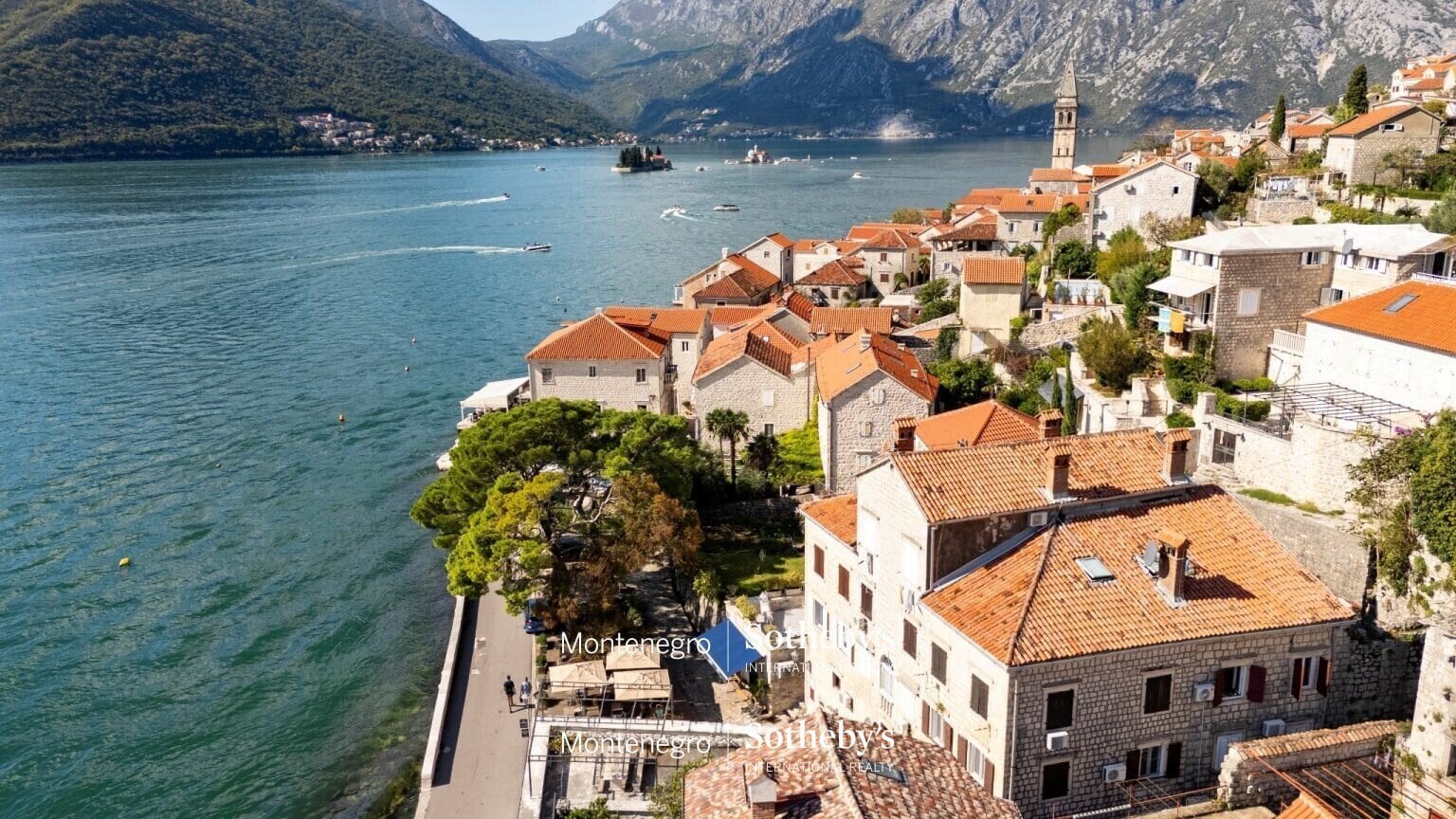
Perast waterfront villas in the Bay of Kotor sit at the top of Montenegro’s short-term rental income market. Guests who choose Perast, Dobrota, or Ljuta typically book multi-week stays, two or three weeks rather than a long weekend, and spend significantly more per trip than the average Adriatic visitor.
Bay of Kotor waterfront villas with private pools and dock access consistently command among the highest nightly rates on the Adriatic, attracting guests from Western Europe and the Gulf. The combination of UNESCO-protected heritage scenery, privacy, and exclusivity creates a natural rate floor that other Montenegro regions cannot easily replicate.
The trade-off is lower booking volume. The Bay of Kotor’s appeal is selective by design. Owners who rely on professional management to access high-net-worth booking channels, rather than mass-market platforms, tend to protect both rate integrity and guest quality.
Budva Riviera and Tivat: Volume, Visibility, and Year-Round Demand
Budva generates higher booking volumes and shorter average stays, attracting a broader visitor profile. It suits owners who want consistent occupancy across a longer season, accepting slightly lower per-night rates in exchange for fewer vacant weeks.
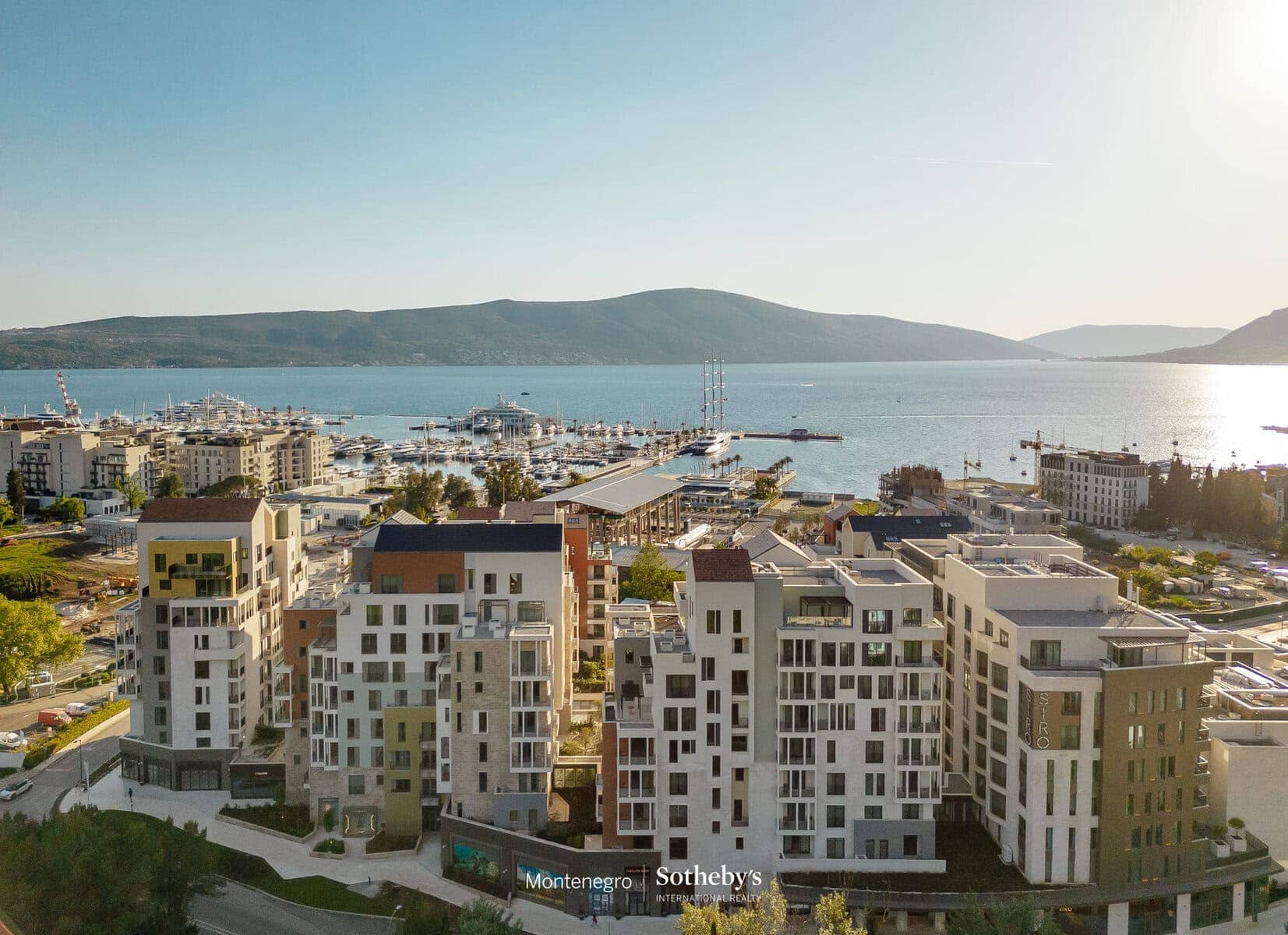
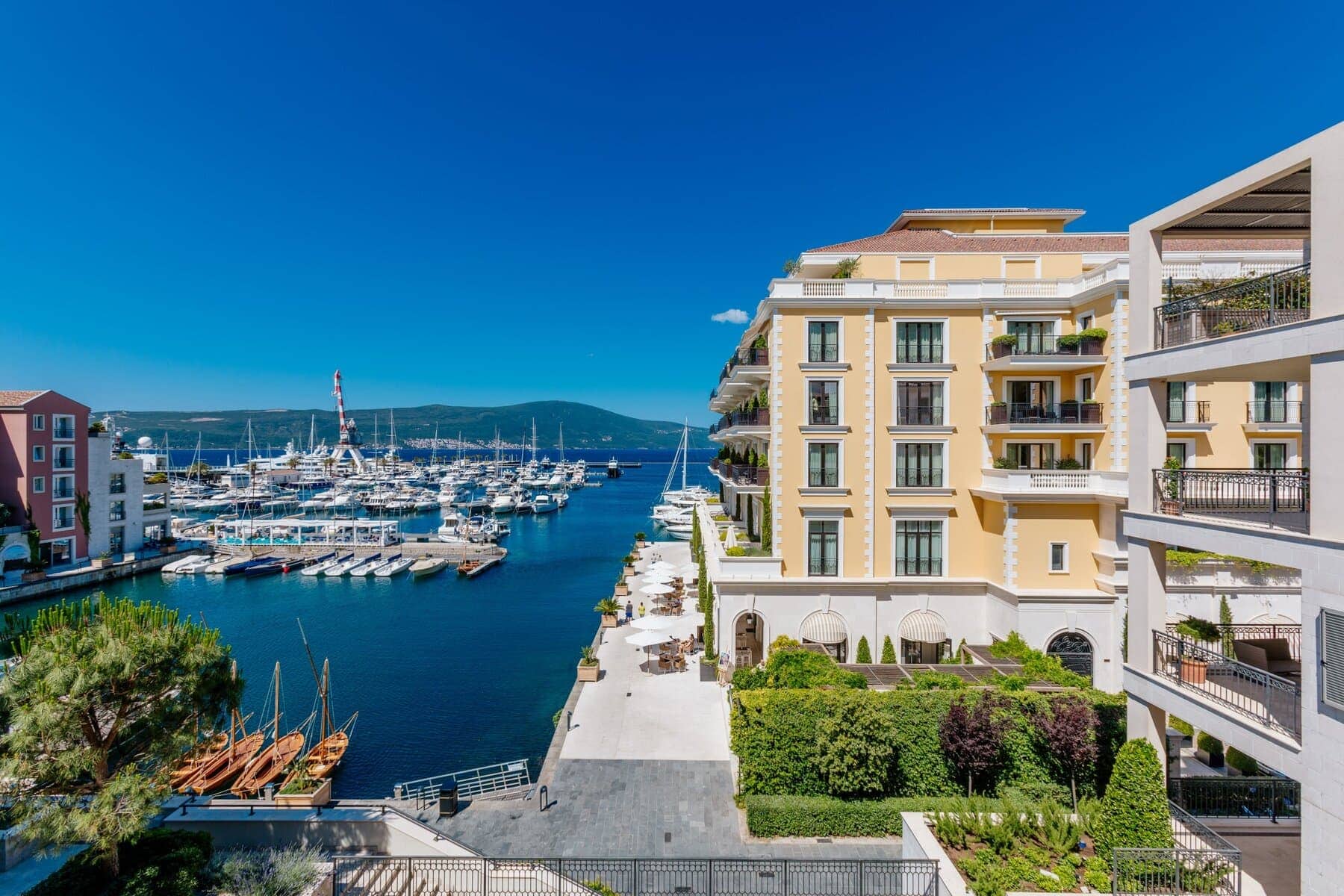
Tivat, particularly Porto Montenegro, is a distinct rental micro-market. Porto Montenegro luxury apartments in Tivat illustrate how marina-adjacent rentals attract a specific, high-spending guest profile: superyacht crews, regatta participants, and luxury travellers who sustain premium nightly rates even outside peak summer weeks. Tivat Airport’s connectivity gives it an accessibility advantage over more remote bay locations.
Ulcinj and Bar, further south, are emerging markets. Nightly rates remain lower than the Bay of Kotor or Budva, but acquisition costs are also lower, and occupancy rates for well-managed properties are improving as visitor flows diversify. Investors willing to take a longer view will find genuine growth plays in these southern markets.
Seasonal Occupancy and Villa Rental Pricing Strategy in Montenegro
Peak, Shoulder, and Low Season: How to Structure Your Rates
Montenegro’s rental calendar has three distinct phases. July and August are peak, demand exceeds quality supply, and disciplined owners hold rates firm rather than discount. May, June, and September form a productive shoulder season, attracting early-bookers and post-summer travellers who prioritise value and availability. October through April is low season for most coastal properties, though Tivat and Budva retain some business from marina visitors, Montenegrin domestic demand, and digital nomads.
Dynamic pricing is standard practice in competitive Adriatic markets. Rates should move with lead time, competitor availability, and event calendars, not remain fixed across a published schedule. A premium villa that opens with a flat weekly rate in May will consistently leave revenue on the table compared to one managed with real-time pricing tools.
Minimum-stay policies protect yield. Most well-positioned luxury villas in Montenegro operate seven-night minimums during peak, dropping to three or four nights in shoulder season to capture last-minute bookings without breaking prime-week inventory. One-night bookings almost never make economic sense at the luxury tier.
Premium amenities justify rate uplifts and should be marketed explicitly. A private infinity pool, boat or paddleboard rentals, a dedicated chef, and airport transfer services don’t just add comfort, they shift the property into a category where rate comparison with standard rentals becomes irrelevant to the guest.
For detail on rate optimisation and occupancy modelling, strategies to maximize rental income from Montenegro properties in 2026 covers the tactical ground beyond this overview.
Villa Rental Tax Implications for Foreign Owners in Montenegro
Rental Income Tax, VAT Thresholds, and Registration Requirements
Montenegro’s tax framework is one of the most straightforward and competitive in the region. The flat personal income tax rate on rental income is 9%, among the lowest in Europe, and there is no inheritance tax, making the jurisdiction structurally attractive for international investors compared to higher-tax Adriatic alternatives such as Croatia and Italy.
Foreign owners earning rental income in Montenegro are legally required to register their rental activity with the relevant authorities. Operating unregistered carries meaningful penalties and can complicate future property transactions. Registration also enables correct VAT treatment: short-term rental operators exceeding the annual VAT registration threshold must charge and remit VAT, while those below it operate outside the VAT system entirely.
Declaring income correctly matters for two reasons beyond compliance: it builds a documented income history that supports future financing or resale due diligence, and it protects the owner’s status as a legitimate commercial operator.
For a full breakdown of compliance obligations, the tax implications for foreign owners of second homes in Montenegro и property tax in Montenegro explained for foreign buyers provide detailed guidance. Professional tax advice from a locally qualified practitioner is not optional, it is the baseline for any rental operation that takes yield seriously.
Property Management and Operational Strategy for Holiday Villa Rentals
What a Full-Service Property Management Partner Delivers
Holiday villa rental management in Montenegro has matured as the luxury rental market has grown. A credible full-service partner delivers channel management across Airbnb, VRBO, and direct booking platforms; professional photography and listing copy; dynamic pricing; guest communication and vetting; housekeeping to hotel standards; concierge services covering transfers, dining, and activity bookings; and maintained property condition that protects both reviews and asset value.
For remote owners, the majority of foreign villa investors, a professional management partner is not a convenience. It is the operational structure that makes the rental income model work. A poorly reviewed villa loses rate integrity within a single season. A well-managed one builds a repeat-guest base that reduces platform dependency and stabilises annual income.
Across the Montenegro Sotheby’s International Realty portfolio, luxury villas in Perast, Dobrota, and Tivat are increasingly acquired with a dual mandate: personal use during peak weeks and professionally managed short-term rental for the remainder of the season, a model that covers carrying costs while preserving lifestyle value.
Choosing Between Self-Management and a Specialist Agency
Self-management is viable only for owners who are locally based, operationally committed, and willing to handle maintenance, guest relations, and regulatory compliance personally. For international owners, the realistic comparison is between a specialist agency at 20–30% of gross revenues and the revenue loss, reputational risk, and operational burden of managing remotely without expert support.
The management fee is not a cost against yield, it is the mechanism that generates yield. A professionally managed villa at 85% peak-season occupancy with a 25% management fee almost always outperforms a self-managed villa at 60% occupancy with zero management cost. Choose a partner with a demonstrable luxury client base in Montenegro, not a generalist holiday lettings agency.
Rental Income vs. Resale: Which Strategy Suits Your Montenegro Villa?
The binary choice between renting and selling is rarely the right frame. Montenegro’s market in 2026 supports both, and the strongest investment thesis often holds both options open simultaneously.
Capital appreciation in prime Bay of Kotor and Tivat locations has been consistent, driven by constrained supply of quality waterfront properties, sustained international demand, and Montenegro’s EU accession momentum, a structural shift that continues to reduce perceived risk for European investors. How Montenegro compares to other Adriatic luxury real estate markets in 2026 provides context on where Montenegro sits relative to competing destinations.
Rental income, in this context, is best understood as a carrying-cost offset with upside. A villa generating net rental yields of 4–6% annually is effectively being held at near-zero cost while the underlying asset appreciates. When the owner decides to sell, whether in three years or ten, the rental history also provides documented evidence of income-generating performance, which strengthens the case for buyers entering for the same reasons.
The owners who regret their Montenegro villa strategy are almost always those who deferred professional management, underestimated seasonal pricing discipline, or acquired without a clear view of their own usage weeks. The owners who are satisfied, financially and experientially, are those who built the operational structure early and treated the property as both lifestyle asset and investment from day one.
If you are ready to model the rental income potential of a specific villa, or to identify an acquisition aligned with your yield and lifestyle targets, speak with a Sotheby’s high-net-worth property advisor in Montenegro for a personalised assessment. We work across acquisition, rental strategy, management partner selection, and tax structuring to ensure your villa performs across the full investment horizon, not just in peak season.