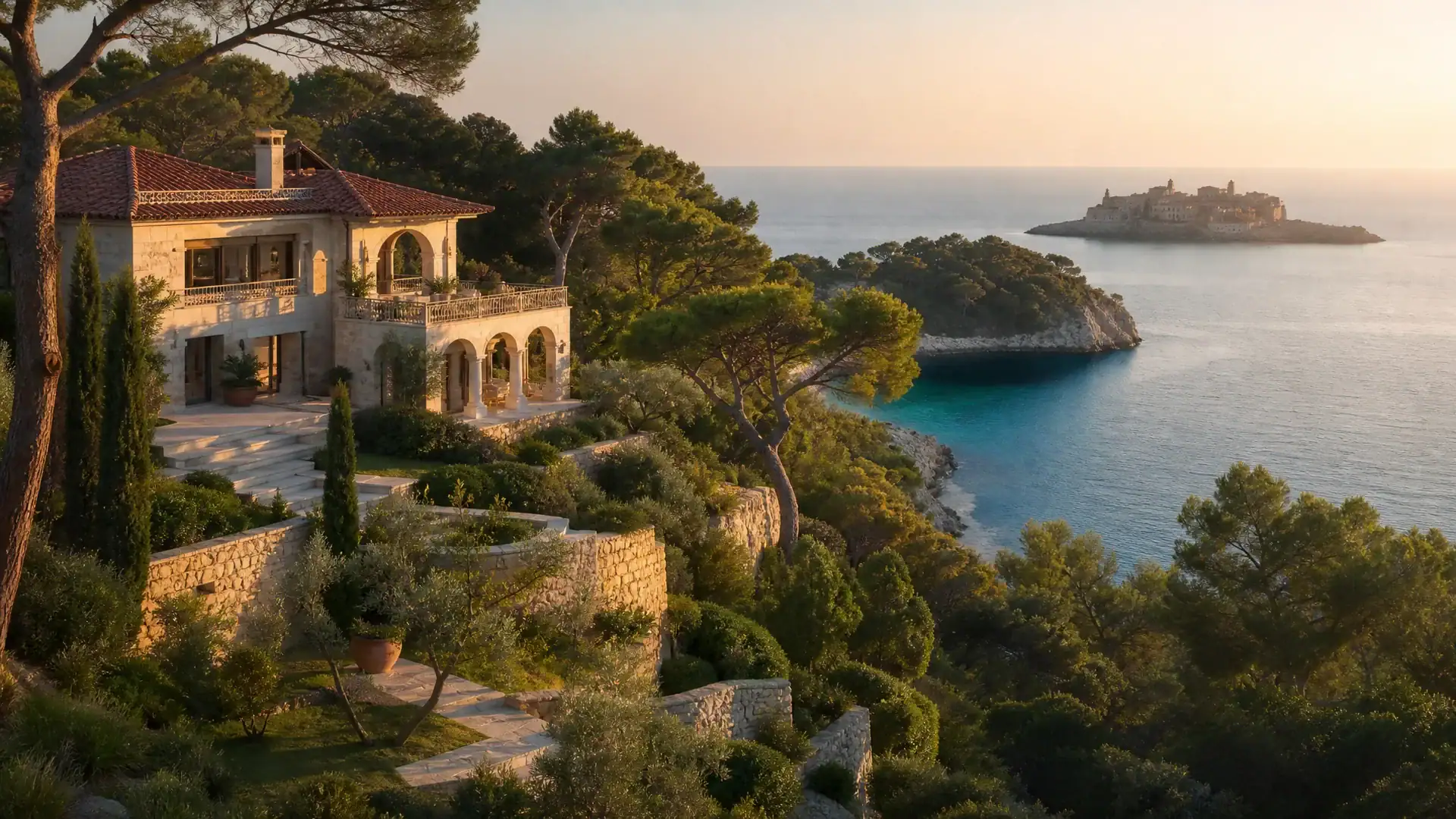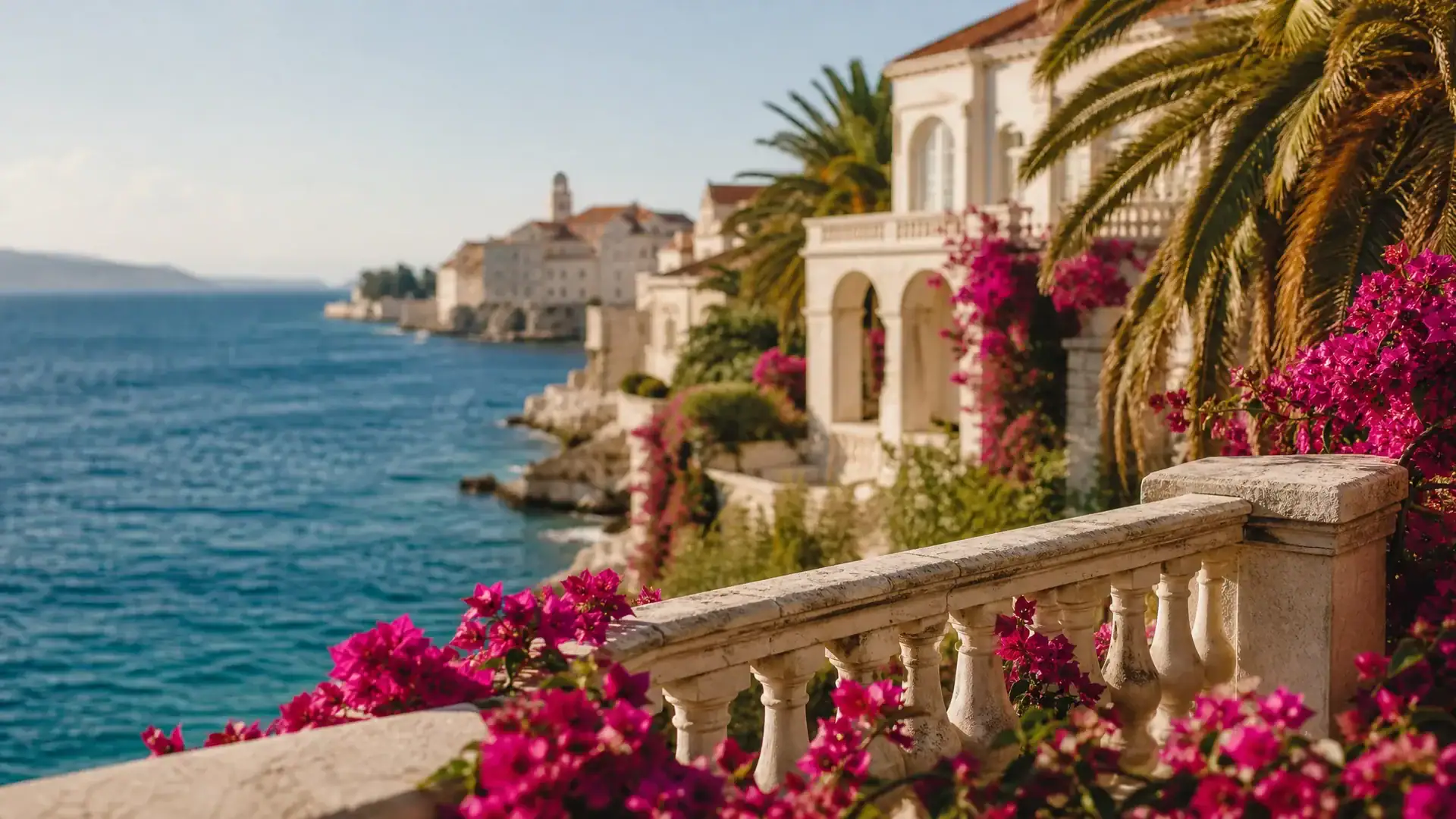



For the European property buyer considering relocation, Montenegro has become the story of 2026, a small Adriatic nation that offers EU citizens a credible, well-connected base to restructure their lifestyle, lower their tax burden, and own exceptional property outright. This guide covers what EU nationals can own, how the tax picture stacks up, what residency rights look like in practice, and where the most compelling locations are right now.
Why Montenegro Is the European Buyer’s Relocation Story of 2026
Montenegro sits at the crossroads of the Adriatic with a geography that feels almost designed for cross-border living. Croatia, an EU and Schengen member since 2023, shares a land border to the north. Albania borders it to the south. On a clear evening, the Italian coastline is visible across the water. That physical proximity to the heart of Europe matters: relocating here is a lifestyle upgrade, not a withdrawal from the continent.
The broader migration trend is clear. Europeans, particularly from high-tax Western economies, are searching for lower costs, sunnier climates, and simpler fiscal structures, without leaving the European cultural orbit. Montenegro answers all three.
Schengen Area Proximity and Cross-Border Living
Montenegro shares that land border with Croatia and is within a two-hour flight from London, Paris, Frankfurt, and Amsterdam. Dubrovnik Airport, just across the border, effectively functions as a gateway for Bay of Kotor residents. Schengen proximity is a daily practical reality here, not a talking point.
Cross-border living, splitting weeks between Montenegro and an EU home, is entirely viable. EU citizens face no long-stay restrictions in Croatia or the broader Schengen zone up to 90 days in any 180-day period when entering as tourists, and with structured residency planning, the calendar can be managed comfortably.
EU Citizen Property Rights in Montenegro: What You Can Own
EU citizens enjoy broadly equivalent rights to Montenegrin nationals when purchasing residential real estate. There are no restrictions on buying apartments or villas, freehold title transfers directly to the buyer, with full ownership rights registered in the Montenegrin land registry (the Katastar). This is clean, outright ownership with the same legal standing as local title.
Freehold Ownership, Land, and Company Routes
For residential property, apartments, townhouses, standalone villas, EU nationals buy freehold without conditions. Montenegro’s property rights framework for EU citizens is one of the most open in the Western Balkans.
Larger undeveloped plots and agricultural land sit in a different category. The standard route is acquisition through a locally registered company, a structure that a Montenegrin property lawyer can establish efficiently. For buyers looking at development land or significant agricultural parcels, this route is well-trodden and presents no material obstacle.
For the full procedural picture, the step-by-step property purchase process in Montenegro covers every stage from offer to title registration.
Tax Residency and EU Tax Comparison for European Relocators
Montenegro levies one of the lowest flat personal income tax rates in the broader European region, making it a structurally attractive destination for high earners relocating from countries with progressive tax bands reaching 40–55%. The headline personal income tax rate sits at 9% on most income up to a defined threshold, with a 15% rate applying above it. Corporate tax is set at 9%, also flat. Both figures are significantly lower than most Western European counterparts.
For European buyers comparing tax residency options, the contrast with France, Germany, the Netherlands, or the UK is striking. An entrepreneur, freelancer, or high-net-worth retiree operating under the French or German system faces marginal rates that can exceed 45% on income above relatively modest thresholds. Montenegro’s structure rewards relocation in a direct and quantifiable way.
Montenegro’s Flat Tax Rate vs. Western European Regimes
The flat structure removes complexity. There are no tapered reliefs, no bracket-creep calculations, and no surtaxes layered on top. Property transfer tax is low, typically 3% of the assessed value, and annual property-holding costs are modest by EU standards. Running a residence here is materially cheaper than running an equivalent property in Provence, Tuscany, or the Algarve.
Understanding the 183-Day Rule for EU Nationals
Tax residency in Montenegro, as in most jurisdictions, is triggered by spending 183 or more days in the country in a calendar year. EU nationals who relocate and establish Montenegrin tax residency can exit their home country’s tax system, subject to that home country’s own exit rules, which vary. Some countries require formal deregistration; others apply a trailing liability period. Taking independent tax advice before the move is essential, but the 183-day threshold itself is familiar and manageable for lifestyle migrants who split their time across borders.
The Relocation Logistics: Getting Here, Settling In, and Staying Connected
The practical path to establishing residence follows a logical sequence. Purchasing property creates the basis for applying for temporary residence, a permit that is typically renewable annually and, after five years of continuous residence, can lead to permanent residence status. EU passport holders navigate this process more smoothly than third-country nationals, with fewer documentary hurdles at most stages.
Residency Permits, Timelines, and Documents
A typical temporary residence application based on property ownership requires proof of ownership, a valid passport, proof of health insurance, and evidence of sufficient financial means. Processing timelines at the Ministry of Interior vary, but straightforward applications are generally measured in weeks rather than months.
Healthcare access for residents is available through Montenegro’s public system once residency is established, though many European relocators maintain private international health coverage, particularly in the early years. International schooling options exist in the Tivat and Budva areas. Banking for non-residents has historically required patience, but Montenegrin banks are increasingly familiar with EU-based applicants.
Montenegro has held EU candidate country status since 2010, with the longest-running accession negotiation in the bloc’s history, covering 33 of 35 policy chapters. That trajectory means ongoing regulatory convergence with EU standards, a credible long-term assurance for European buyers who want to know that today’s investment is protected by tomorrow’s frameworks. For a fuller picture of what daily expat life looks like in Montenegro, read our dedicated guide.
Top Locations for European Buyers: Where to Relocate in Montenegro
خليج كوتور
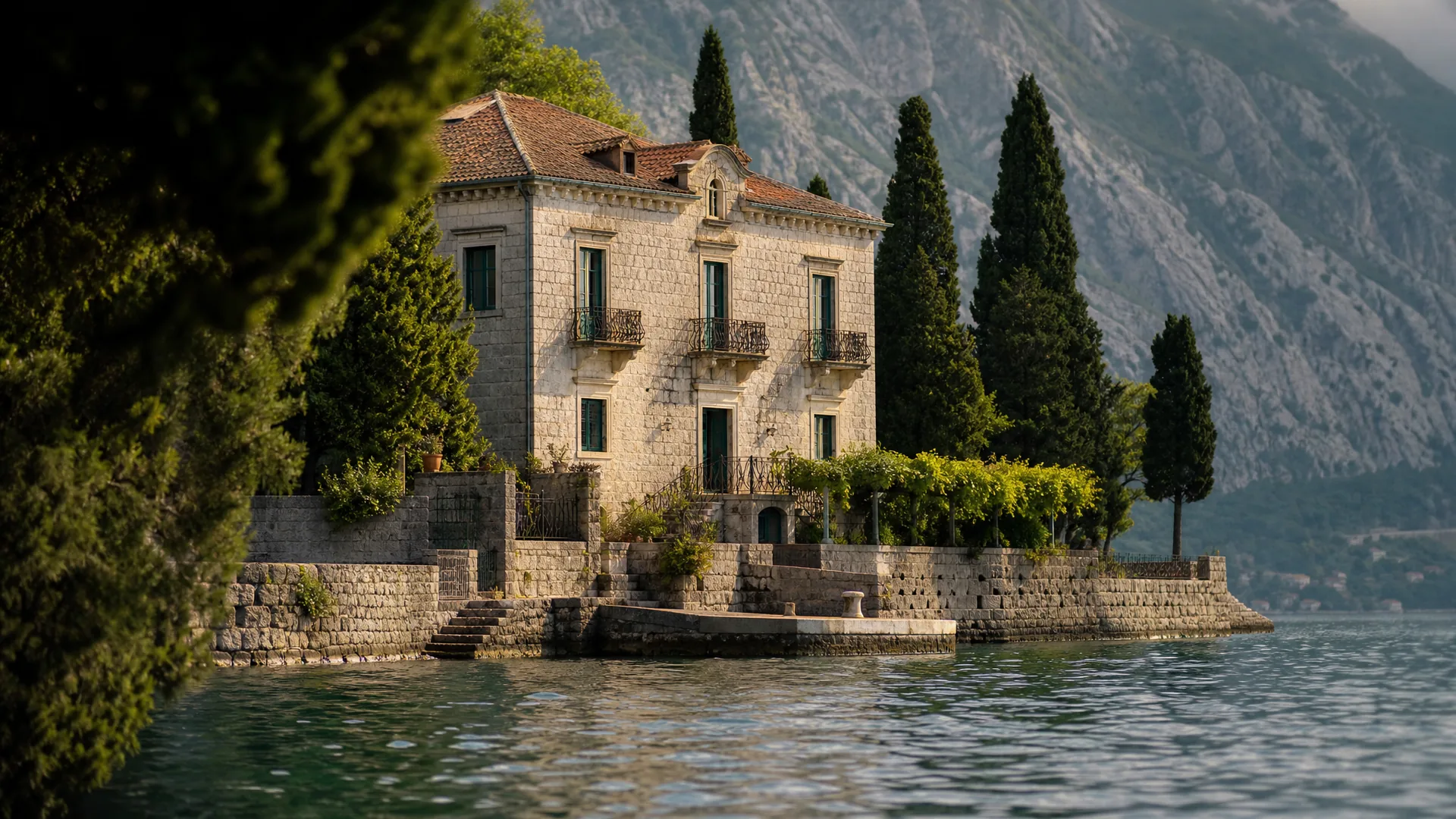
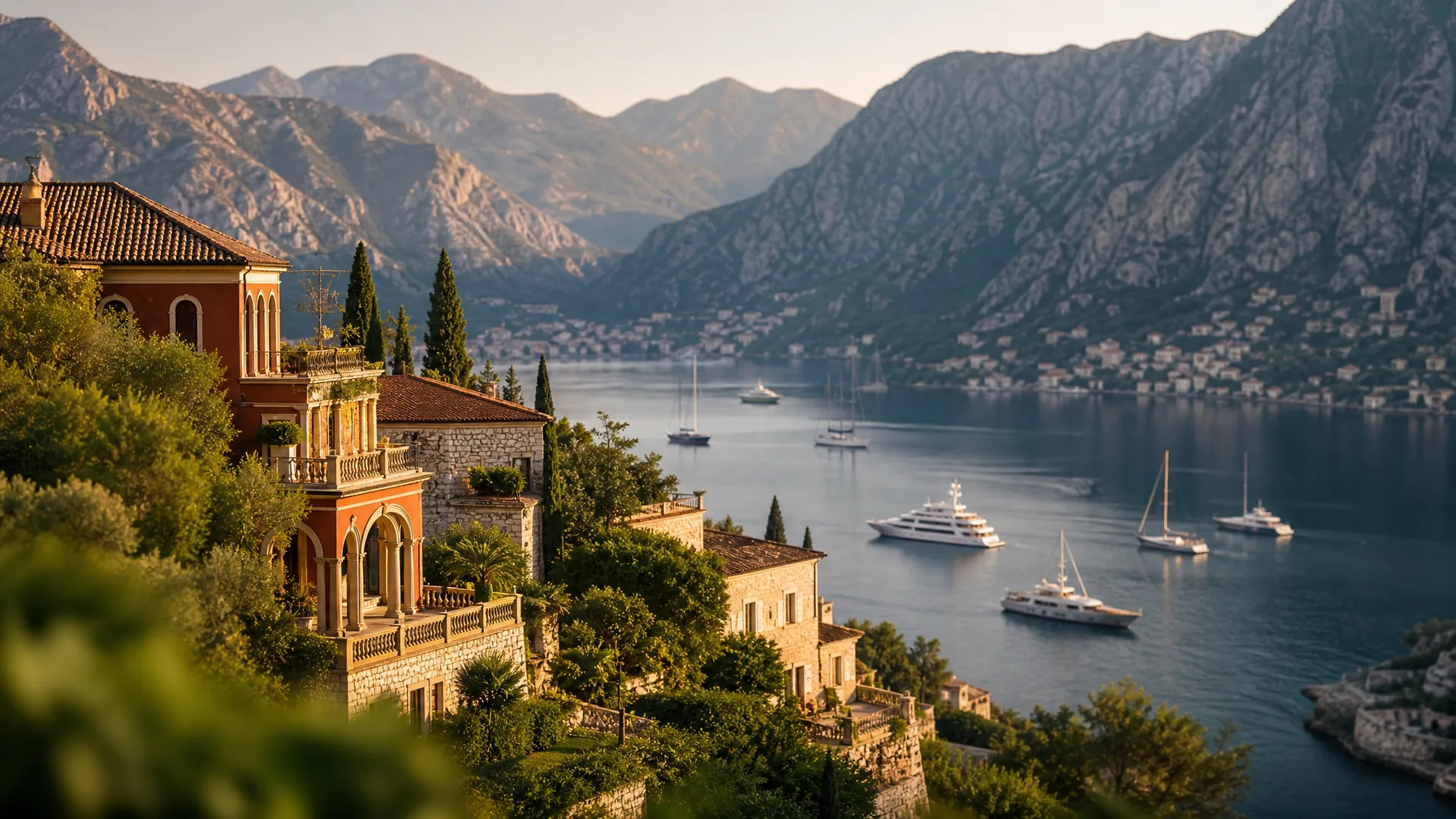
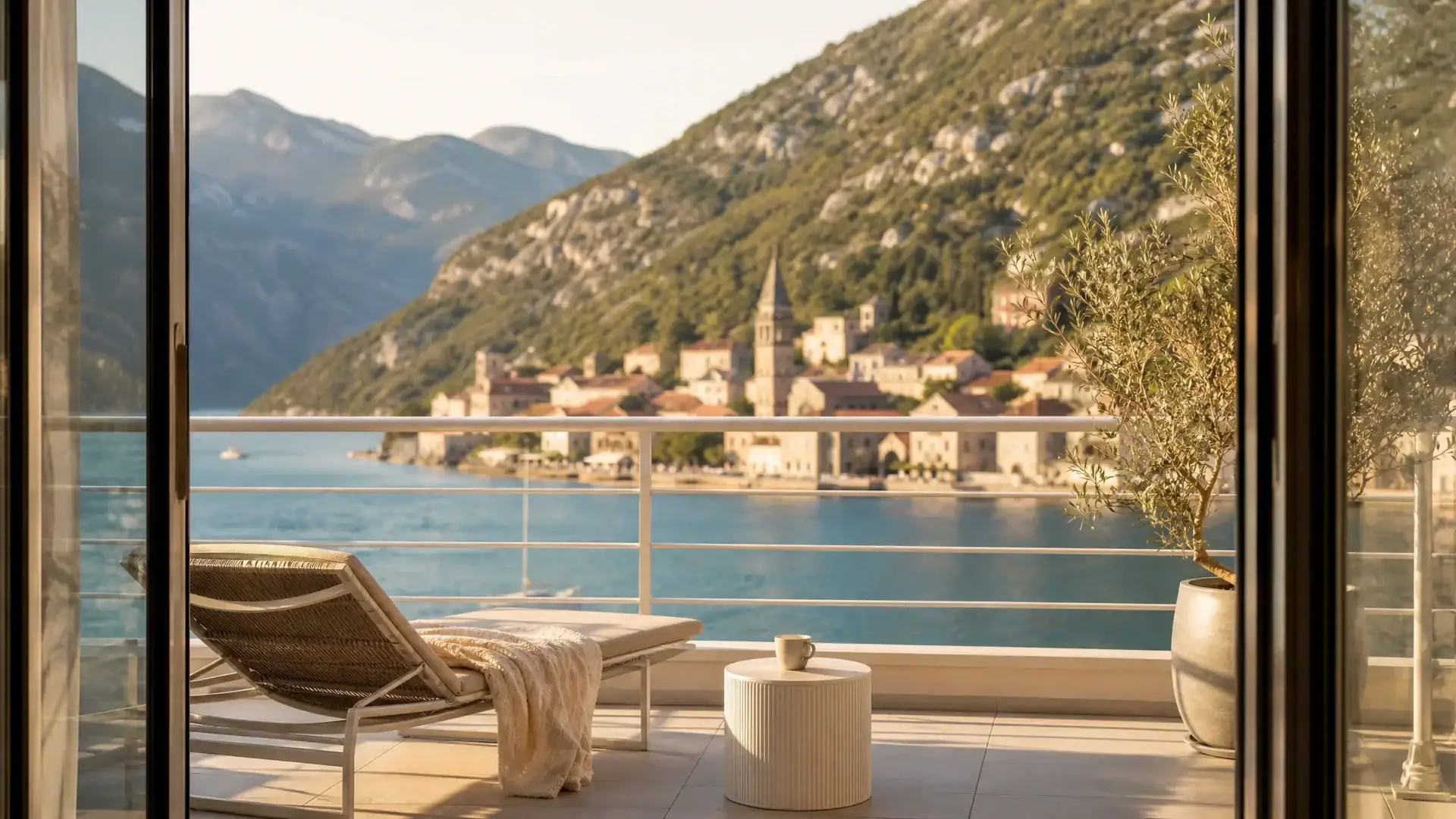
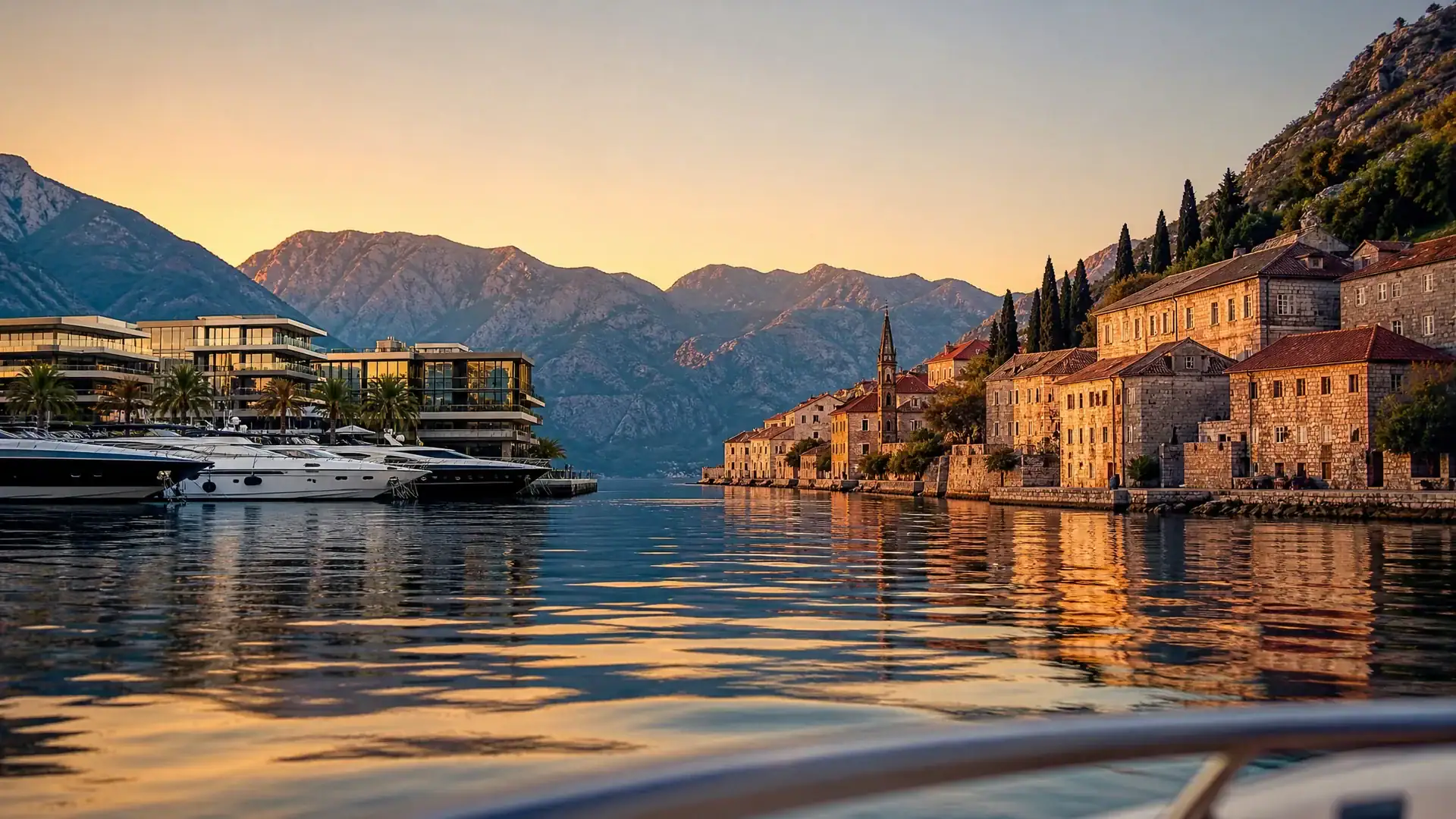
The Bay of Kotor is Montenegro’s headline address for culture-driven European buyers seeking quiet luxury. Kotor Old Town, a UNESCO World Heritage Site, offers medieval architecture, a thriving arts calendar, and year-round café culture against a backdrop of dramatic limestone karst. Perast, a few kilometres north, is arguably the most serene village on the Adriatic: a string of baroque palaces and waterfront gardens facing two small islands. Perast waterfront villas in the Bay of Kotor represent some of the rarest inventory in the entire region.
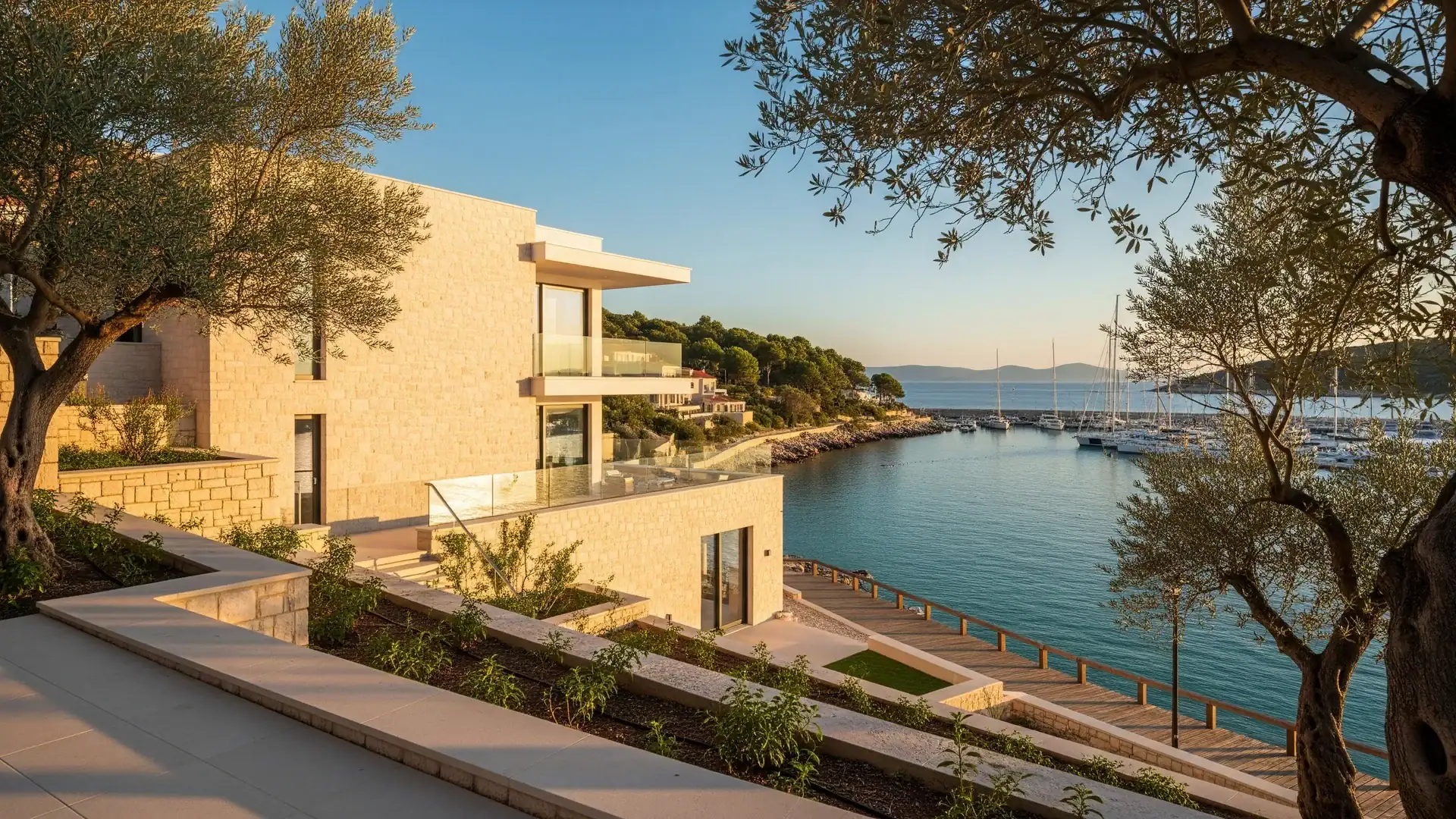
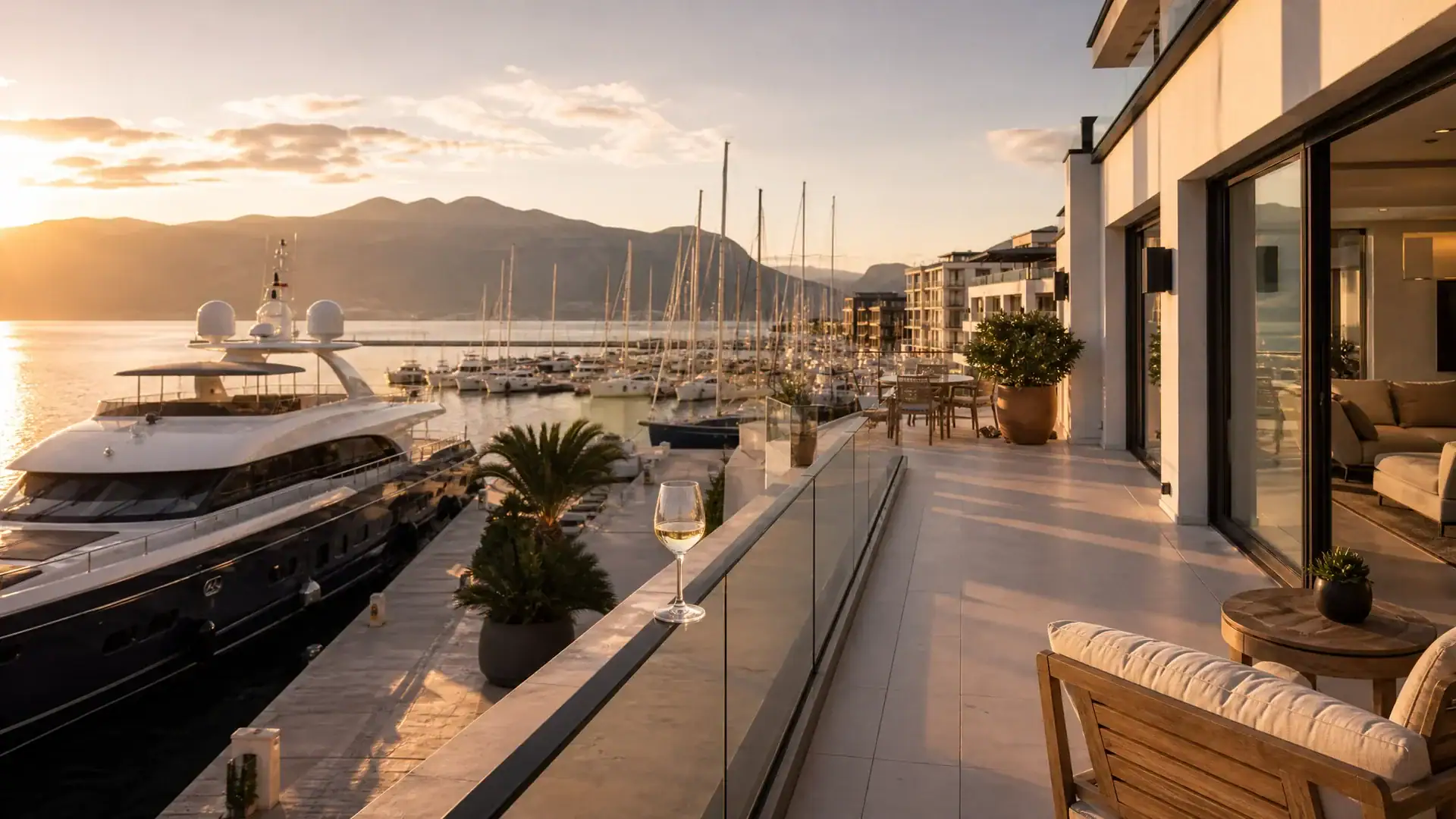
Tivat anchors the bay’s contemporary side. Porto Montenegro, a superyacht marina and luxury residential quarter developed to international standards, provides EU-grade infrastructure without compromise: private healthcare, international schools, fine dining, and a resident marina community drawn from across Europe. Luxury apartments at Porto Montenegro in Tivat are the natural starting point for buyers who want turnkey Adriatic living. For pricing context, current Bay of Kotor real estate prices show the range across the bay’s distinct micro-markets.
Budva Riviera and the Adriatic Coast
The Budva Riviera suits a different kind of European relocator, one who wants energy alongside the scenery. Budva is Montenegro’s most cosmopolitan coastal town: a medieval old town ringed by some of the Adriatic’s best beaches, a full summer festival calendar, and a restaurant and nightlife scene that draws an international crowd from May through September. The coast south toward Sveti Stefan and Petrovac is quieter and more residential, with a growing number of thoughtfully developed villa compounds designed for year-round living. Beachfront property options on the Budva Riviera cover the full spectrum from lock-up-and-leave apartments to substantial private villas.
European relocators consistently weigh the Bay of Kotor for year-round calm against the Budva Riviera for lifestyle energy, many end up owning in both. For a broader view of where the market is heading, سوق العقارات الفاخرة في الجبل الأسود في عام 2026 sets the competitive context.
How Montenegro Sotheby’s International Realty Guides Your Relocation
The difference between a transaction and a relocation is everything that happens after the contract is signed. Montenegro Sotheby’s International Realty works as an end-to-end partner for European clients, from the initial property search through legal due diligence coordination, notary appointments, and title registration, to introductions to trusted tax advisers, immigration lawyers, and banking contacts.
Buyers relocating from Germany, France, and the UK consistently cite the combination of low property transfer tax, affordable running costs, and Adriatic lifestyle as their primary decision drivers. The relocation concierge layer means clients arrive with their professional network already in place, not starting from zero in an unfamiliar system.
Post-purchase, the relationship continues. Montenegro Sotheby’s International Realty can connect clients with property management, school admissions advisers, and the broader expat community, turning what might feel like a logistical challenge into a well-supported move.
If you are a European property buyer considering relocation to Montenegro, we invite you to book a complimentary consultation with our advisory team. The conversation starts wherever you are, and ends with you knowing exactly what your next move looks like.