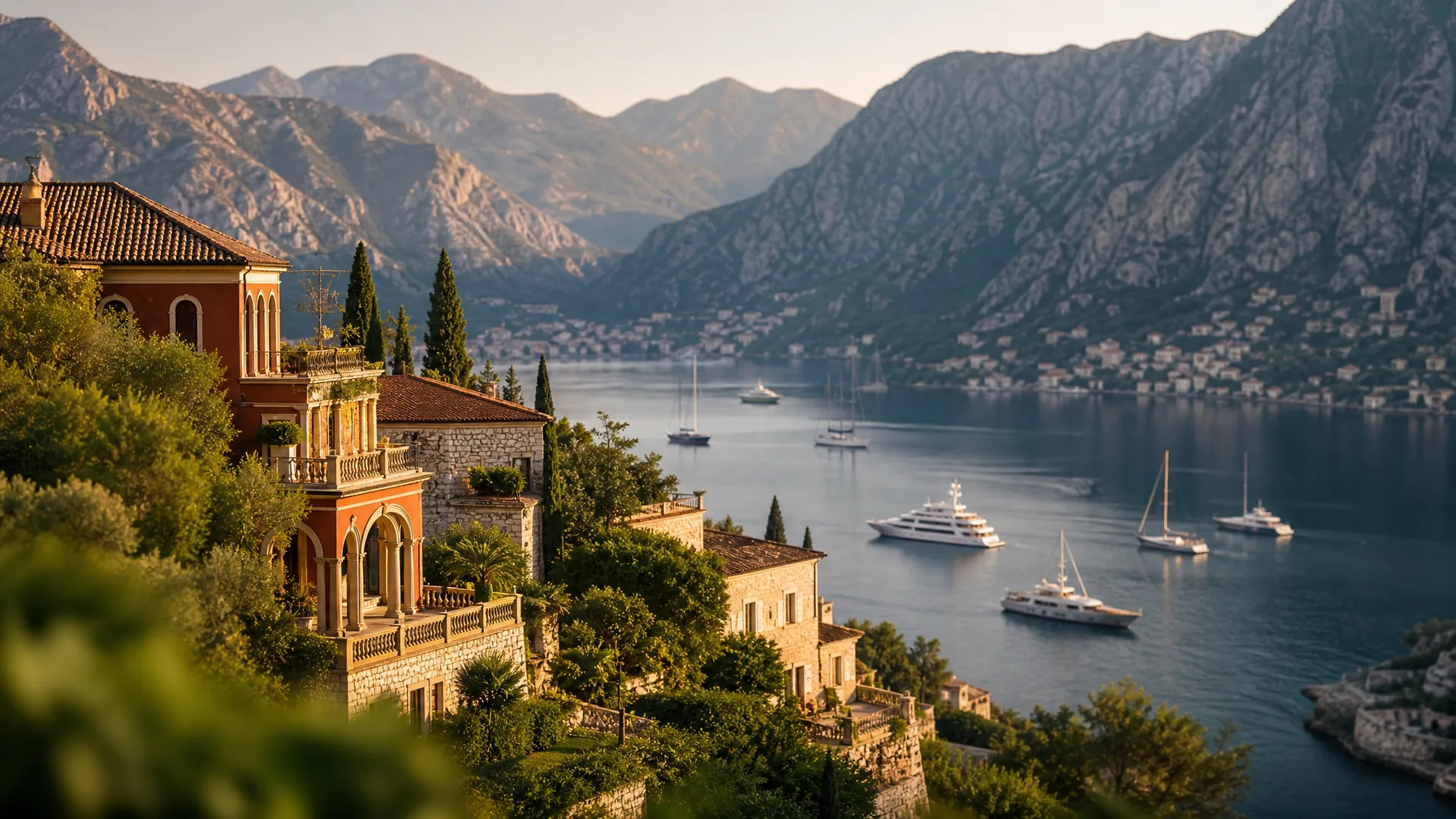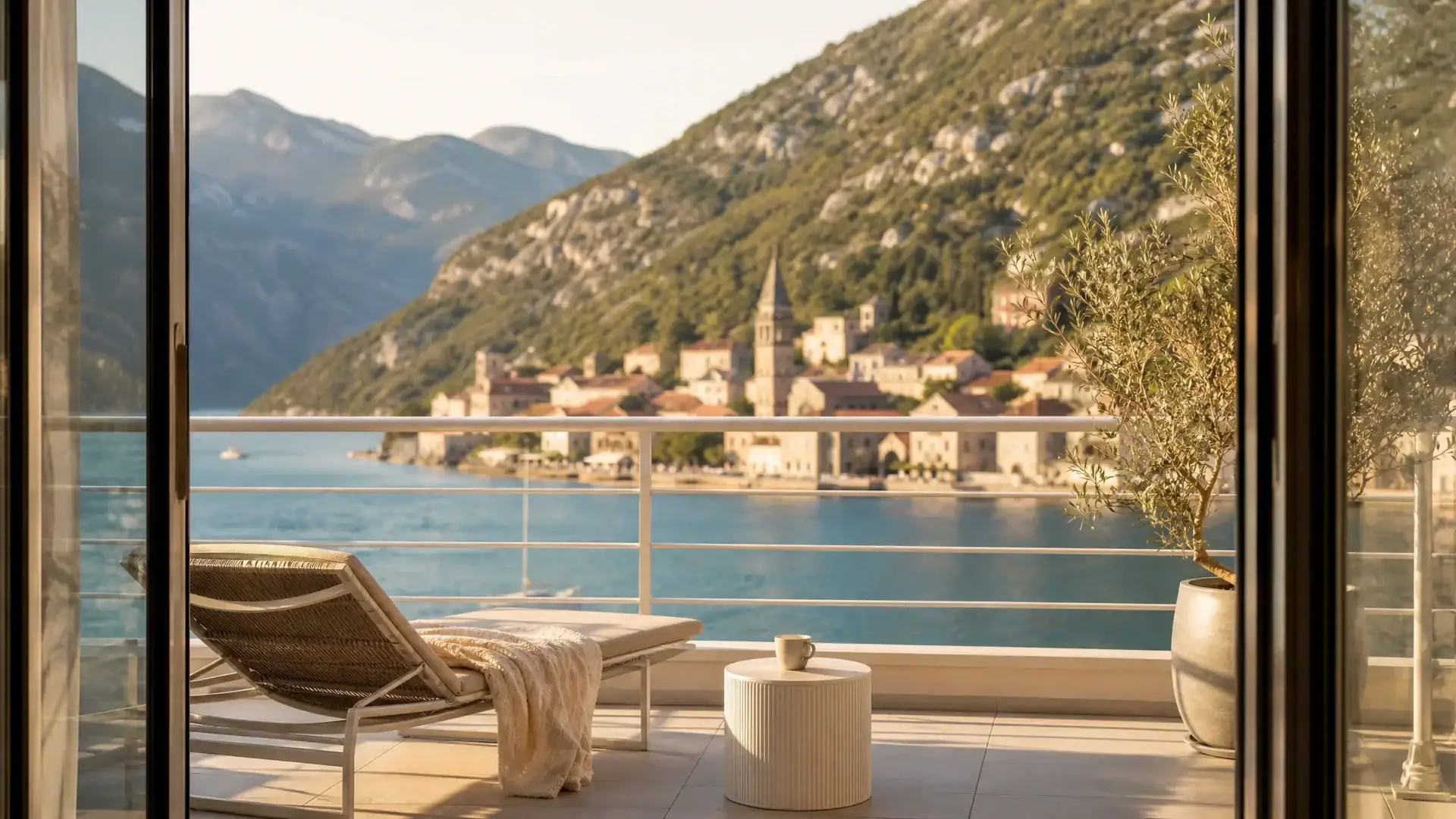




For international buyers acquiring a coastal property in Montenegro, the purchase price is only the opening number. Villa renovation costs in Montenegro are frequently the largest variable in the total investment equation, and the figure most often underestimated at acquisition. A well-restored Adriatic villa commands a meaningful premium at resale and generates strong luxury rental yields. Getting the renovation budget right from the start is what separates a high-performing asset from an expensive lesson.
Montenegro’s cost structure differs significantly from Western Europe, Italy, and even neighbouring Croatia. Labor costs are lower, locally quarried stone keeps baseline material costs competitive, and the permitting system is process-driven but not prohibitively expensive. Those advantages come with important nuances: specialist trades are scarce, heritage compliance in UNESCO-designated areas adds real cost and time, and imported luxury finishes can close the gap with Italian or Croatian benchmarks faster than buyers expect.
Why Montenegro Villa Renovation Costs Deserve a Dedicated Budget Line
Buyers who treat renovation as an afterthought typically discover the real number mid-project, when contractor leverage is highest and design decisions are hardest to reverse. Montenegro is a market where the acquisition price of an unrenovated villa can look compelling, and genuinely is, but only when total project cost is modelled correctly before exchange.
A standard restoration, structural remediation, new systems, and quality-grade finishes, typically runs from €600 to €900 per square metre for solid but not exceptional outcomes. Luxury-grade finishes, imported cabinetry, high-specification glazing, smart-home integration, and pool infrastructure push budgets to €1,200–€1,800 per square metre or beyond, depending on property age, condition, and location constraints. These figures reflect 2026 contractor pricing across the Bay of Kotor and Budva Riviera sub-markets and should be used as planning anchors, not fixed quotes.
The upside is equally real. A sensitively restored stone villa in Perast or a modernised beachfront property in Budva occupies a different market tier entirely, one where international demand consistently outpaces supply.
The Key Cost Drivers Behind Montenegro Villa Restoration Budgets
Understanding what moves the number is more useful than a single per-square-metre figure. Three variables dominate: labor, materials, and the complexity of the scope.
Construction Labor Costs in Montenegro 2026
Montenegro’s construction labor market has tightened in recent years. EU accession preparations and a sustained run of major coastal development projects have kept skilled contractor capacity in high demand, which means reputable firms book quickly and price accordingly. General construction labor remains meaningfully cheaper than in Croatia, Italy, or France, but the gap narrows sharply when specialist trades enter the picture.
A stone-built villa in the Bay of Kotor often requires stonemasons who understand traditional Venetian-era construction methods, a trade that is genuinely scarce in Montenegro and typically commands two to three times the day rate of a general laborer. Plasterers, tile-setters, and carpenters with experience in heritage-quality finishes are in similarly limited supply. Securing a reputable firm early, ideally before finalising an offer, is the most effective way to lock in both pricing and timeline.
General labor day rates in 2026 remain competitive by Adriatic standards, roughly one-third to one-half of Italian or Croatian equivalents for comparable general trades, but that advantage erodes when projects require imported expertise or extended supervision.
Materials: Local Sourcing vs. Imported Finishes
Montenegro’s quarries produce excellent limestone and stone cladding at prices well below Italian equivalents. Regional suppliers provide solid structural materials, basic tiling, and standard joinery at competitive rates. For buyers targeting a quality-grade restoration without a luxury-specification brief, local sourcing keeps budgets firmly in the lower tier.
The calculus shifts with specification. Italian kitchen systems, German triple-glazed windows, Scandinavian bathroom fittings, and branded smart-home infrastructure all carry import logistics costs on top of their base price. A full luxury-specification renovation budget can see 30–40% of material costs allocated to imported finishes. Exchange-rate exposure is also a real consideration for buyers bringing USD, GBP, or other non-euro currencies into a euro-denominated market.
Kotor and Bay of Kotor Villa Renovation Cost Estimates
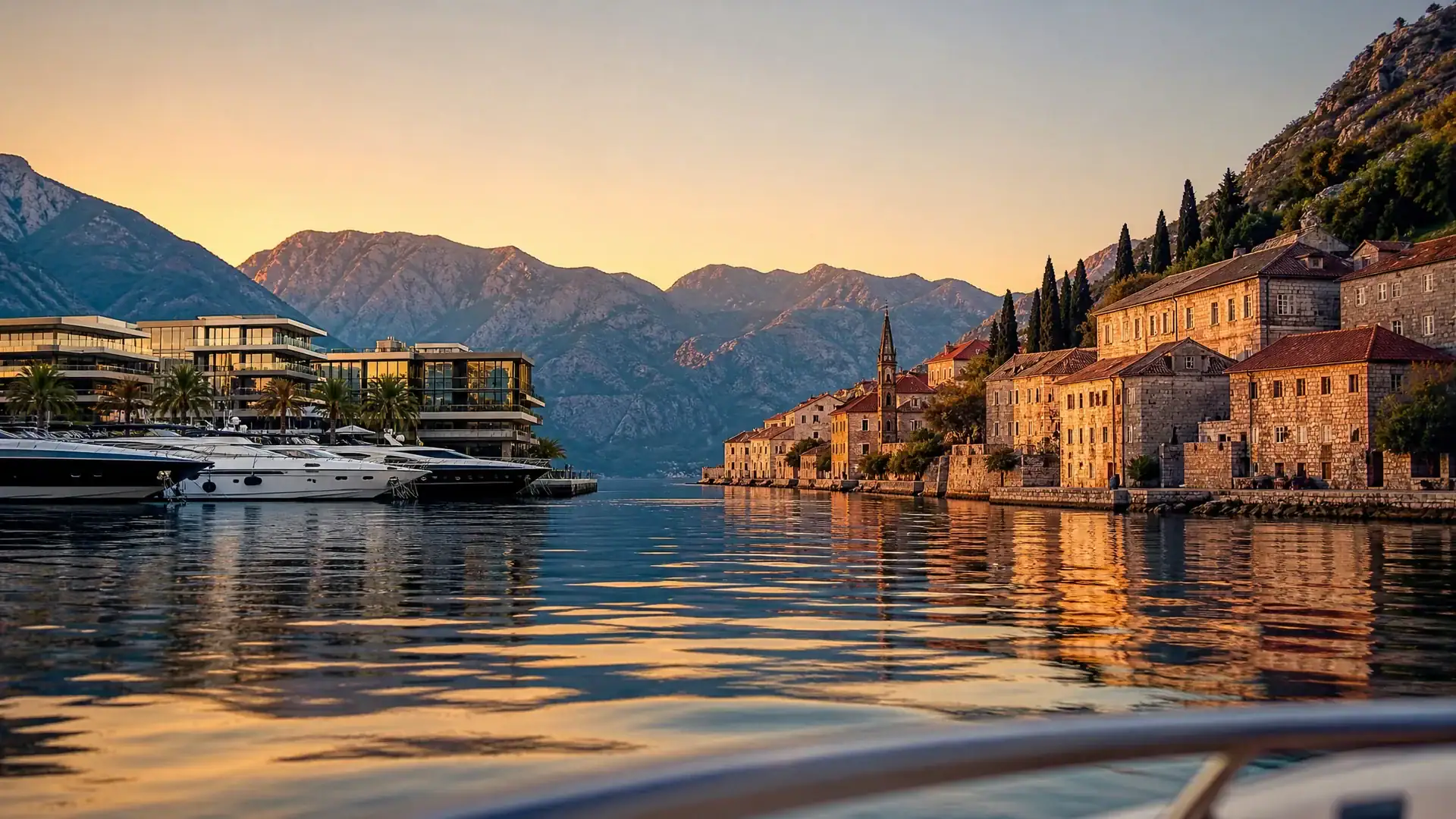
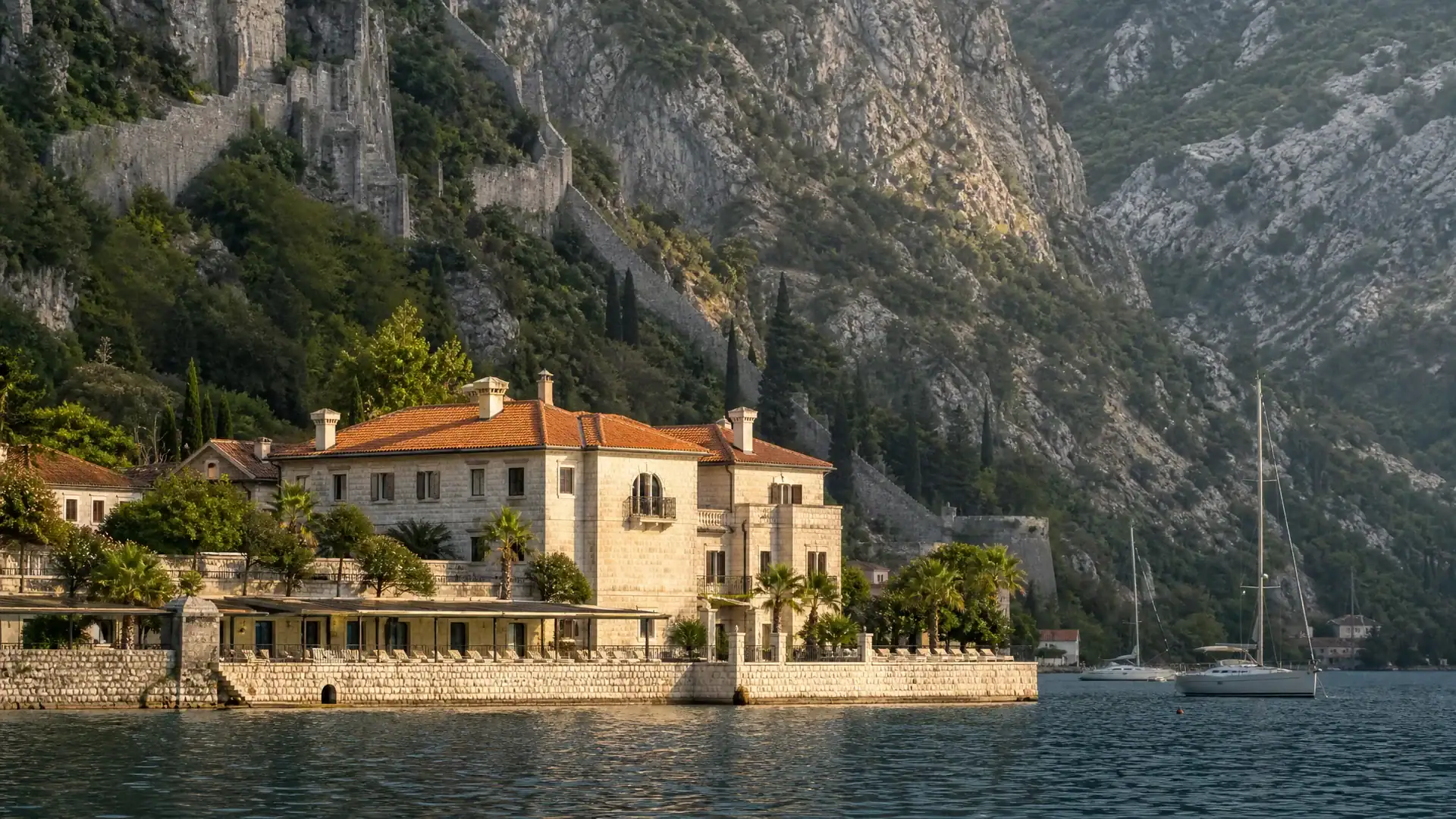
The Bay of Kotor is Montenegro’s premium heritage sub-market. Properties in Kotor Old Town, Perast, Dobrota, and Prčanj offer architectural character that is genuinely irreplaceable, which is precisely why renovation costs here carry a premium over the broader market.
Heritage Compliance and UNESCO Buffer Zone Rules
Kotor’s UNESCO World Heritage listing creates a compliance layer with no equivalent elsewhere in Montenegro. The Institute for Protection of Cultural Monuments must approve façade materials, window styles, shutter design, and roof treatments for properties within and adjacent to the protected zone. This is not a formality: redesigns required after initial rejection are common, and each revision cycle adds both time and professional fees.
Budget for a heritage architect or consultant in addition to your standard project architect, this cost is non-negotiable in the Kotor context. Combined heritage consultant and architect fees for a full restoration in the Bay of Kotor typically add 8–12% to total project cost. Experienced heritage architects working in the region are consistent on one point: engaging a heritage specialist before you make an offer is the single most effective way to avoid costly redesigns after purchase.
For Kotor Old Town property investment, the renovation premium is offset by asset scarcity and international demand that shows no sign of softening. A fully restored heritage villa in this zone is among the most defensible luxury assets on the Adriatic.
Total renovation budgets for heritage properties in the Bay of Kotor, at luxury specification, regularly reach €1,500–€2,000 per square metre when compliance costs, specialist trades, and imported finishes are combined.
Budva and the Riviera: Adriatic Villa Renovation Expenses at Scale
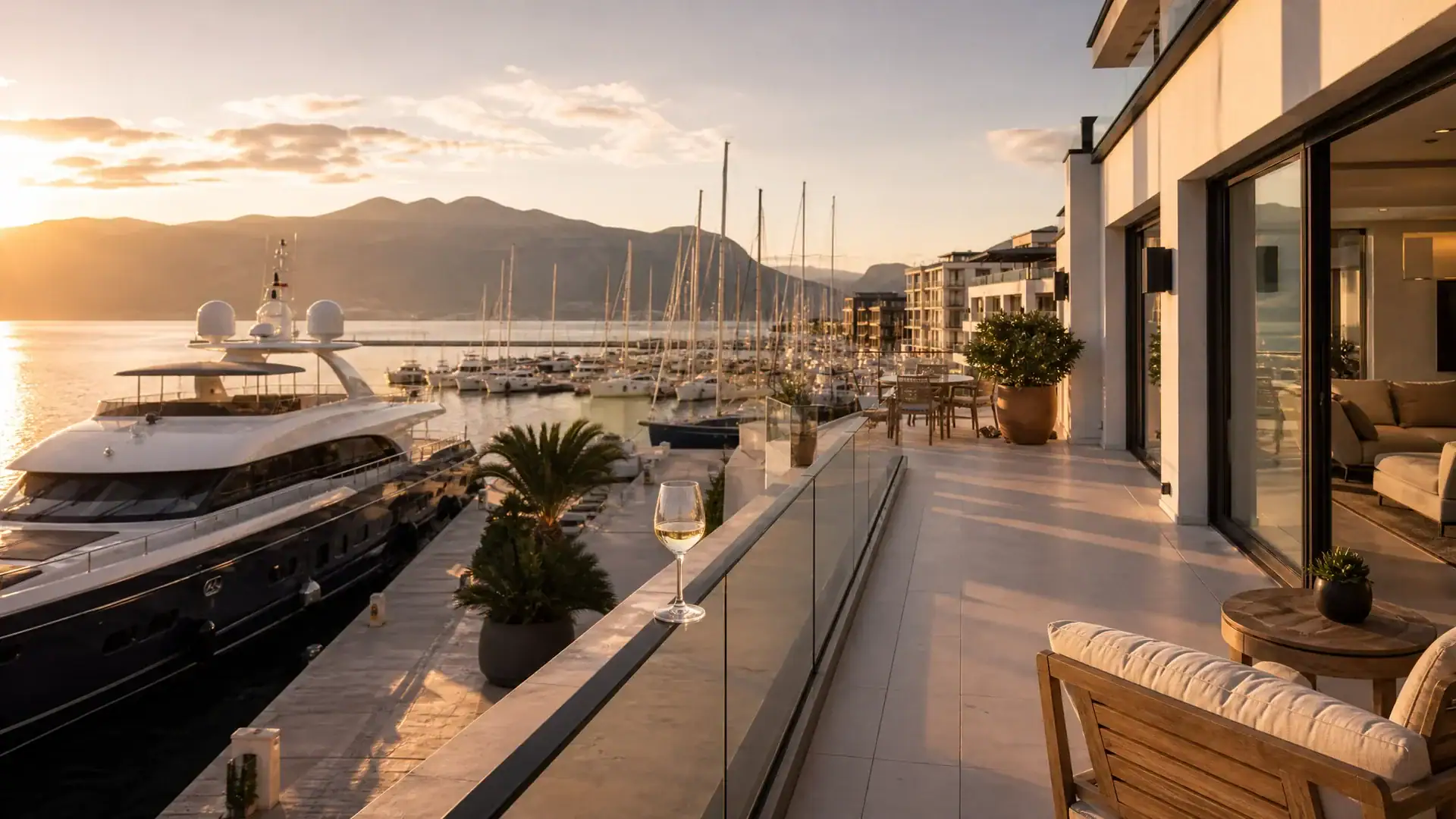
Budva’s property stock is structurally younger than Kotor’s, with most villas dating from the post-1970s era through to the early 2000s. Heavy structural remediation is less common, but the renovation brief typically looks different: buyers are refitting properties to luxury short-term rental standards, and that drives a specific cost profile.
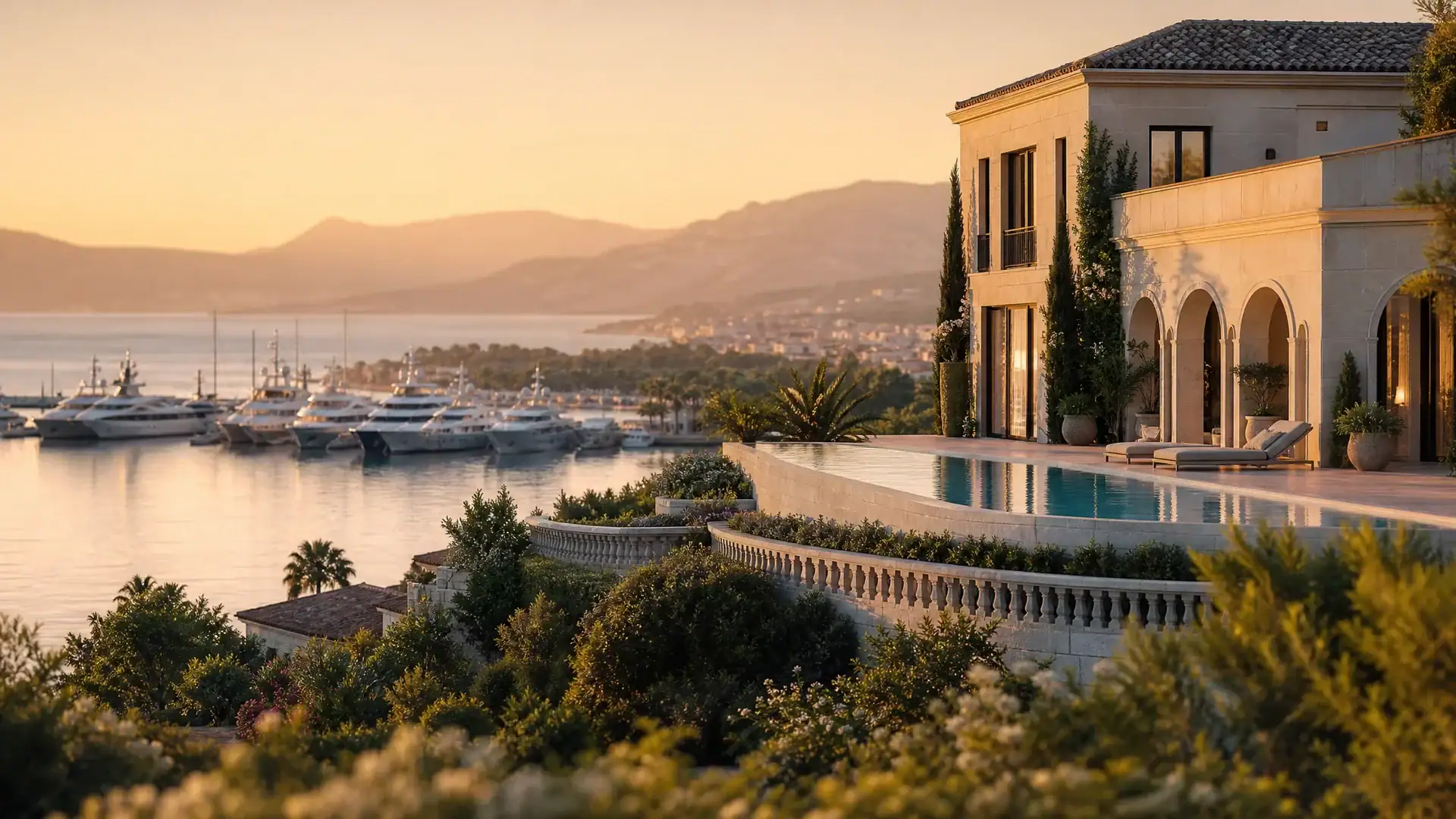
Budva-area villa buyers frequently find that full HVAC replacement, smart-home wiring, and pool infrastructure, rather than structural work, make up the majority of their renovation budget. A high-grade HVAC system for a six-bedroom villa, combined with pool construction, smart-home integration, and contemporary kitchen and bathroom fit-out, can easily reach €300,000–€500,000 on a mid-size property, independent of any structural spend.
Beachfront proximity introduces additional logistics costs. Material delivery to coastal sites in high season is constrained by traffic, access restrictions, and competing demand from active construction projects. Scheduling work between October and April, where project scope allows, produces better contractor availability and lower effective delivery costs.
For buyers targeting villa rental income in Montenegro, Budva renovations represent a clear yield play: renovation investment is directly correlated with achievable nightly rates in the luxury short-term rental market.
Property Renovation Permits in Montenegro: Timelines and Fees
Montenegro operates two primary permit pathways for villa renovation, and choosing the right one from the outset saves significant time.
For cosmetic and interior work, finishes, non-structural partition changes, fixture replacement, a minor works permit (prijava radova) is generally sufficient. This is processed at municipal level and, in most municipalities, can be approved within a few weeks. Fees are modest.
Structural changes, extensions, or any work that alters the building footprint or height require a full urban planning and construction permit (urbanistička saglasnost and građevinska dozvola). In Kotor municipality, heritage review adds a layer that can extend the timeline to four to eight months; Budva municipality typically moves faster for non-heritage properties, with well-prepared applications often approved in two to four months.
Permit fees are not high by European standards, they are calculated on a per-square-metre basis relative to work scope and are not the primary planning cost. The real cost of permit delays is contractor downtime, carrying costs on the acquisition, and compressed project timelines that follow. A licensed local architect (projektant) must author all permit submissions. Engaging one from the initial design stage, not as a late addition, prevents the most common documentation errors that cause delays.
Across the luxury properties we represent in Kotor, Perast, and Budva, buyers who commission a professional pre-purchase technical survey consistently uncover hidden remediation costs, damp ingress in thick stone walls, outdated electrical panels, undersized drainage, that reshape their total acquisition budget. This step costs a fraction of what a mid-project discovery costs.
Luxury Villa Restoration Budget: Phased Planning That Protects Your Investment
A structured phased approach is the most reliable framework for managing a luxury villa restoration budget in Montenegro. Each phase has a distinct cost and timeline profile, and sequencing them correctly avoids expensive rework.
Phase 1, Structural and Shell: Foundation checks, damp remediation, roof replacement or repair, and external masonry. This phase must be complete before systems work begins. It is also where heritage-compliance requirements have the most impact on specification and cost.
Phase 2, Systems: Plumbing, electrical rewiring, HVAC installation, and smart-home infrastructure. This is the phase most underestimated in Budva-area renovations, where systems are often original and undersized for luxury rental use.
Phase 3, Finishes: Flooring, wall finishes, joinery, kitchens, and bathrooms. This is where specification decisions have the largest impact on per-square-metre cost, and where imported materials add the most budget variability.
Phase 4, External: Landscaping, terracing, pool construction, and external lighting. For Adriatic villas, outdoor space is a primary amenity. This phase warrants serious investment, not a scaled-back budget because funds were exhausted earlier.
Realistic Villa Renovation Timelines in Montenegro
A full luxury restoration typically runs 12 to 18 months for a well-managed project with permits in place. Complex heritage properties in the Bay of Kotor, or projects that begin the permit process after acquisition, should plan for 18 to 24 months from purchase to handover. Compressed timelines are possible, but only with contractor capacity secured in advance and permits accelerated through proper pre-application engagement.
Building a Contingency Buffer into Your Budget
A 15–20% contingency on top of all contractor and consultant quotes is the right planning standard for Montenegro villa renovation. Supply-chain variability, heritage surprise costs (a wall opened to reveal unexpected structural issues is common in older stone buildings), and mid-project scope refinements all draw on contingency. Buyers who set this buffer at 10% or less frequently find it exhausted before Phase 3 finishes.
The contingency is not an expectation of problems, it is the structure that allows good decisions under pressure. Buyers working with an experienced local advisory team consistently avoid the most costly scenario: mid-project scope changes driven by budget anxiety rather than design intent.
For a full picture of how renovation investment interacts with acquisition value and return potential, speak with the Montenegro Sotheby’s International Realty advisory team before committing to a property and budget structure.